Knife cutting and laser cutting can both process leather, but they create value in different ways. The right choice depends on the exact leather, required edge appearance, need for engraving, defect-handling workflow, production volume, and working environment.
Avoid choosing from a generic “which machine is better?” comparison. Start with the finished product and test the actual material.
The basic process difference
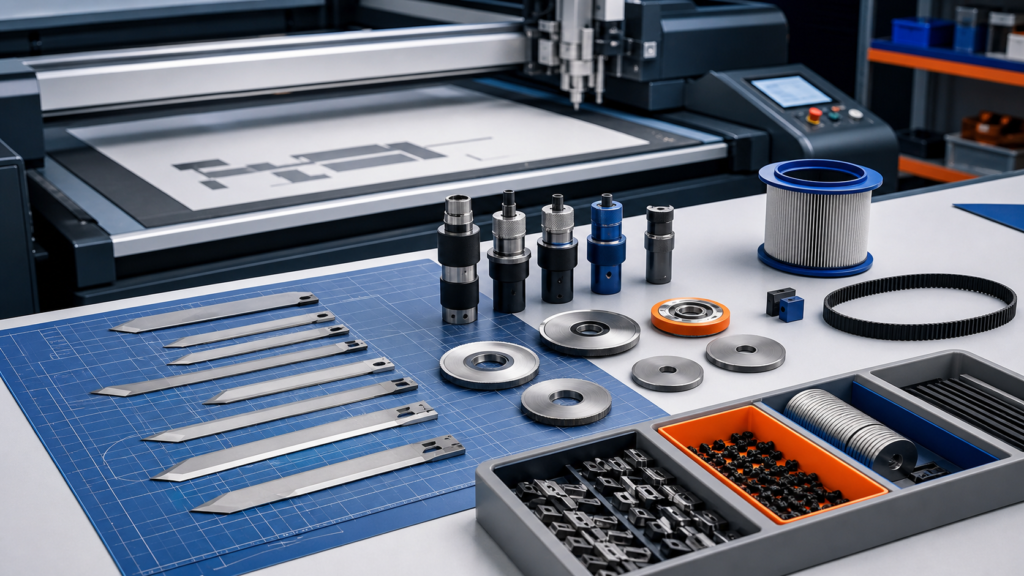
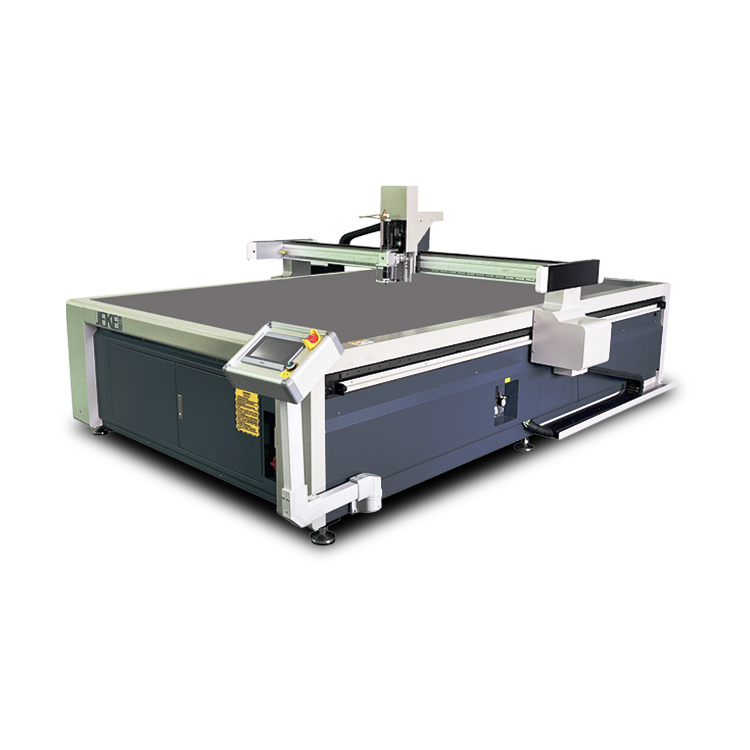
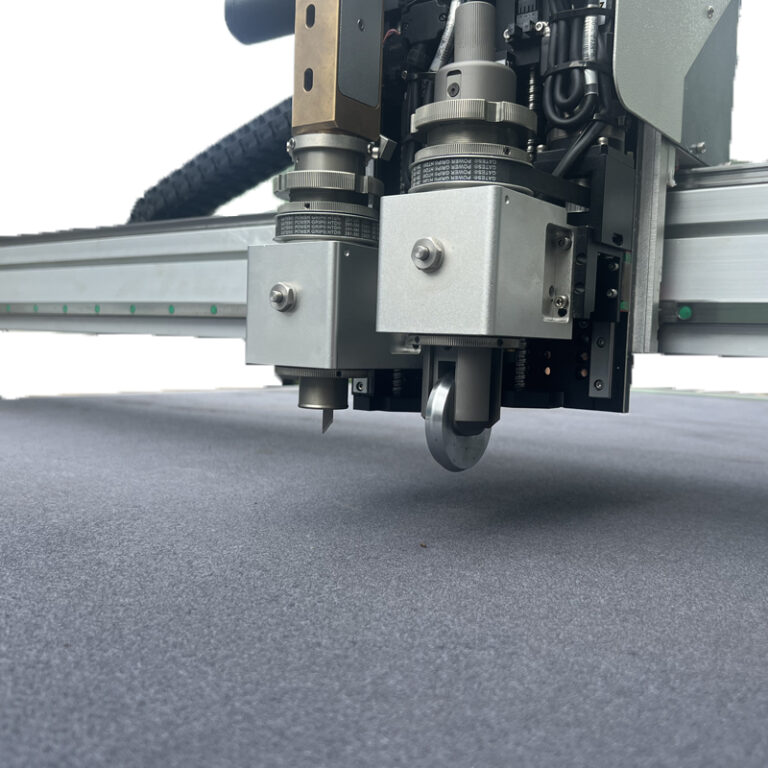
A digital knife cutter separates material mechanically with a blade. Depending on the material and machine, the workflow may use an oscillating knife, drag knife, rotary knife, punching tool, or other module.
A laser cutter uses focused heat to cut or engrave. This makes non-contact processing and engraving possible, but the material’s reaction to heat becomes part of the result.
Neither description proves that every leather is suitable. Natural hides, PU materials, PVC-containing synthetic leather, microfiber leather, coated leather, and composites can react differently.
Compare the finished edge—not only cutting speed
For a knife-cut sample, inspect:
- – Fiber pull and edge smoothness
- – Compression or marking near the cut
- – Tight corners and small holes
- – Grain-side and flesh-side appearance
- – Whether secondary edge finishing is required
For a laser-cut sample, inspect:
- – Darkening or heat-affected appearance
- – Odor, residue, and cleaning requirement
- – Deformation near fine features
- – Consistency across color, finish, and hide lots
- – Ventilation and material-safety requirements
Trotec’s official leather guidance notes that genuine leather is a natural material with many types that react differently, making universal settings difficult. That is a strong reason to test multiple representative pieces instead of relying on one online result.
Material composition can decide the process
Ask the material supplier for composition and safety information. Some artificial leathers contain PVC. Laser-equipment documentation from Trotec and Universal Laser Systems warns against laser processing PVC-containing materials because harmful and corrosive fumes may be produced.
This does not automatically make knife cutting the correct production solution. It means composition must be verified before a laser test, and health, extraction, and equipment requirements must be included in the decision.
Natural hides add a nesting problem
Leather is not a uniform roll good. Full hides vary in contour, grain, color, stretch, scars, holes, and quality zones. The cutting machine is only one part of the workflow.
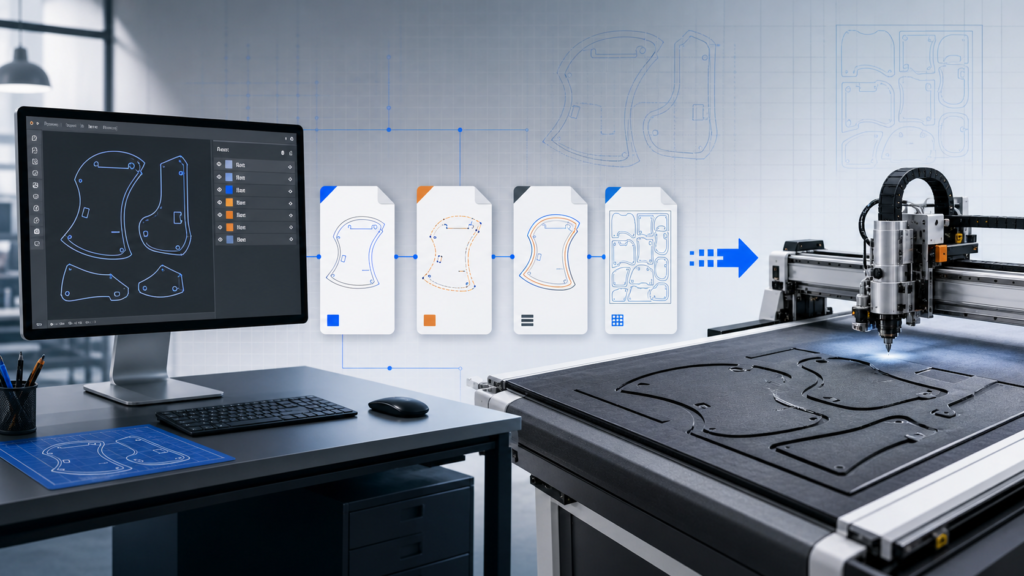
Zünd’s official leather-processing workflow separates four steps: capturing the hide and marked defects, nesting parts, cutting, and identifying parts for removal. This illustrates the questions a leather manufacturer should ask:
- – How is the hide contour captured?
- – Who marks or detects unusable zones?
- – Can the nesting software respect quality zones and grain direction?
- – Can paired parts be placed for visual consistency?
- – How are small, similar parts identified after cutting?
Do not assume that a camera automatically detects every defect. Confirm whether the proposed system offers contour capture, printed-mark recognition, manual marking, projection, or actual automated defect detection.
Hold-down affects accuracy
Soft leather can lift, wrinkle, stretch, or shift. Vacuum hold-down, table zoning, masking, surface condition, and operator loading all affect the result. A clean cut on a small flat sample may not predict performance on a full irregular hide.
Include edge pieces, soft zones, scars, narrow straps, small holes, and mirrored parts in the sample file. Record how much manual repositioning or taping is required.
When knife cutting may fit better
Knife cutting may deserve priority when:
- – A heat-affected or darkened edge is unacceptable
- – The material composition is unsuitable or uncertain for laser processing
- – Full-hide nesting and marked defect zones are central to the workflow
- – The business cuts patterns and holes without needing laser engraving
- – Multiple non-metal flexible materials must share a modular cutting table
These are decision criteria, not guarantees about a particular JEKE machine.
When laser cutting may fit better
Laser cutting may deserve priority when:
- – Cutting and engraving are both important
- – The exact leather has been verified as laser-compatible
- – The heat-affected appearance is acceptable or desirable
- – Non-contact processing benefits fine designs
- – Extraction, filtration, fire safety, and maintenance requirements are understood
Run a fair sample test
Give each supplier identical material lots and the same acceptance sheet:
| Test area | What to inspect |
|---|---|
| Straight cuts | Edge consistency and dimensional result |
| Curves/corners | Drag, overcut, scorching, deformation |
| Holes/details | Minimum usable feature and cleanup |
| Surface | Marks, residue, discoloration |
| Workflow | Nesting, marking, loading, part identification |
| Environment | Noise, odor, extraction, consumables |
Compare the complete workflow and finished part, not an edited demonstration video.
Frequently asked questions
Does knife cutting always produce a cleaner leather edge?
No. Results depend on leather structure, blade, tool, hold-down, path, machine condition, and acceptance criteria. Test the actual leather.
Can every synthetic leather be laser cut?
No. Composition must be checked. PVC-containing synthetic leather should not be laser processed according to major laser-equipment guidance.
What should I send for a JEKE knife-cutting test?
Send representative leather from different areas or lots, thickness, composition, finished-product drawings, defect markings, smallest features, required daily output, and edge acceptance photos.
Next step: compare your actual leather
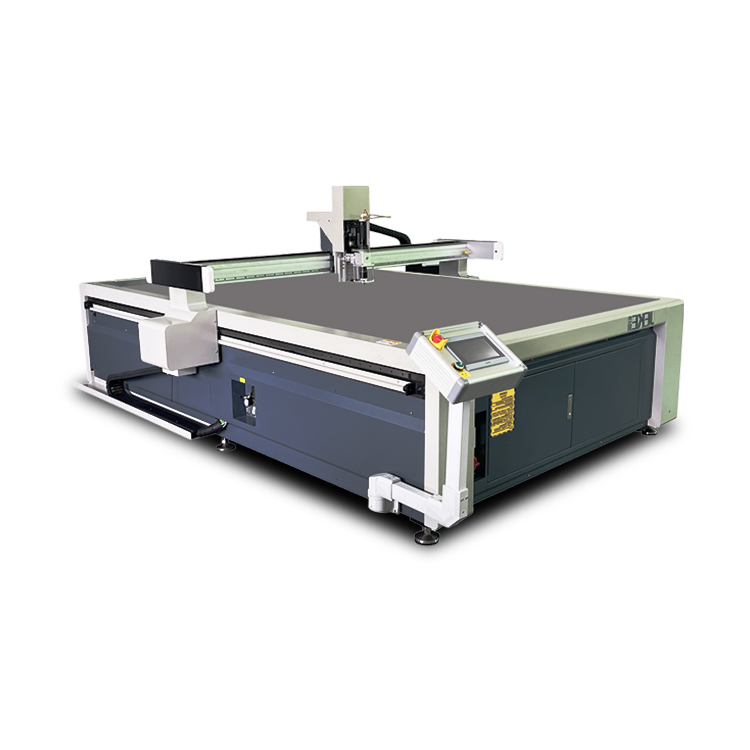
Contact JEKE to request a knife-cutting sample test. Send the material composition, thickness range, part files, edge-quality standard, defect information, production target, and photos of an acceptable finished part. A recommendation should be based on the tested material and confirmed configuration, not on a generic leather claim.
Related JEKE resources
Continue your evaluation with the JEKE leather cutting machine guide, leather cutting sample test report, laser-free cutting for PVC synthetic leather, request a leather sample test.