Buyer question: When should PVC, synthetic leather or foam be cut with a knife system instead of a heat-based process?
Short answer: Knife cutting is a practical laser-free route when the buyer wants no heat-affected edge, needs to avoid melting or scorching, or must process mixed flexible materials on one table. The final decision still depends on material composition, thickness, part geometry, ventilation rules and sample-test results.

What laser-free cutting means
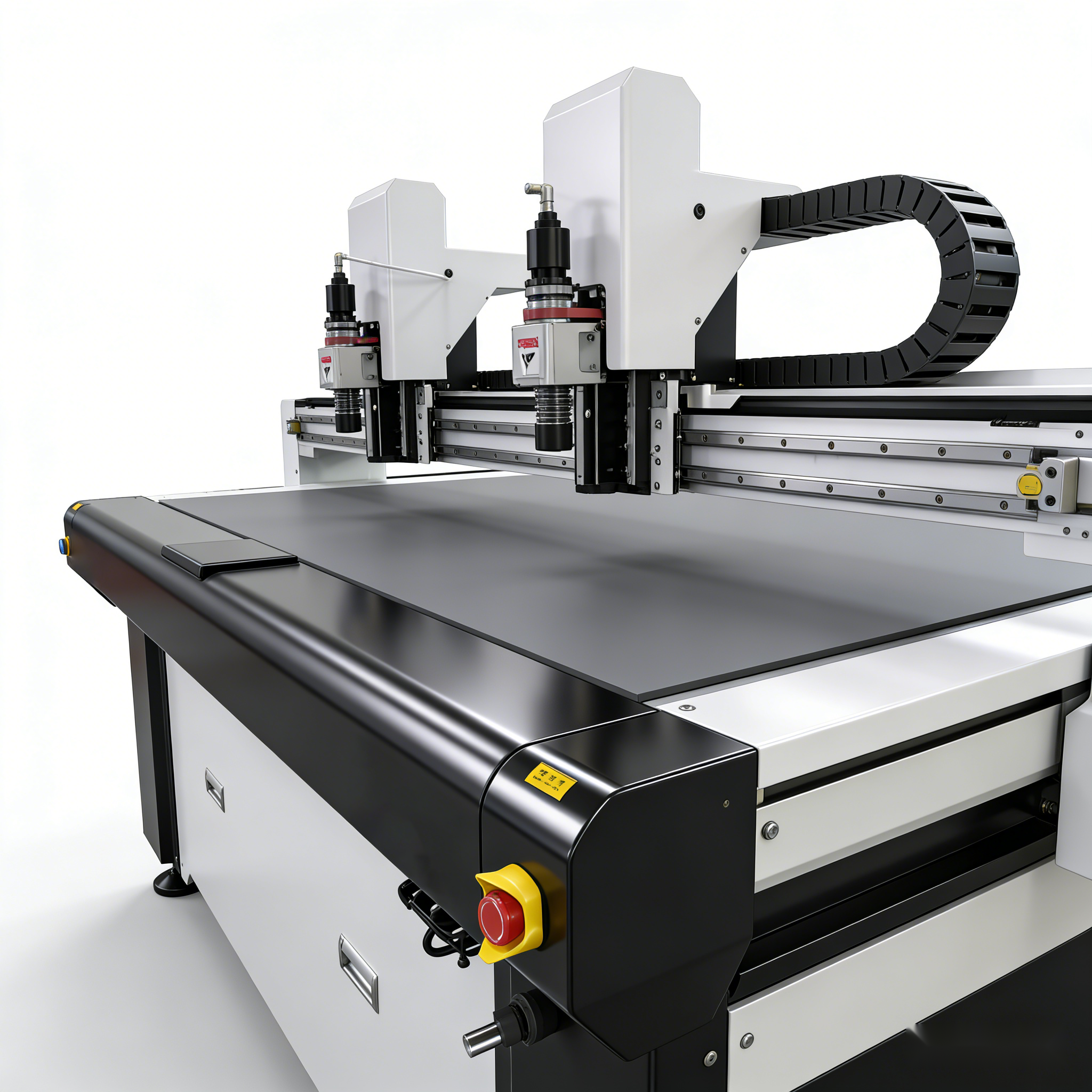
Laser-free cutting uses a physical blade rather than a focused heat source. On a CNC digital cutter, the material is held on a flatbed while an oscillating knife, drag knife, rotary knife or another tool follows the CAD path. There is no thermal cutting zone, so the evaluation focuses on blade access, edge cleanliness, compression, stretch and vacuum hold-down.
This does not mean one knife can process every material. PVC sheet, coated fabric, synthetic leather, EVA foam and sponge differ in hardness, surface friction, density and recovery after compression. Request a sample test for the exact material specification.
Material-by-material decision guide
| Material | Why buyers consider knife cutting | What to test |
|---|---|---|
| Flexible PVC sheet or mat | Avoids a heat-affected edge and supports CAD-driven shapes | Blade drag, corner quality, surface marks and local processing rules |
| Synthetic leather | Supports cutting without thermal discoloration on many constructions | Stretch, backing, vacuum marks, edge quality and nesting |
| EVA and PE foam | Oscillating tools can process different thicknesses and insert shapes | Compression, blade length, small holes and vertical edge quality |
| Sponge and soft foam | A blade can follow contours without melting the surface | Material movement, compression recovery and narrow features |
| Coated fabric | Useful when the coating or backing reacts poorly to heat | Fraying, coating separation, hold-down and feeding method |
Four reasons buyers choose a heat-free process
- Edge requirement: the finished part should not show melted, darkened or hardened thermal edges.
- Material mix: one factory may cut fabric, leather, foam and flexible sheet materials on the same platform.
- Prototype flexibility: CAD changes can be tested without creating a physical die.
- Tool combination: cutting, marking, punching or creasing can be arranged in one workflow when the configuration supports it.

Tool selection for PVC, leather and foam
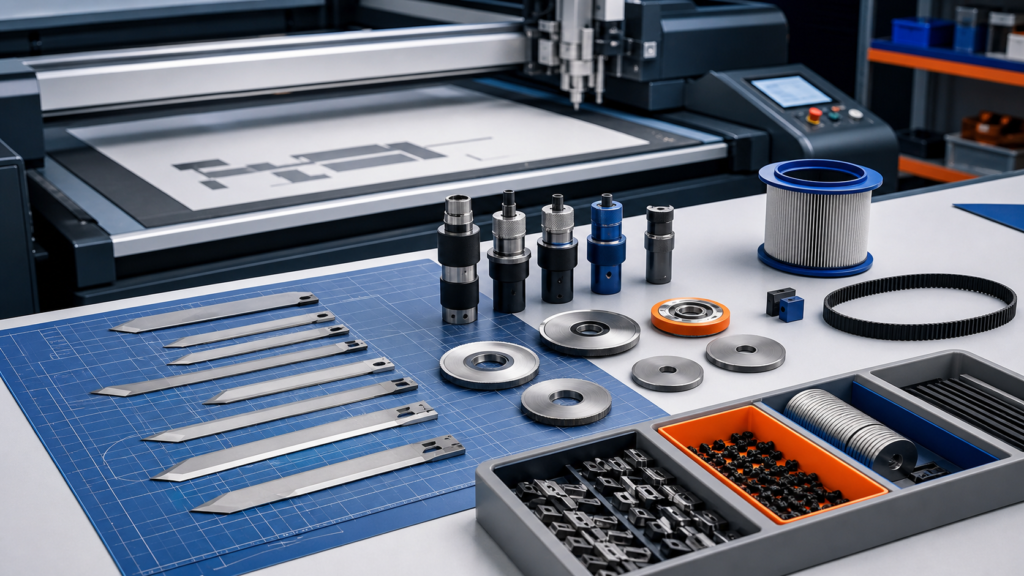
A drag knife may fit thin, easy-to-cut sheet material, while an electric or pneumatic oscillating knife may be considered for thicker, denser or more resistant material. Rotary tools can fit selected textile workflows. The correct tool depends on the test result, not only the material name.
| Decision factor | Why it matters | Evidence to request |
|---|---|---|
| Thickness and density | Determines blade length, force and cutting passes | Measured sample and selected blade specification |
| Small holes and corners | Shows whether the blade can follow tight geometry | Close-up photos with dimensions |
| Surface finish | Soft or coated material may mark under hold-down | Before-and-after surface photos |
| Edge verticality | Thick foam can deflect or compress during cutting | Side-view edge photo and parameter notes |
| Part removal | Small pieces may move or remain attached | Complete nested-sheet and waste-removal video |
Hold-down and nesting are part of cut quality
A suitable blade cannot compensate for moving material. Porous foam, curled PVC sheet and stretch synthetic leather need different hold-down strategies. Check vacuum zones, cover-film use, roll feeding and whether the material arrives flat. Nesting should leave enough space for blade movement and stable small parts.
What a useful material test should show
- Record the material name, thickness, density, backing and surface finish.
- Use a drawing that includes long curves, sharp corners, small holes and narrow parts.
- Show the selected tool, blade and main parameter settings.
- Photograph the top surface, underside and edge after cutting.
- Check dimensions, deformation, marks, odor or visible material change, then document the result.
Limits and safety checks
Knife cutting is not automatically the best process for every product. Very hard sheet, metal, highly abrasive reinforcement or geometry smaller than the practical blade radius may need another method. Before processing PVC or any coated material, confirm the material safety data, ventilation requirements and local factory rules with the material supplier and your safety team.
What to send JEKE
- A labeled material sample and its technical or safety data when available.
- Thickness, density, roll or sheet size, and whether the material has backing or adhesive.
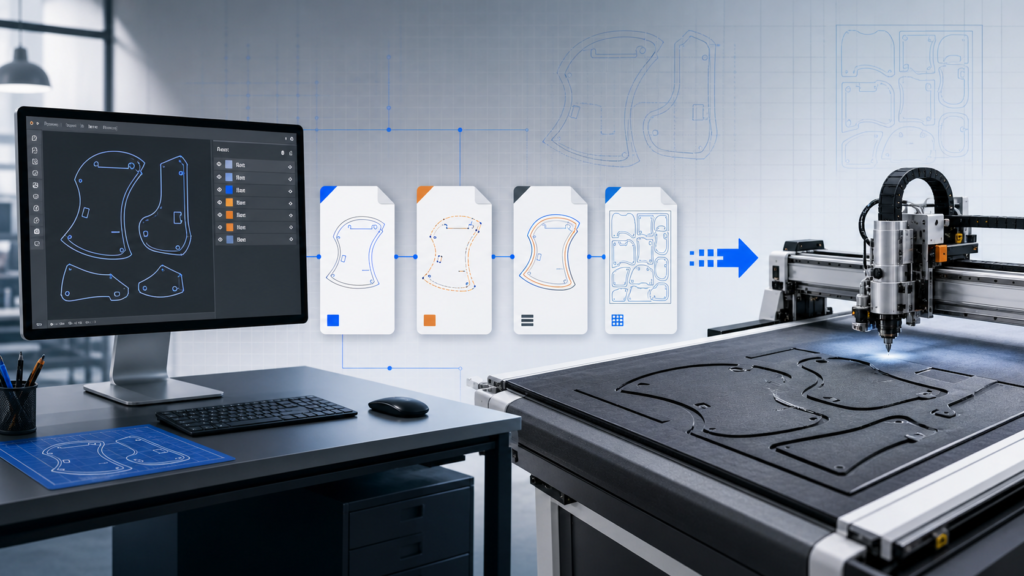
- DXF, AI or PDF drawings with the smallest hole, corner and narrow feature identified.
- Required edge quality, tolerance, output target and current cutting problem.
- Photos of defects you want to avoid, such as melting, dark edges, compression or surface marks.
Recommended next step
Send the exact PVC, synthetic leather or foam sample with a representative drawing. Compare edge quality, dimensions, hold-down and production speed before choosing the tool package and table configuration.
Useful JEKE links: Materials an oscillating knife cutter can cut · Textile fabric CNC cutting machine · CNC leather cutting machine · Contact JEKE for material testing
Buyer FAQ
Does knife cutting seal fabric edges?
No. Knife cutting is a mechanical process, so it does not thermally seal an edge. The result depends on fabric construction, coating and tool choice.
Can one oscillating knife cut every foam thickness?
No. Blade length, oscillation, material density, compression and part geometry set practical limits. Test the maximum real thickness before confirming the configuration.
Can printed synthetic leather use camera positioning?
If the cut must follow printed contours, camera positioning may be useful. Provide the printed sample and registration design for a complete test.