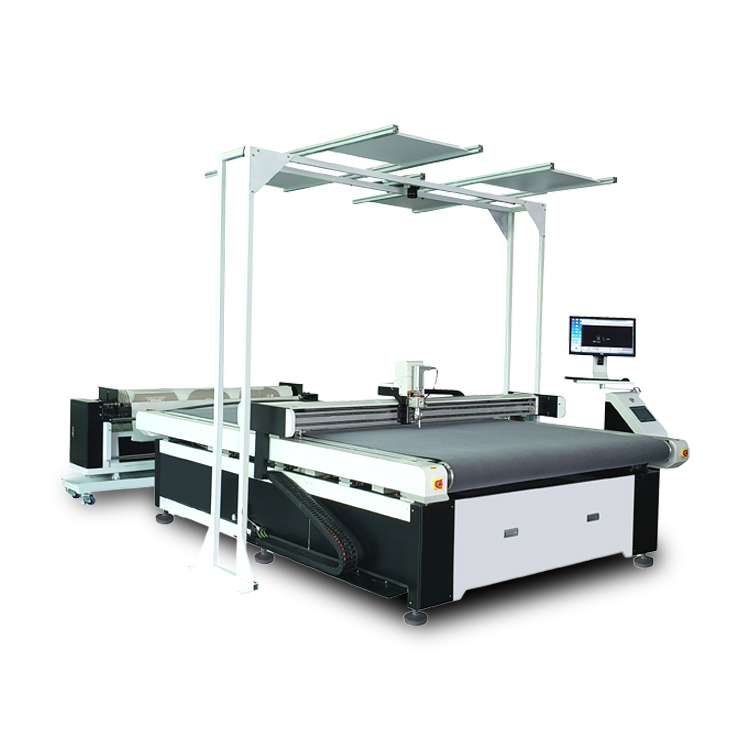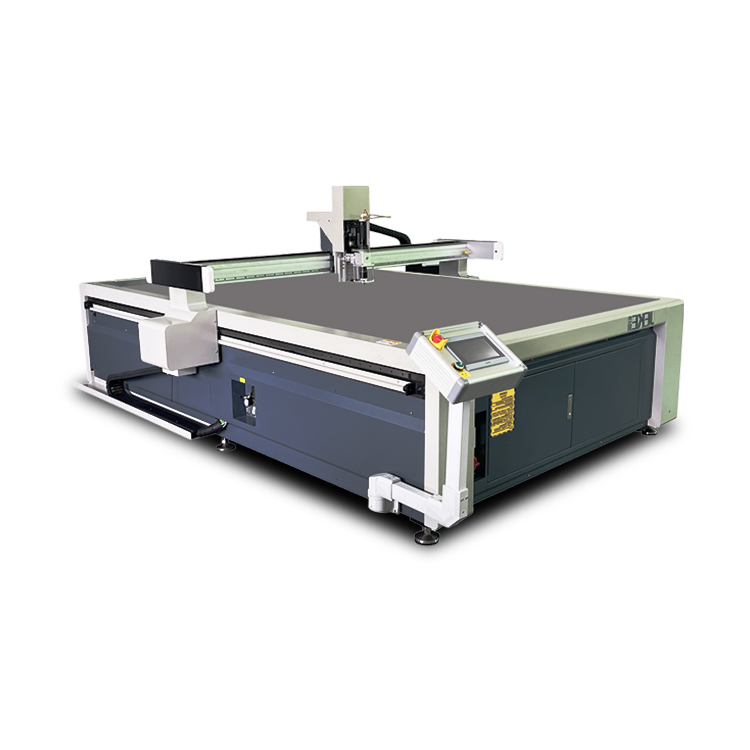
Direct answer: Single-ply cutting usually fits one-off, made-to-measure, sample-room and high-mix orders where every layer may contain a different job. Low-ply cutting can fit repeated small batches where several identical plies justify spreading and compressed cutting. The right choice depends on order mix, style-change frequency, fabric behavior, pattern matching, spreading labor, recuts and required daily output—not on a universal ply-count rule.
Made-to-order production changes the cutting-room question. A factory is no longer choosing only the fastest blade path. It is choosing how quickly an order can move from approved pattern to sorted pieces without building excess work-in-process or losing control of variants.

What single-ply and low-ply mean in this decision
Single-ply cutting processes one layer at a time, often directly from a roll or a single sheet. It is well suited to jobs where the pattern set changes frequently, each order is different, or the fabric must be scanned or matched individually.
Low-ply cutting processes a small stack of layers. It can increase the number of identical pieces produced per cutting cycle, but it introduces spreading, alignment, compression and layer-shift considerations. “Low ply” is not one fixed number; the practical stack depends on fabric thickness, permeability, compressibility and quality requirements.
Use the order mix as the first filter
| Production condition | Single-ply tendency | Low-ply tendency |
|---|---|---|
| One-off or made-to-measure orders | Strong fit | Limited benefit unless orders can be grouped |
| Many styles, colors and sizes | Reduces the need to build identical lays | Works when jobs can be batched reliably |
| Repeated small production lots | Flexible but may require more cutting cycles | Can produce several identical sets per cycle |
| Frequent last-minute changes | Easier to change the next job | Changes can disrupt a prepared lay |
| Stripe, plaid or motif matching | Each layer can be captured and adjusted | Requires a workflow that controls repeat and layer alignment |
| High-volume stable styles | May not deliver the required throughput alone | Often more suitable, with multi-ply systems considered as volume grows |
Calculate complete order-to-cut time
Compare both methods from order release to sorted pieces. Include:
- Pattern and marker preparation.
- Fabric retrieval and roll change.
- Spreading or single-layer feeding.
- Camera capture or pattern matching when required.
- Cutting, notching and marking.
- Unloading, identification and sorting.
- Recuts, replacement pieces and unused remnants.
Low-ply cutting may reduce cutting cycles but add spreading and alignment time. Single-ply cutting may require more cycles but allow orders to flow without waiting for a batch. The better choice is the one that improves total flow for the actual order mix.
Fabric behavior can override the volume calculation
Stretch, bow, skew, surface friction, air permeability, compression and print repeat all affect the decision. A low stack can still shift between layers. A single layer can distort if roll tension or vacuum is poorly controlled. Test representative fabrics, including the most elastic, delicate, porous and patterned materials in the range.
For motif, stripe or plaid work, document whether the process uses match points, repeat measurements, camera capture or operator adjustment. Official apparel-cutting workflows show that on-demand single-ply systems can connect order release to cutting and can add vision for motif fabrics. That capability should still be validated on the factory’s design and fabric variation.
Compare quality risks
| Risk | Single-ply test | Low-ply test |
|---|---|---|
| Pattern distortion | Check feed tension and hold-down on each layer | Check spreading tension and alignment across the stack |
| Layer shift | Not applicable between layers | Measure top-to-bottom part alignment |
| Edge consistency | Inspect one layer under normal feed conditions | Inspect top, middle and bottom layers |
| Pattern matching | Capture and adjust the actual layer | Verify that every layer maintains the required repeat relationship |
| Part identification | Connect each order to its cut set | Keep size, color and order groups separated through unloading |
| Recuts | Re-run the specific part and material | Avoid rebuilding a lay for one replacement piece |

When a hybrid cutting room makes sense
Some factories use single-ply equipment for samples, urgent replacements, personalized garments, printed fabrics and small mixed orders, while a low-ply or multi-layer system handles stable repeated styles. This is not a compromise if each job is routed by clear rules.
A routing rule can include order quantity, number of variants, fabric match requirement, promised lead time, lay-building time and capacity available on each system. Review the rule with real order history rather than relying on an arbitrary batch-size threshold.
Data to collect before selecting a system
- Export at least several weeks of orders by style, color, size and quantity.
- Measure how often the same material and pattern can be grouped.
- Record spreading, waiting, cutting, unloading and recut time.
- Identify fabrics that require individual pattern or print registration.
- Test the highest-volume and most difficult fabric on each candidate workflow.
- Compare finished, sorted pieces per shift—not only nominal cutting speed.

For adjacent apparel decisions, compare the single-ply and multi-layer cutter guide, apparel sample-room buying checklist, and JEKE material application overview.
How JEKE can help evaluate the workflow
JEKE manufactures digital cutting systems for single-layer flexible materials and automatic multi-layer cutting systems for fabric production. The appropriate route depends on fabric construction, order mix, compressed lay height, quality requirements and production target. No fixed number of plies should be promised without the actual material test.
Review your apparel order mix with JEKE by sharing representative order data, fabric samples, pattern files, largest roll width and required daily output.
Frequently asked questions
Is single-ply cutting only for samples?
No. It can support on-demand, customized and small-series production when the workflow is designed around frequent job changes and individual orders.
Does low-ply always produce more pieces per hour?
It can produce several plies per cutting cycle, but complete output also depends on spreading, alignment, compression, unloading, recuts and changeovers. Compare the full workflow.
Can stretch fabric be cut in low plies?
Possibly, but spreading tension, layer movement, vacuum compression and top-to-bottom consistency must be tested. A low stack does not remove the risk of distortion.
When should a factory consider a multi-layer cutter instead?
When stable, repeated production volume dominates and the factory can build consistent lays efficiently. The decision should be based on real fabric and compressed lay tests, not only on an advertised maximum ply count.
Sources and further reading
- Lectra: Virga single-ply workflow for one-off, small-series and on-demand apparel
- Zünd: Digital textile workflow, nesting, pattern matching and print-to-cut
- Kuris: Single-layer cutting for samples and small batches
Last reviewed: August 20, 2026.