Buyer question: After the machine purchase, what does an oscillating knife cutter cost to run each month?
Short answer: Operating cost is driven by production hours, blade consumption, compressed air for pneumatic tools, vacuum power, filters, routine maintenance and operator setup time. A useful estimate starts with cost per production hour, not a single monthly number.

What belongs in the operating-cost calculation?
A purchase quotation shows the initial machine cost, but it does not explain the cost of keeping the cutter productive. Buyers should separate fixed ownership costs from variable operating costs. The items below change with material type, thickness, tool choice, table size and daily workload.
| Cost item | Main cost driver | What to record |
|---|---|---|
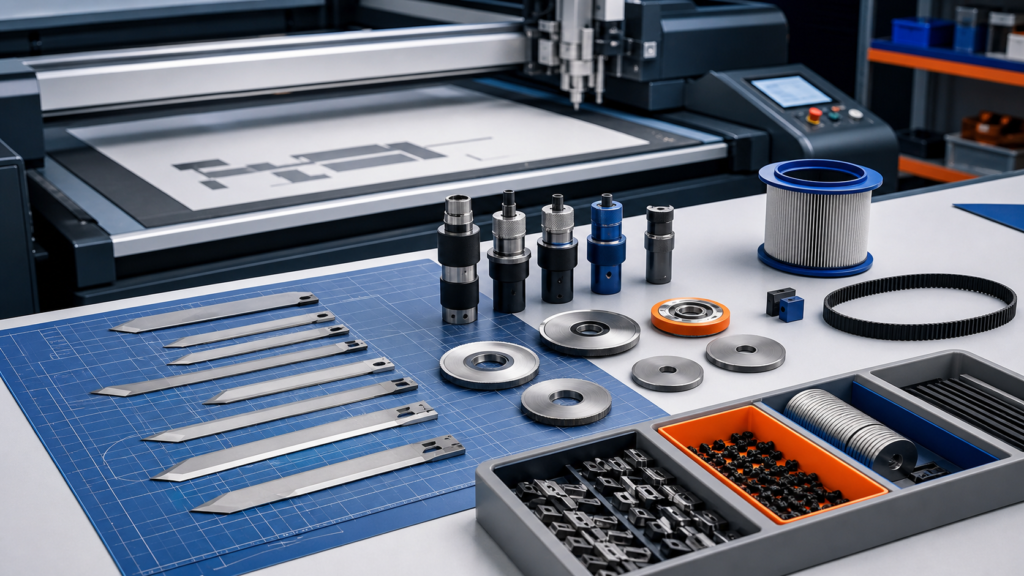
| Blades and consumables | Material abrasiveness, thickness, cut length and edge requirement | Blade type, pieces used per shift and replacement reason |
| Compressed air | Use of pneumatic oscillating tools and available factory air | Tool air requirement, compressor load and operating hours |
| Vacuum power | Table size, material permeability and hold-down requirement | Pump power, zones used and cutting hours |
| Filters and cleaning | Dust, fibers, paper particles and workshop conditions | Cleaning interval and replacement parts |
| Preventive maintenance | Production hours and working environment | Inspection, lubrication, belt and fastener checks |
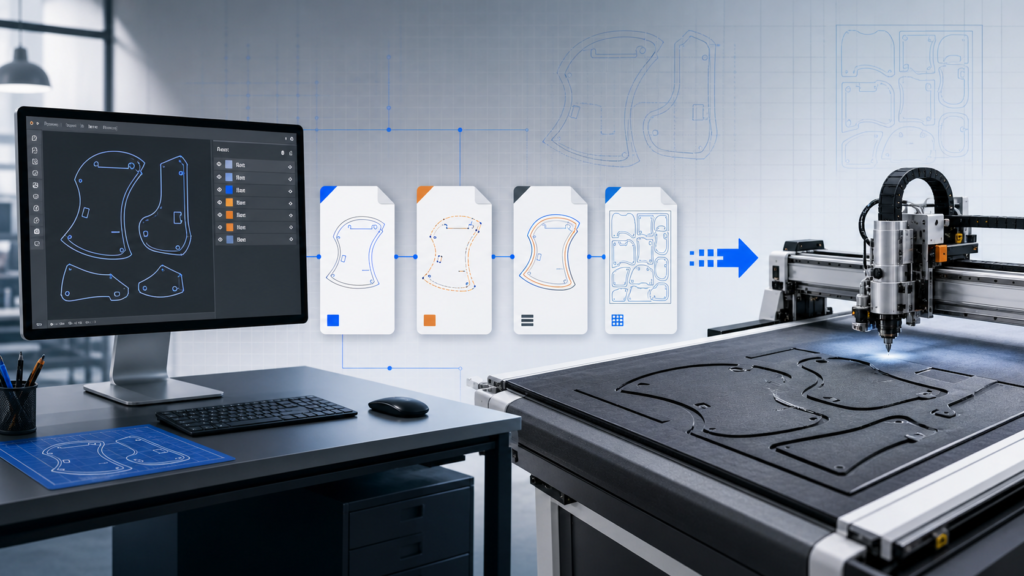
| Operator time | File preparation, nesting, loading and tool changes | Setup minutes per job and rework rate |
A practical cost-per-hour formula
Use a production-hour model so the estimate can be compared across one shift, two shifts or seasonal workloads. Add blade cost, electricity, compressed air, filters, scheduled maintenance and setup labor for the period. Divide the result by actual cutting hours, not by total factory opening hours.
Operating cost per cutting hour = (blades + electricity + compressed air + filters + planned maintenance + setup labor) ÷ productive cutting hours. Keep depreciation and financing separate if you also want a full ownership-cost model.
- Track productive cutting hours separately from idle, loading and file-preparation time.
- Record why each blade was replaced: wear, damage, wrong blade choice or edge-quality requirement.
- Measure vacuum and air use for the actual tool configuration instead of using a generic estimate.
- Include sample failures and rework because they consume material, blades and operator time.
Why blade cost varies so much
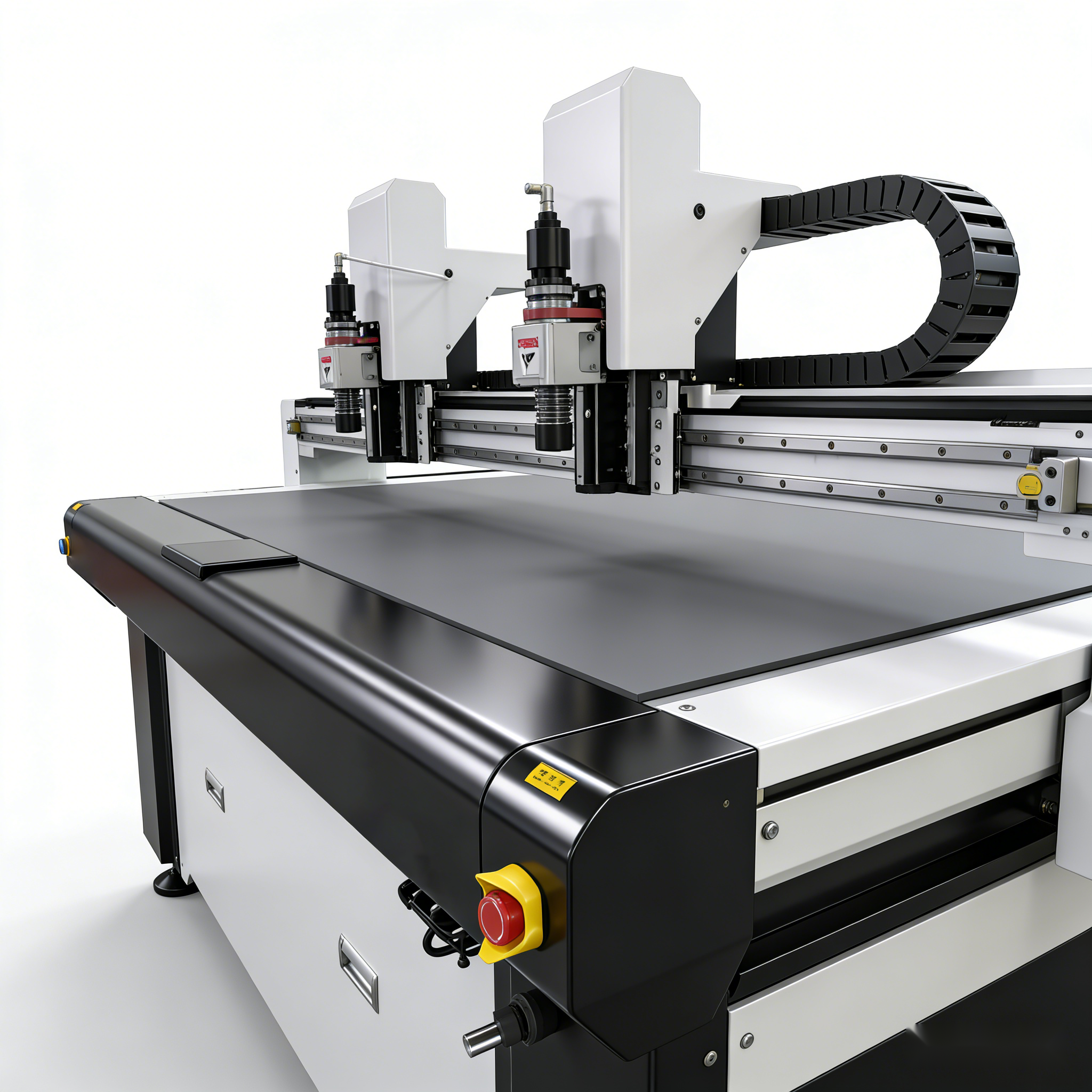
Two factories with the same cutter can report different blade consumption. Corrugated board, dense rubber, fiberglass-reinforced sheets, foam and fabric place different loads on the edge. Cutting speed, oscillation settings, blade exposure and path quality also matter. A blade that is inexpensive per piece can still be costly if the wrong geometry creates frequent changes or rejected edges.
For a realistic forecast, ask the supplier to identify the blade used during your sample test and record the material thickness, cutting speed and total cut length. That evidence is more useful than a general statement such as one blade lasts several days.
Compressed air and vacuum power
Electric oscillating tools and pneumatic oscillating tools do not use utilities in the same way. A pneumatic tool may require stable compressed air, while every vacuum table needs enough hold-down for the material. Porous fabric, foam and small parts may require stronger or more targeted vacuum zones than dense sheet material.
Do not estimate vacuum cost from pump rating alone. Record how many zones run, how long the pump operates and whether the material needs a cover sheet. Good nesting and zone control can reduce wasted vacuum time without weakening hold-down.
Maintenance that protects uptime
| Interval | Typical checks | Reason |
|---|---|---|
| Every shift | Clean table, inspect blade and confirm vacuum openings | Prevents poor hold-down and sudden blade failure |
| Weekly | Check tool fasteners, cable movement, filters and lubrication points | Catches wear before it affects accuracy |
| Monthly | Review belts, guide components, pump condition and error history | Supports stable motion and repeatable output |
| Planned service | Replace wear parts based on hours and condition | Avoids emergency downtime during urgent orders |

Information JEKE needs for an operating-cost estimate
- Material name, thickness, density and whether it contains abrasive reinforcement.
- Expected cutting hours per shift, shifts per day and working days per month.
- Part drawings or typical cut length, plus required edge quality and tolerance.
- Selected tool package, table size, vacuum pump and local electricity information.
- Available compressed-air pressure and whether pneumatic tools will run continuously or only on selected jobs.
Recommended next step
Ask for two separate numbers: the machine quotation and an operating-cost worksheet based on your material test. This keeps the buying decision tied to real production hours, rather than treating purchase price as the only cost.
Useful JEKE links: Digital cutting machine price and configuration guide · Digital Cutting Machine · JK-2225 CNC computer cutting machine · Contact JEKE for an operating-cost estimate
Buyer FAQ
Is blade cost always the largest operating expense?
Not always. On some materials blade cost is visible, while lost time from setup, rework or weak hold-down costs more. Track both consumables and productive hours.
Can JEKE estimate monthly cost without a sample?
An initial range is possible from material and workload data, but a real sample test gives a better basis for blade, tool and speed assumptions.
Should spare parts be included in the first order?
A starter stock of blades, filters and configuration-specific wear parts can reduce downtime. The list should match the selected tools and expected workload.