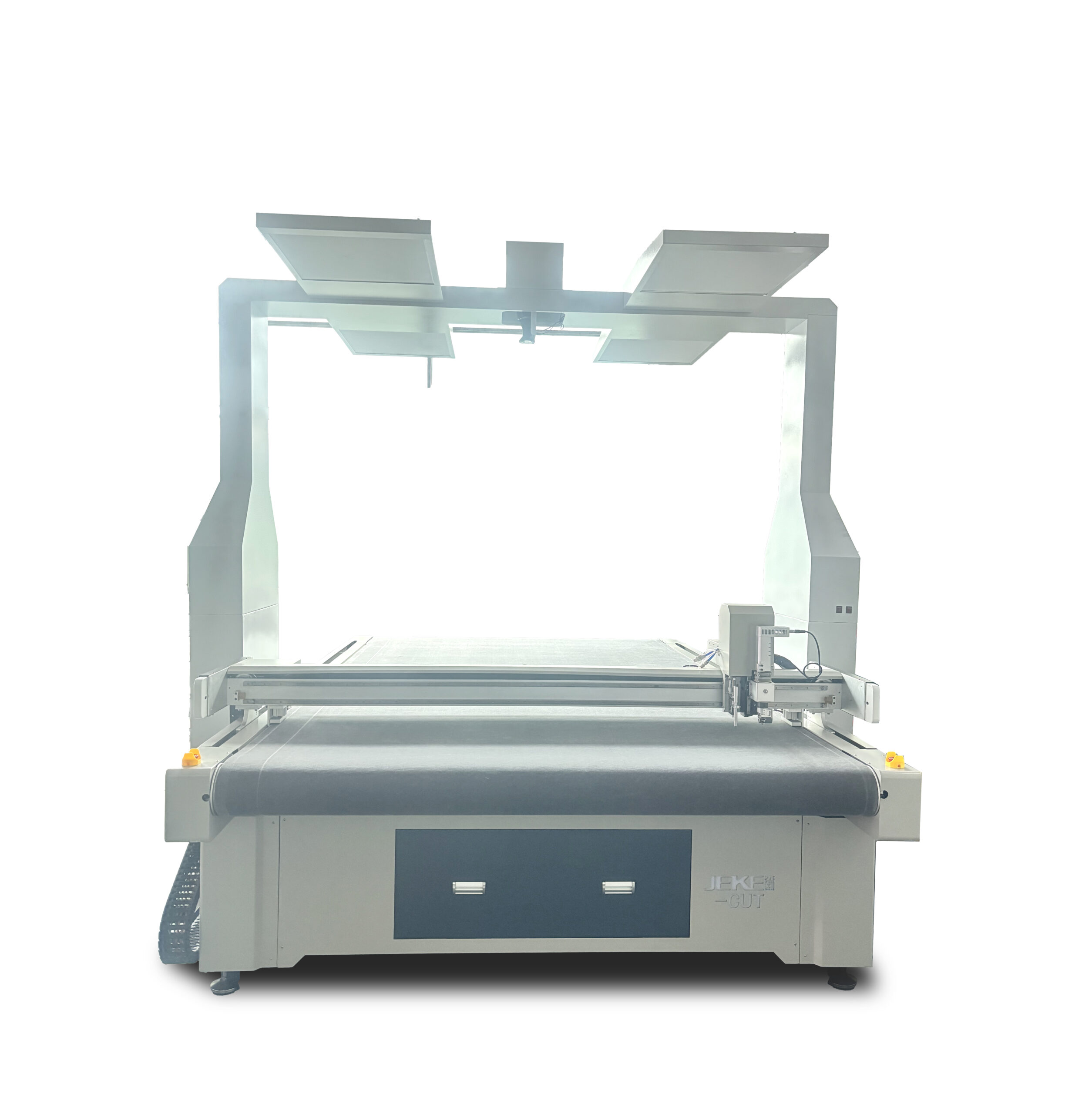
Digital cutting machine price is not a single fixed number. Two machines may look similar in photos, but the final quote can be very different because the table size, tool head, vacuum system, camera option, feeding method, software workflow, packaging and after-sales scope are not the same.
This is why a useful digital cutting machine price should always be connected to a real configuration. A small sample-room cutter for flexible sheets is not the same as a production cutter with a larger table, stronger vacuum, camera positioning and multiple tool heads. A machine for cardboard samples is not the same as a machine for printed fabric, leather, EVA foam or automotive mats.
JEKE already has a general guide on digital cutting machine price and cost factors. This article focuses on the configuration side: what changes the quote, how to compare supplier offers and what information you should send before asking for a serious price.
Quick Answer: Why Digital Cutting Machine Quotes Differ
Use this table to understand why two quotes may not be directly comparable.
| Quote factor | Why it changes price | What to confirm |
|---|---|---|
| Table size | Larger working area needs a larger frame and table system | largest material and finished part size |
| Tool head | Different materials need different knives or functions | cutting, creasing, marking, punching or camera work |
| Material type | Thickness, density, stretch and surface finish affect configuration | real material samples and thickness |
| Vacuum holding | Soft or moving materials need stronger holding | material movement during cutting |
| Camera system | Printed materials may need recognition and correction | registration marks or contour cutting need |
| Feeding method | Roll or repeated production may need conveyor support | sheet, roll or batch workflow |
| Software workflow | File formats and nesting affect daily operation | CAD file, nesting and operator process |
| Installation scope | Training, spare parts and shipping change total cost | destination, voltage and support expectations |
The lowest number is not always the lowest real cost. If the machine cannot hold the material, cut the required thickness or match the production file, the buyer may lose more money through rework, slow output or unusable samples.
Price Factor 1: Material and Cutting Result
The first question should not be “How much is the machine?” It should be “What material do you need to cut, and what result is acceptable?”
Different materials affect the tool and table configuration:
- fabric may require stable holding and smooth cutting
- leather may require surface protection and clean visible edges
- EVA foam may require thickness and rebound testing
- cardboard may require cutting and creasing
- printed materials may require camera positioning
- rubber or gasket material may require stronger knife settings
- automotive mats may require large patterns and repeatability
For flexible material buying logic, start with JEKE’s CNC knife cutting machine buyer checklist. It helps buyers think through material, thickness, edge quality and production target before asking for a quote.
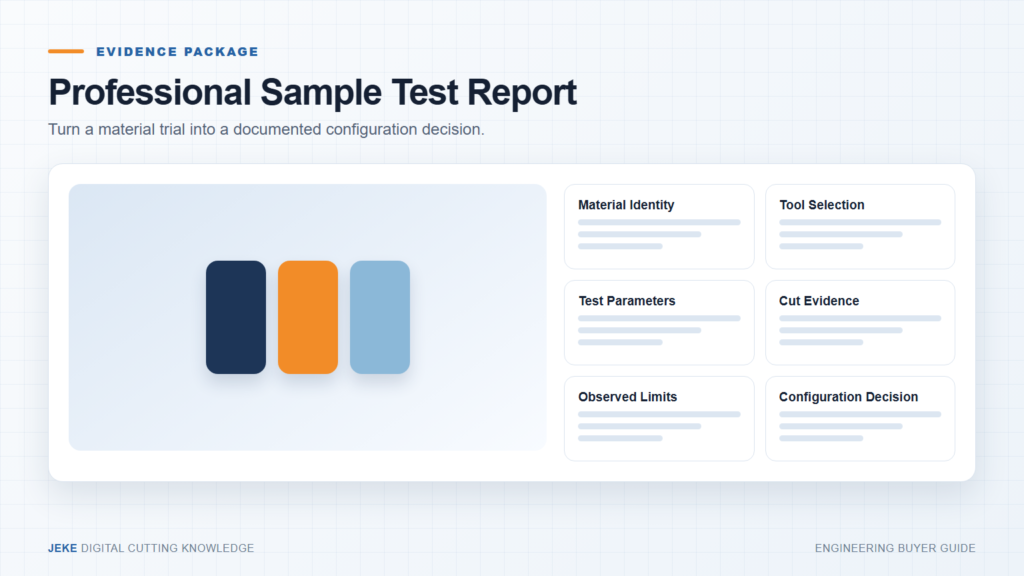
If the material is unusual, coated, elastic, thick or expensive, sample testing is the safest way to avoid a wrong configuration. JEKE’s material sample testing guide explains what to send before confirming a machine.
Price Factor 2: Table Size and Working Area
Table size is one of the most obvious price factors. A larger table usually means more frame material, larger working area, more vacuum zones and a bigger shipping package. But the right table size is not simply the largest one you can buy.
Choose the working area based on:
- largest material sheet or roll width
- largest finished part
- whether the part needs rotation or nesting space
- operator loading direction
- workshop space
- future product plans
A table that is too small limits what you can cut. A table that is much larger than necessary can waste budget and floor space. For many buyers, the best choice is the smallest working area that comfortably supports current production and near-future jobs.
Price Factor 3: Tool Head Configuration
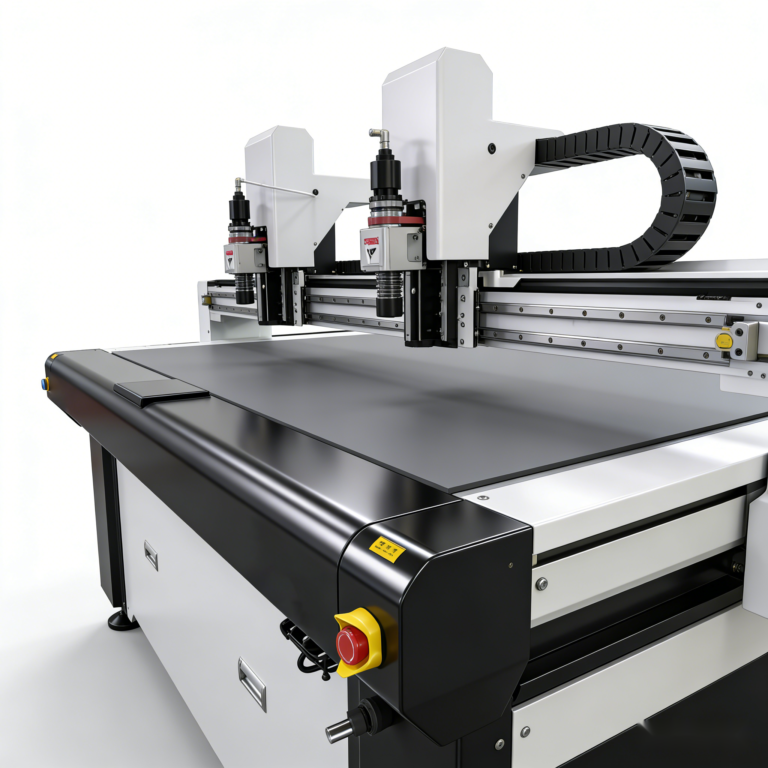
The tool head is where many price differences appear. A basic configuration may include one cutting tool. A more complete configuration may include multiple tools for cutting, creasing, marking or punching.
Common tool options include:
- oscillating knife for many flexible and semi-rigid materials
- rotary knife for some textile and fabric workflows
- drag knife for thinner materials
- creasing tool for cardboard and packaging samples
- marking pen for reference lines
- punching or notching tools for specific production needs
- multi-tool head for mixed materials and mixed operations
The tool choice should be based on real material and real cutting shape. A supplier can quote a lower price by removing tool functions, but that may not be useful if your production needs creasing, marking or a stronger cutting tool.
For product-level comparison, review the JK-2025 Automatic Knife Cutting Machine and the JK-2225 CNC Computer Cutting Machine pages.
Price Factor 4: Camera, Feeding and Vacuum
Camera positioning, feeding method and vacuum holding are often the difference between a simple machine and a production-ready configuration.
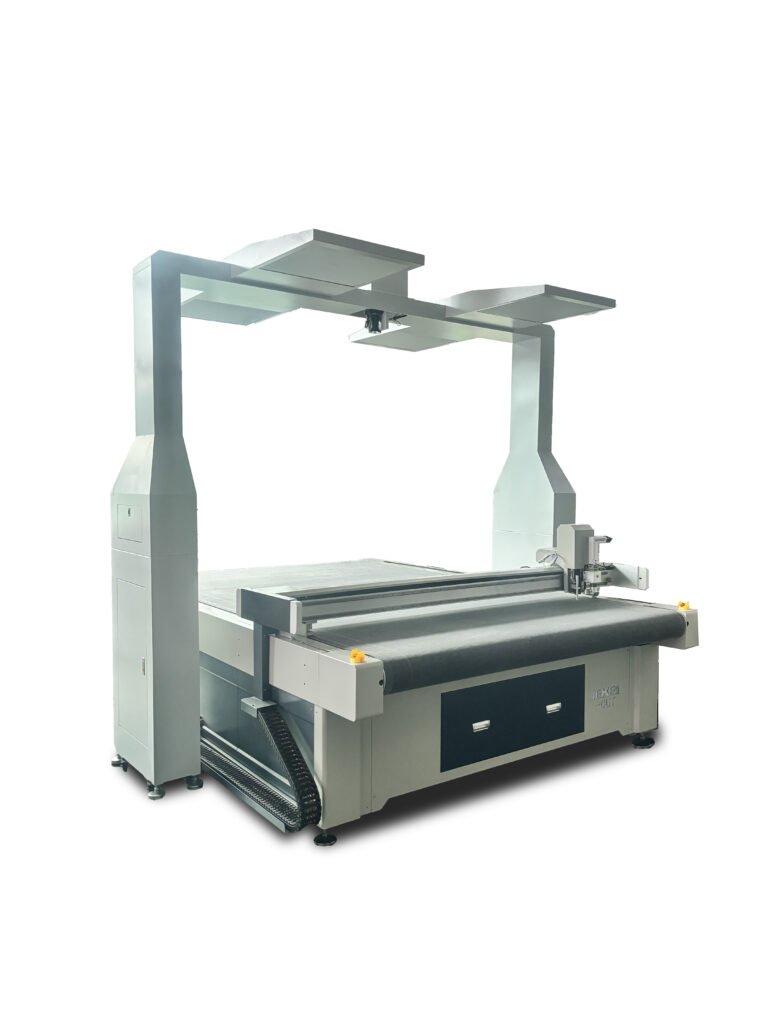
Camera positioning
Printed fabric, labels, stickers, film and printed cardboard may require camera positioning. If the cutting path must follow the real printed position, a standard file-only cutting workflow may not be enough.
For printed materials, compare this with JEKE’s CCD camera cutting machine guide.
Feeding method
Sheet materials may work well on a flatbed table. Roll materials or repeated production may need feeding support or a conveyor workflow. The quote should clearly state whether feeding is included.
Vacuum holding
Vacuum holding affects cutting accuracy. If the material shifts during cutting, even a precise machine cannot produce accurate parts. Stronger vacuum, more zones or a larger table system can change the final price.
For broader product direction, use JEKE’s Digital Cutting Machine category as a starting point.
Price Factor 5: Software, Installation and After-Sales Scope
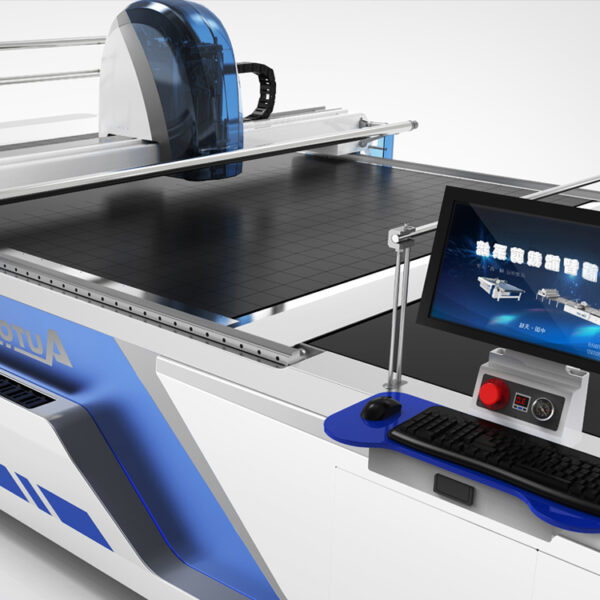
A digital cutter quote should not only include the machine body. Buyers should also check software, training, spare parts, packaging, shipping and support.
Important questions include:
- What file formats does the software support?
- Is nesting included or optional?
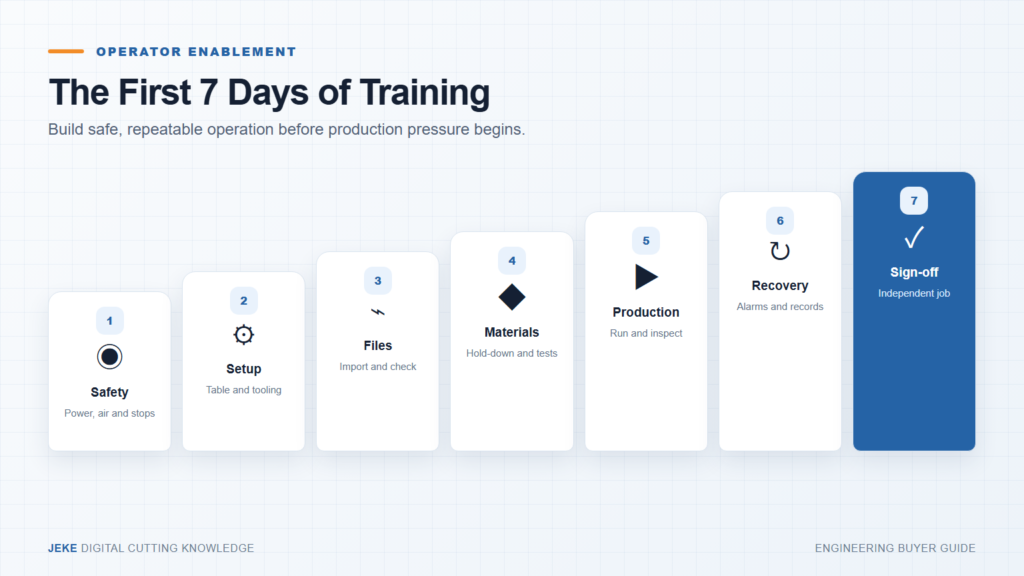
- Is operator training included?
- Are spare blades or consumables included?
- What voltage and power setup are required?
- Is air supply needed for any tool?
- How is the machine packed for export?
- What after-sales support is included?
JEKE’s installation requirements guide explains what buyers should prepare before the machine arrives.
Three Practical Buyer Scenarios
Scenario 1: Sample room or small batch buyer
A sample room may not need the largest production table. The buyer may care more about file changes, sample accuracy, material testing and basic tool versatility.
For this case, the quote should focus on table size, essential tools and sample testing. Paying for a large production system may not be necessary at the beginning.
Scenario 2: Packaging or printed material buyer
A packaging or printed material buyer may need cutting, creasing, camera positioning or repeated short-run production. A low quote without creasing or camera functions may not solve the real workflow.
For this case, compare tool functions and printed-material requirements carefully before judging price.
Scenario 3: Production factory with daily output target
A production factory may need a larger table, stronger vacuum, better feeding, spare parts, training and a more complete support scope.
For this case, the buyer should compare total production capability, not only machine price. A cheaper configuration may become expensive if it slows output or requires too much manual handling.

How to Compare Two Supplier Quotes
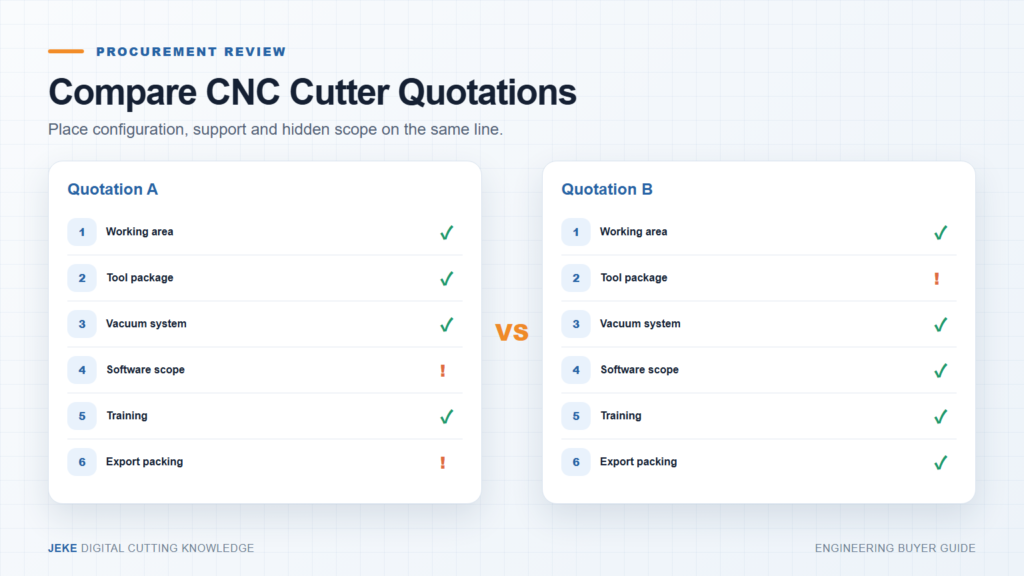
When two suppliers give different prices, compare the configuration line by line.
Check:
- Is the table size the same?
- Are the tool heads the same?
- Is camera positioning included?
- Is the vacuum system described clearly?
- Is feeding or conveyor support included?
- Is software and nesting included?
- Are spare parts and blades included?
- Are packing and shipping terms clear?
- Is installation or remote training included?
- Was the quote based on real material testing?
If the quote does not list these details, ask for clarification before comparing prices. A lower price may simply mean fewer functions, smaller table size or missing support.
What to Send JEKE for an Accurate Quote
To get a serious digital cutting machine quote, send practical production information.
Prepare:
- main material name
- material thickness
- sheet size or roll width
- largest finished part size
- sample drawing or CAD file
- edge quality requirement
- cutting, creasing, marking or punching needs
- whether printed alignment is required
- daily output target
- current cutting method and pain point
- destination country or port
- workshop voltage and space limitations
If you are not sure what to prepare, use JEKE’s CNC cutter quote checklist before contacting the team.
JEKE Recommendation
JEKE recommends treating digital cutting machine price as a configuration result, not a catalog number.
Start with material, thickness, largest cutting size, drawing file and production target. Then confirm table size, tool head, vacuum holding, camera requirement, feeding method and installation scope. If the material is important or difficult, request sample testing before confirming the final configuration.
For a practical quote, send your material details, drawings, production target and destination through the JEKE contact page. Our team can help match the configuration to your real workflow.
FAQ
Why cannot JEKE give one fixed digital cutting machine price immediately?
Because the correct price depends on table size, material, tool head, camera, feeding, vacuum, software and support scope. A fixed number without configuration may be misleading.
Is the cheapest digital cutter enough?
It may be enough for simple materials and small jobs, but it may not support thicker materials, printed alignment, creasing, larger parts or production output. The buyer should compare the real configuration.
Does a larger table always cost more?
A larger table often increases cost, but the correct table should be chosen by material size and finished part size. Oversizing can waste budget, while undersizing can limit production.
Do I need a camera system?
You may need camera positioning if you cut printed fabric, labels, stickers, film or printed cardboard where the cutting path must match the real printed position.
Does sample testing affect the quote?
Yes. Sample testing helps confirm tool choice, cutting speed, edge quality and whether special holding or camera functions are needed.
What is the fastest way to get a serious quote?
Send material type, thickness, size, drawing file, sample photos, production target, required functions and destination country. The more complete the information, the more useful the quote.
Conclusion
Digital cutting machine price depends on configuration. Table size, material, tool head, camera positioning, feeding, vacuum, software and support scope all affect the final quote.
Instead of chasing the lowest number, compare what is included. A useful quote should match your material, file, production target and workshop conditions. That is the only way to choose a machine that works after it arrives.