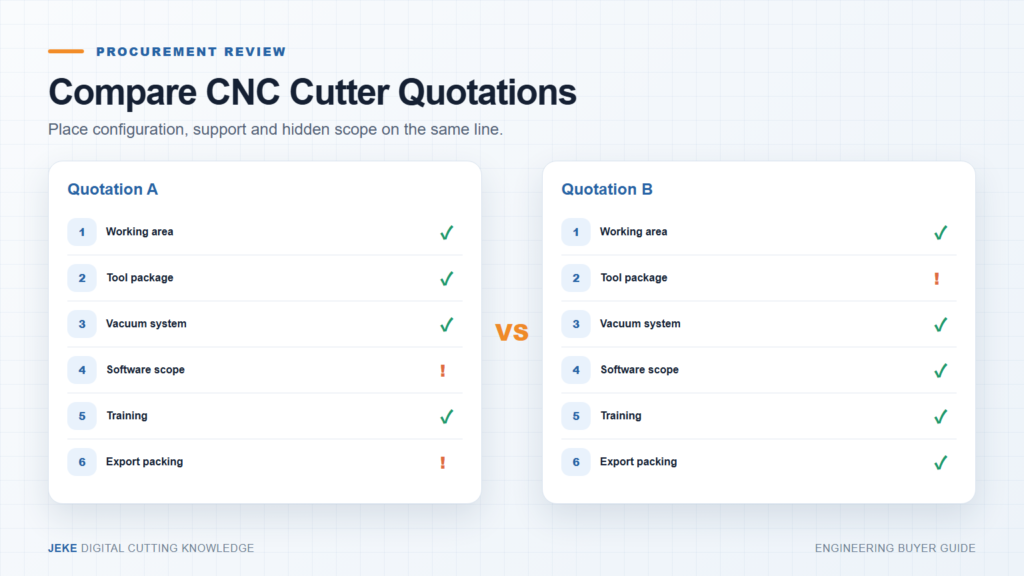
To compare CNC cutter quotations fairly, buyers need to convert different supplier documents into one common scope. Two offers can use the same machine description while including different working areas, tools, pumps, software, packing, training and spare parts. The lowest total is not meaningful until those lines are normalized.
Write the production requirement above the price table
Begin with material, maximum thickness, largest pattern, sheet or roll format, daily output, required processes and destination. This prevents the comparison from rewarding a cheaper configuration that does not fit the job.
If the suppliers quoted against different assumptions, stop and send the same requirement to both. A quotation comparison cannot repair a missing material test or an undefined production target.
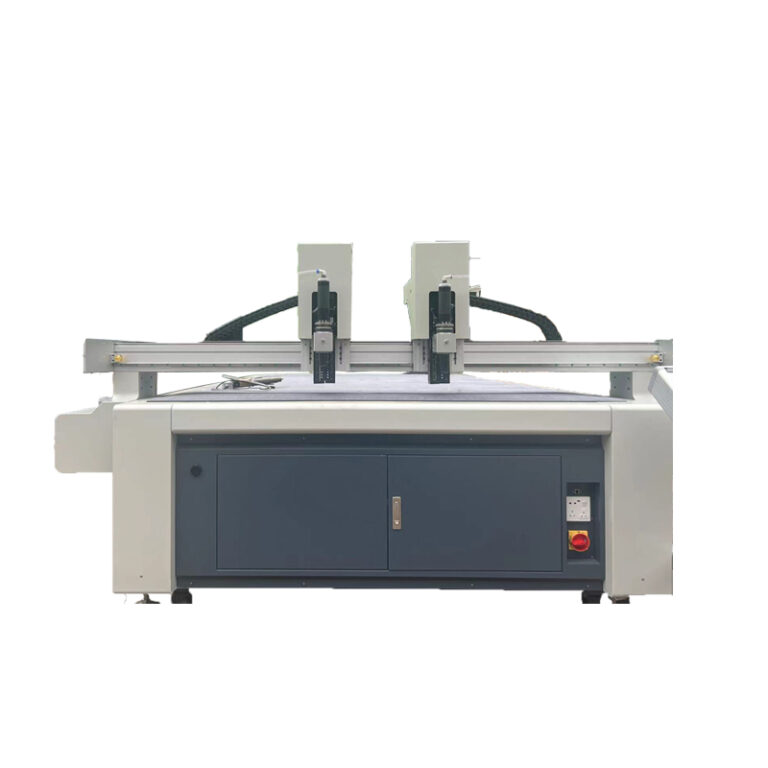
Normalize the hardware line by line
| Comparison line | Details that must be explicit | Common hidden difference |
|---|---|---|
| Working area | Usable cutting width and length, not only external size | Quoted model name hides a smaller usable area |
| Table and feeding | Fixed, conveyor, roll holder and collection method | Manual handling is excluded from the workflow |
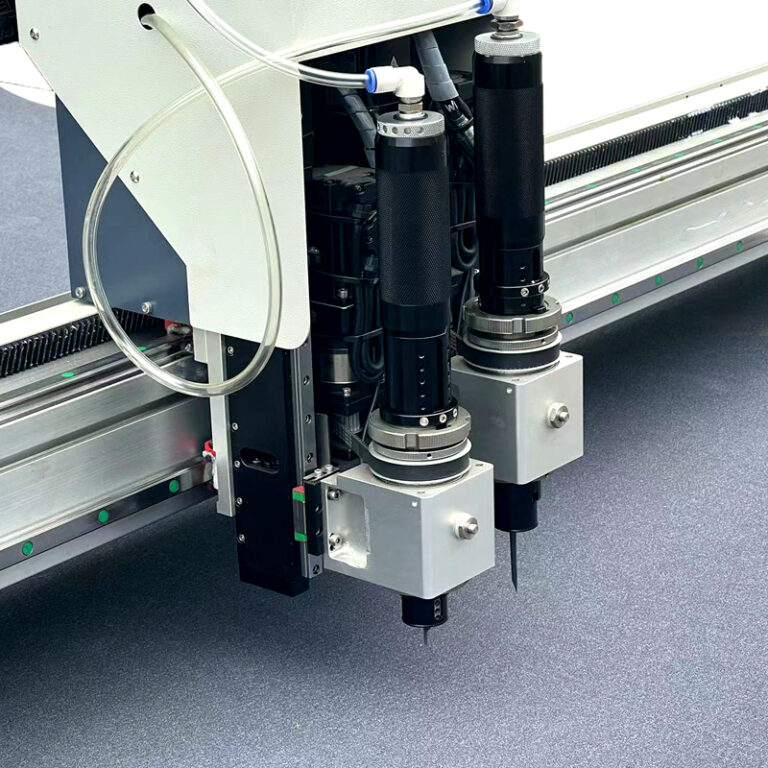
| Tool package | Tool-head model, blade type, quantity and included holders | A tool is optional or uses a different actuation method |
| Vacuum system | Pump configuration, power and included connections | Pump or electrical setup is priced separately |
| Camera and marking | Hardware, software function and calibration scope | Camera is shown in photographs but not included |
| Control components | Controller, motors, interface and applicable electrical standard | Brand claims replace a complete component list |
Compare software by workflow and license
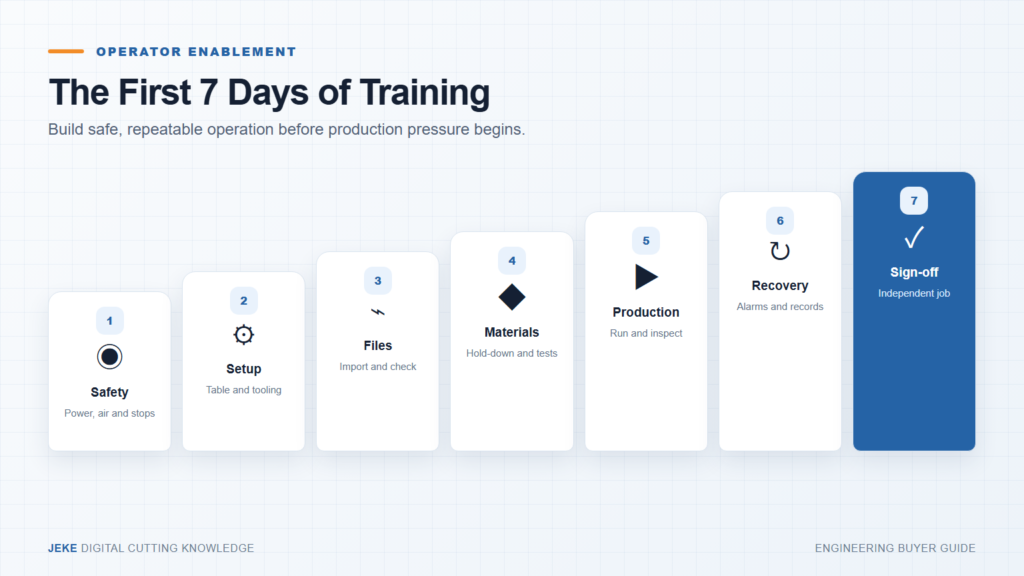
Ask which file formats the quoted system imports, whether nesting is included, how jobs reach the controller, which operating system is supported and whether the license is permanent, device-bound or subscription-based. Training should cover the actual buyer file, not only a factory sample.
For printed material, separate camera hardware from recognition software and workflow setup. For multi-process work, confirm how cut, crease and mark layers are assigned.
Bring testing, packing and delivery into the same table
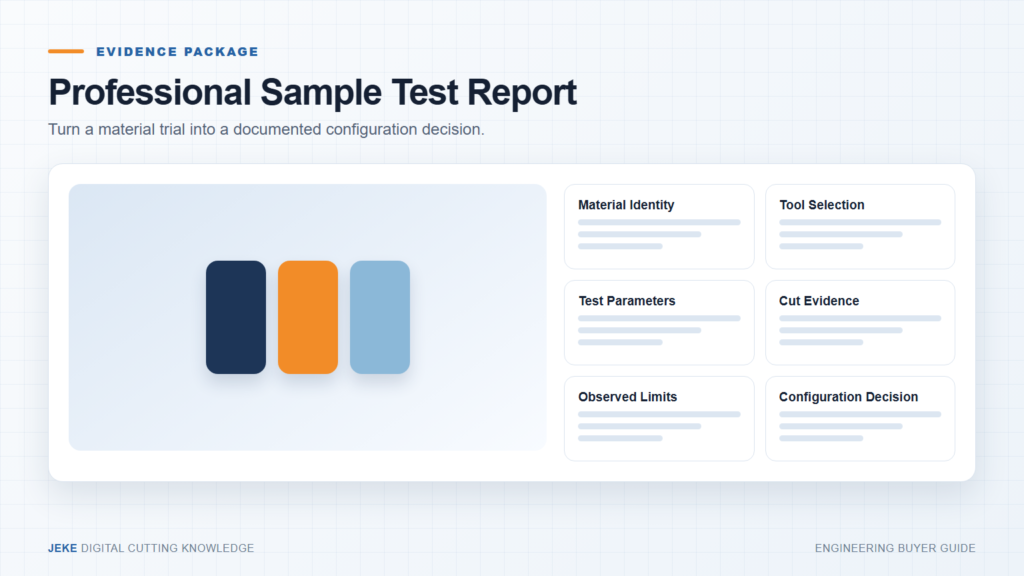
One quotation may include a buyer-material test, export crate, accessory list and pre-shipment video while another lists only the machine. Compare:
- Sample-test scope and whether the buyer receives the report and cut sample.
- Factory acceptance evidence and correction procedure.
- Export packing, crate, moisture protection and package count.
- Incoterm, named place and costs excluded after cargo handover.
- Manuals, remote installation, operator training and troubleshooting channel.
- Starter blades, consumables and recommended critical spares.

Mark every blank line as an open commercial risk
Blank does not mean included. Use three states: included with a specific description, excluded, or clarification required. Ask the supplier to update the quotation rather than accepting important explanations only in chat messages.
Be cautious with guaranteed savings, production rates without material conditions, universal accuracy claims and product photographs that do not match the configuration list. A useful quotation explains assumptions and limits.
Compare evaluated cost, not only purchase price
Add required local electrical work, compressor or extraction, unloading, taxes, software, initial spares, training and the cost of an uncovered process. Then consider downtime risk and how quickly a configuration-specific part can be identified and shipped.
Use the existing digital cutting machine price guide, accurate quote input checklist and supplier deposit checklist together. Review available digital cutter configurations or ask JEKE for a line-item quotation based on one defined requirement.