
Choosing a CNC foam cutting machine is not only about table size or price. Foam packaging inserts can look simple, but EVA, EPE, XPE and sponge behave very differently during cutting. A machine that works well for one material may need a different tool, speed, blade length, vacuum setup or testing method for another.
For packaging suppliers, tool box insert makers, electronics packaging teams and sample rooms, the real question is practical: can the machine cut the outer shape, inner cavity, slots and grooves cleanly enough for the product to fit?
This guide explains how to choose a CNC foam cutting machine for EVA, EPE, XPE and sponge packaging inserts. If you are still comparing flexible material cutting systems in general, start with JEKE’s CNC knife cutting machine buyer checklist first, then use this foam guide to narrow the configuration.
Quick Answer: Which Foam Cutting Setup Fits Your Job?
Use the table below as a first filter before asking for a quote.
| Foam job | Better first direction | Key configuration check |
|---|---|---|
| EVA precision inserts | CNC foam cutting machine with knife tool | Edge quality and cavity accuracy |
| EPE protective packaging | Knife cutter with stable holding | Compression and material movement |
| XPE packaging inserts | Digital knife cutting workflow | Thickness, rebound and repeatability |
| Sponge or soft foam | Low-pressure cutting test | Deformation during cutting |
| Grooved foam inserts | Knife plus grooving or bevel option | Groove depth and angle |
| Mixed foam sample room | Flexible digital cutting machine | Tool change and material testing |
If the insert has only simple outer shapes, the decision may be straightforward. If it has deep cavities, narrow slots, tight corners, layered foam or soft material that compresses easily, sample testing becomes much more important than a catalog specification.
What a CNC Foam Cutting Machine Actually Does
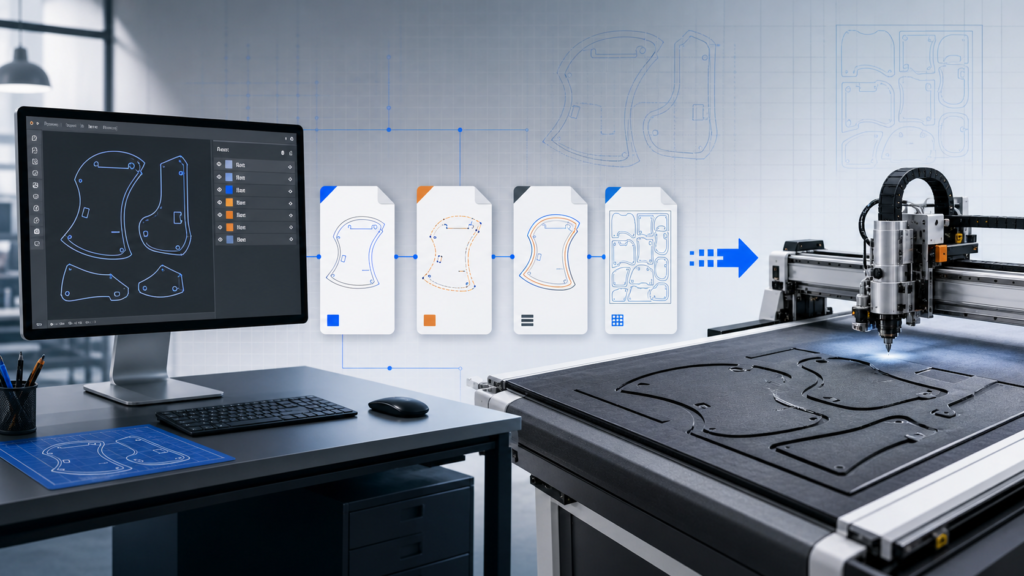
A CNC foam cutting machine uses a digital cutting path to cut foam sheet materials into specific shapes. For packaging inserts, this can include outer contours, inner holes, slots, grooves and sample shapes used for product fitting.
The main value is flexibility. Instead of making a physical die for every new insert design, the operator can adjust the drawing file and cut a new sample. This is useful when a customer changes the product size, box layout, foam thickness or insert shape.
For EVA inserts, the buyer often wants clean edges and accurate cavities. For EPE or XPE protective packaging, the buyer may care more about thickness, shock absorption and material holding. For sponge, the buyer must check whether the material deforms under cutting pressure.
JEKE’s CNC EVA Cutting Machine is the most relevant product direction when your main application is EVA foam inserts, protective packaging or custom foam sample cutting.

EVA, EPE, XPE and Sponge: Why Material Behavior Matters
Many buyers ask whether one CNC foam cutting machine can cut EVA, EPE, XPE and sponge. The better answer is: one platform may support multiple foam materials, but the tool setup and cutting parameters should be tested by material.
| Material | Common use | Cutting concern | What to test |
|---|---|---|---|
| EVA foam | Tool boxes, electronics inserts, display packaging | Dense material and clean cavity edges | Blade type, edge finish, inner-hole accuracy |
| EPE foam | Protective packaging, cushioning, shipping inserts | Soft material and compression | Holding method, rebound, cut stability |
| XPE foam | Protective packaging and shaped inserts | Thickness and elastic recovery | Blade length, repeatability, cavity size |
| Sponge | Soft pads and flexible inserts | Deformation under pressure | Cutting pressure, speed, product fit |
This is why material names alone are not enough. Two EVA sheets can cut differently if density, hardness or thickness changes. Two sponge materials can behave differently if one compresses more easily. A supplier needs the real sample or at least detailed material data before giving a reliable configuration recommendation.

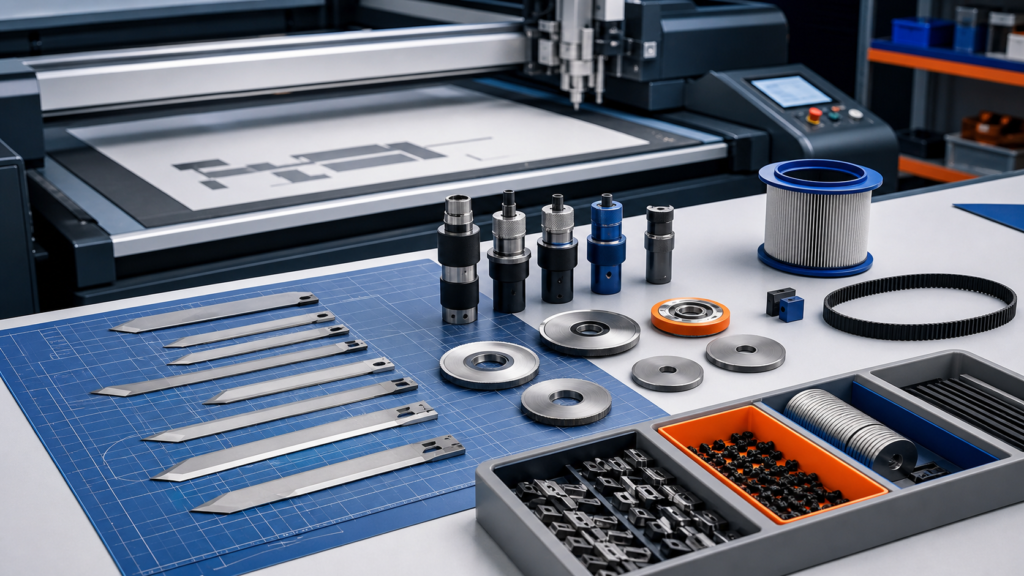
Tool Configuration: Knife, Pneumatic Tool, Grooving and Holding
For many foam packaging insert jobs, an oscillating knife or similar digital knife tool is the first direction to test. It cuts by physical blade movement, which is useful for many flexible and non-metallic materials.
If your foam is thicker, denser or harder, a pneumatic knife or a longer blade setup may be needed. If the insert needs grooves, bevels or partial-depth cuts, the tool configuration becomes more specific. If the insert has deep pockets, the supplier may need to evaluate whether knife cutting alone is enough or whether another process is required for the desired cavity finish.
The holding method also matters. Soft foam can move, lift or compress during cutting. A vacuum table can help, but the real result depends on material porosity, sheet size, thickness and cutting path. Very small parts or narrow slots may require additional process testing.
If you are comparing knife cutting with thermal cutting, JEKE’s oscillating knife cutter vs laser cutter guide explains why flexible materials often need a cold cutting decision rather than a laser-first decision.
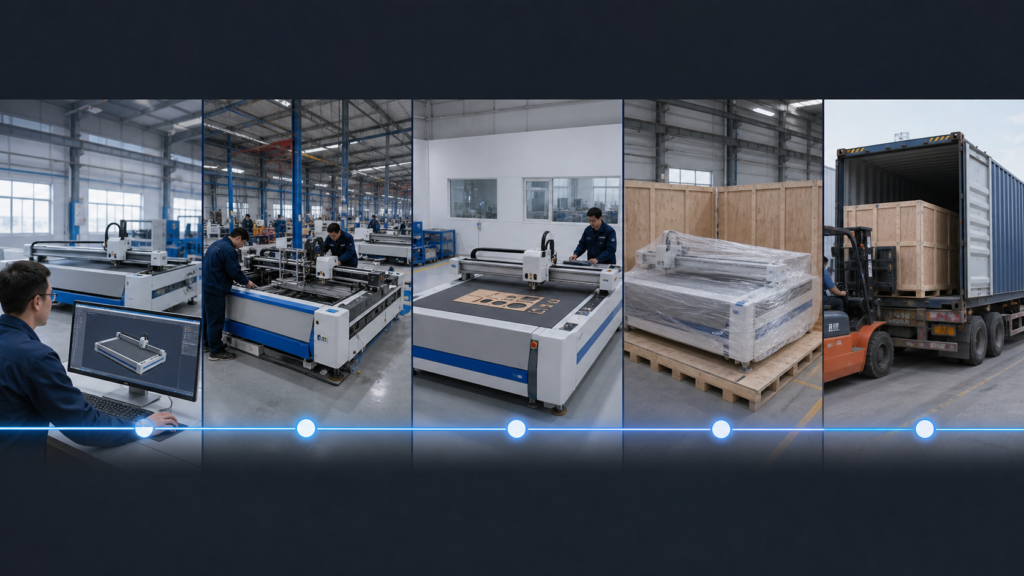
Packaging Insert Workflow: From Drawing to Sample Approval
A good foam cutting workflow starts before the machine runs. The buyer should define the product, protection requirement and insert drawing first.
A practical workflow looks like this:
- Confirm the product size and the box or case size.
- Choose the foam material and thickness.
- Prepare the insert drawing or CAD file.
- Cut the outer shape and product cavity.
- Check the product fit, edge quality and rebound.
- Adjust the drawing if the cavity is too tight or too loose.
- Confirm repeatability before short-run production.
This workflow is similar to packaging sample work in cardboard, but foam adds extra variables such as compression, rebound and cavity fit. If your team also handles carton samples, JEKE’s corrugated cardboard cutting machine guide can help connect the foam insert decision with the wider packaging sample workflow.
Cutting Quality Checks Buyers Should Not Skip
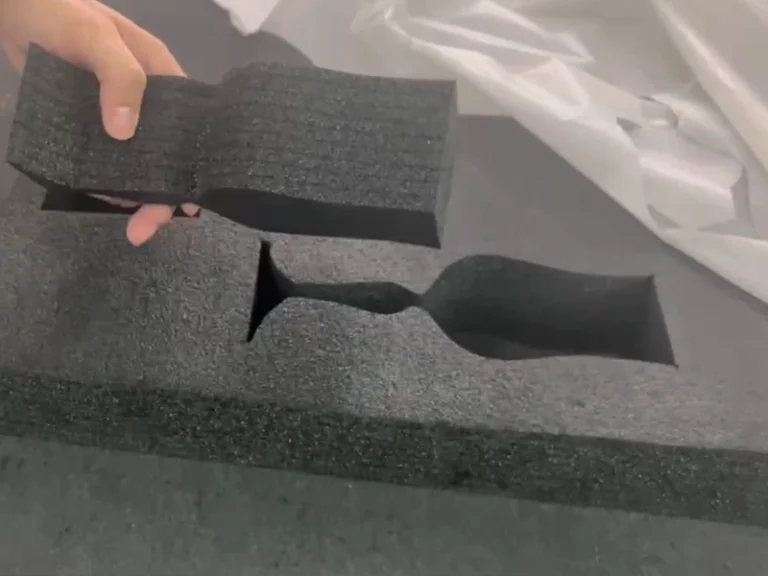
Foam cutting quality should be checked with real parts, not only by looking at a straight test line.
Important checks include:
- Whether the edge tears or pulls.
- Whether the cavity size stays accurate after rebound.
- Whether the product fits without forcing.
- Whether inner holes and slots are clean.
- Whether the groove depth is consistent.
- Whether the sheet moves during cutting.
- Whether the blade leaves dust, burrs or rough edges.
- Whether repeated samples stay consistent.
For packaging inserts, a small error can matter. If the cavity is too tight, the customer may struggle to place the product. If it is too loose, the insert may not protect the product well. If the foam compresses heavily during cutting, the final cavity may not match the drawing size.
Three Practical Buying Scenarios
Scenario 1: EVA inserts for electronics or tool boxes
EVA inserts often need a clean appearance and accurate cavities. The customer may use the insert for tools, electronics, instruments, samples or product display kits.
For this case, the buyer should test edge finish, small inner holes, tight corners and product fitting. The CNC EVA Cutting Machine page is the most direct JEKE product direction to review.
Scenario 2: EPE or XPE protective packaging
EPE and XPE are often used for protective packaging where cushioning matters. The material may be thicker, lighter or more elastic than EVA. The main challenge is not only cutting the shape, but also keeping the sheet stable and confirming that the final insert protects the product correctly.
For this use case, send the supplier your thickness, sheet size, product weight and target protection requirement. The machine recommendation may change if the material is very thick or if the cavity shape is complex.
Scenario 3: Sponge and soft foam
Sponge and soft foam can deform more during cutting. The buyer should not assume that a clean drawing always produces a clean part. Cutting pressure, blade movement, suction and speed can change the result.
For soft foam, the most reliable approach is sample testing. Cut the actual shape, place the product into the cavity and check whether the fit remains stable after the material rebounds.

Machine Size and Productivity: What Changes the Quote?
The price of a CNC foam cutting machine is affected by more than the cutting table.
Important quote factors include:
- Working area and sheet size.
- Foam thickness range.
- Tool type and blade length.
- Need for grooving, bevel cutting or marking.
- Vacuum table and material holding.
- Software workflow and file format.
- Sample room use or repeated short-run use.
- Operator skill and training requirement.
- Dust, scrap and cleanup expectations.
- Whether one machine must handle multiple materials.
For a buyer, the lowest price is not always the lowest cost. If the tool configuration is too weak for the material, the team may lose time on failed samples. If the machine is larger or more complex than needed, the buyer may pay for capacity that does not improve the actual workflow.
The better goal is to match machine configuration to the foam jobs you actually run.
What to Send JEKE Before Asking for a Quote
To get a useful recommendation, send practical production information.
Prepare:
- Foam type: EVA, EPE, XPE, sponge or mixed materials.
- Material thickness.
- Density or hardness if available.
- Sheet size.
- Product photo and product size.
- Insert drawing, CAD file or dieline.
- Cavity depth and inner-hole details.
- Need for grooves, bevels or partial-depth cuts.
- Required edge quality.
- Sample quantity and expected short-run volume.
- Current manual cutting or die cutting pain point.
If you already have a foam insert drawing, send it with the material sample. If you only have the product and box size, JEKE can still help discuss the workflow, but the final machine configuration should be checked with real material.
For more context, you can also review JEKE’s existing guide on a CNC foam cutting machine for packaging inserts and the article about cutting EVA foam, XPE foam and sponge.
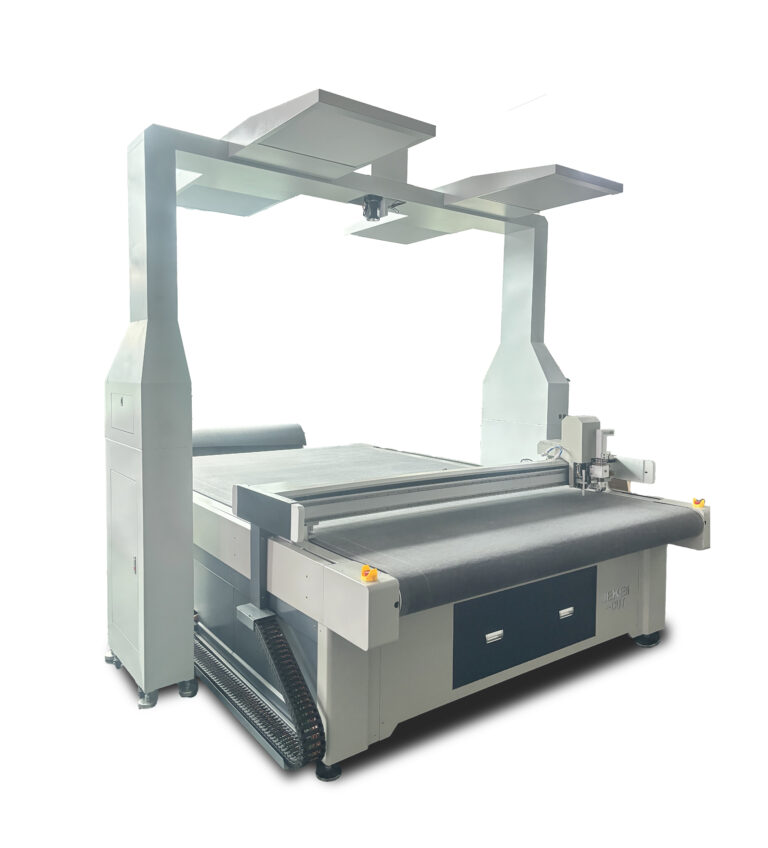
JEKE Recommendation
JEKE recommends choosing a CNC foam cutting machine by material sample and insert structure, not by machine name alone.
If your main work is EVA foam inserts, focus on edge quality, cavity accuracy, blade selection and repeatability. If your work is EPE or XPE protective packaging, focus on material holding, thickness and rebound. If your material is sponge or another soft foam, sample testing is the safest way to avoid wrong assumptions.
For a broader flexible-material workflow, review JEKE’s Digital Cutting Machine category. For foam-focused projects, start with the CNC EVA Cutting Machine page and send your material details to JEKE.
For sample testing or a machine configuration quote, contact JEKE with your foam type, thickness, insert drawing and target production quantity.
FAQ
Can one CNC foam cutting machine cut EVA, EPE, XPE and sponge?
One machine platform may support several foam materials, but the tool, blade length, speed and holding method should be tested for each material. EVA, EPE, XPE and sponge do not behave the same way.
Is an oscillating knife better than laser for foam packaging inserts?
For many flexible foam packaging inserts, a knife cutting system is often the safer first direction because it is a physical cold cutting method. The final choice depends on material type, thickness, edge requirement and whether heat effects are acceptable.
What thickness can a CNC foam cutting machine cut?
The practical thickness depends on the machine structure, blade length, tool type, material density and required edge quality. Always confirm with the actual foam material rather than only reading a maximum thickness number.
Can it cut inner holes and product cavities?
Yes, a CNC foam cutting workflow can cut many inner holes, slots and cavities, but deep pockets, narrow gaps and tight corners should be tested with the real drawing and material.
Do I need a mold for foam insert samples?
For sample work and short runs, digital knife cutting can reduce the need for a physical mold. For very high-volume stable production, the best process should be compared by total cost and consistency.
What should I send to JEKE for sample testing?
Send the foam material, thickness, sheet size, insert drawing, product size, cavity depth, target quantity and photos of the expected finished insert if available.
Conclusion
A CNC foam cutting machine is useful for EVA, EPE, XPE and sponge packaging inserts, but the right configuration depends on material behavior and insert structure. The buyer should check edge quality, rebound, inner holes, grooves, holding method and repeatability before confirming the machine.
If you want a reliable recommendation, do not send only a machine name. Send the foam sample, drawing and target workflow. JEKE can help test the material and recommend a configuration that fits your packaging insert job.