If you are looking for a CNC knife cutting machine for fabric, foam, leather, corrugated cardboard, or printed flexible materials, the most important question is not simply which machine model looks powerful. The better question is: which configuration matches your real material, order type, and production workflow?
Many buyers start with table size or price. Those details matter, but they are not enough. A machine that works well for corrugated carton samples may not be the best choice for roll-fed fabric. A system that cuts thin vinyl may not be strong enough for dense EVA foam. A flatbed table may be perfect for sample making, while a conveyor system may be necessary for continuous textile production.
This buyer checklist explains how to evaluate a CNC knife cutting system by material, tool option, table format, sample testing, and quote preparation. It is written for manufacturers, packaging teams, apparel sample rooms, foam converters, signage producers, and flexible-material workshops that need a practical way to choose the right cutting setup.
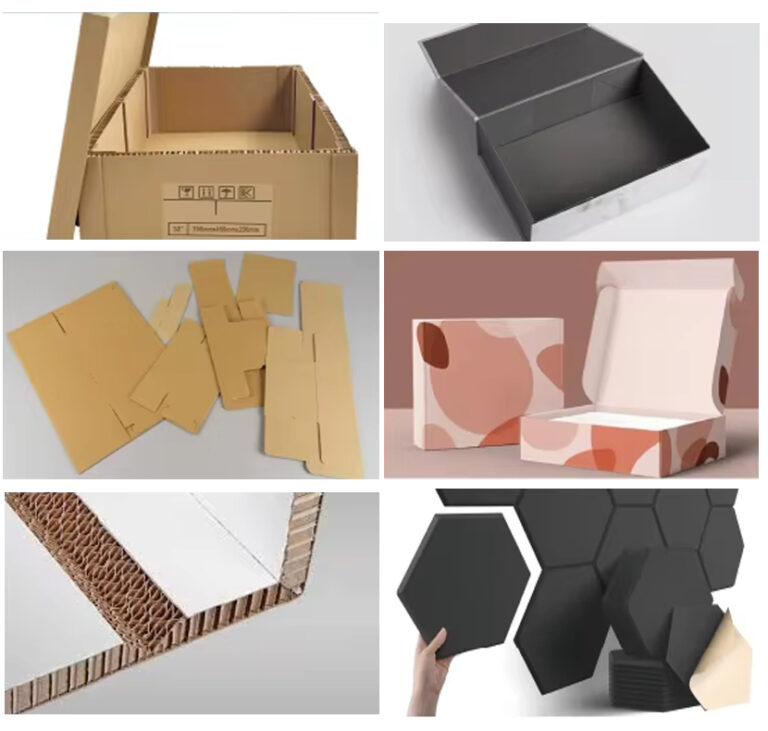
Start With the Material, Not the Machine
A CNC knife cutting machine is not a single-purpose device. It is a cutting platform that can be configured with different tools, feeding methods, camera systems, and work areas. That is why the same machine category can serve very different industries.
For example, a packaging company may care most about cutting and creasing corrugated board. A garment sample room may care about fabric handling and fast pattern changeover. A foam packaging supplier may need stable cutting through EVA, EPE, or XPE foam without tearing the edge. A signage company may need camera alignment for printed graphics.
Before comparing suppliers, prepare your material list. Include the material name, thickness range, sheet or roll format, maximum cutting size, and whether the job is for samples, short runs, or regular production. This information will make the supplier recommendation much more useful.
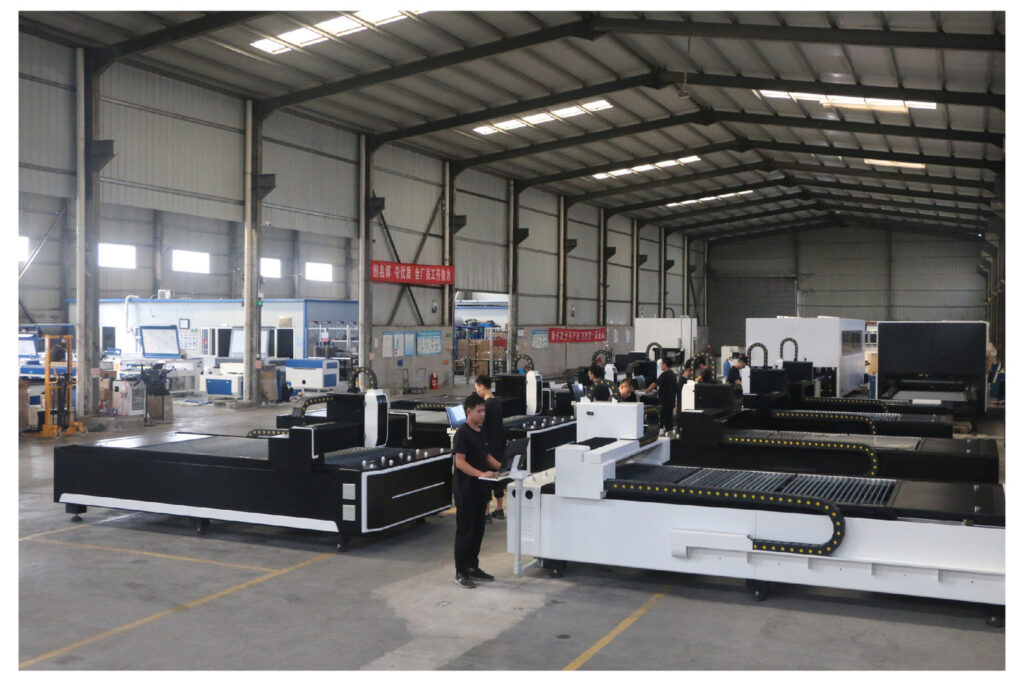
JEKE’s digital cutting machine category covers flexible-material applications where one machine platform may be configured for fabric, foam, leather, cardboard, and related materials.
Material and Tool Matching Checklist
The table below gives a practical first check. It does not replace sample testing, but it helps you avoid choosing a machine only by price or appearance.
| Material | Common application | Tool to check first | Key buying question |
|---|---|---|---|
| Fabric and textile | Apparel samples, technical textile, soft goods | Rotary or oscillating knife, conveyor feeding | Are you cutting sheets, rolls, single-ply, or multiple layers? |
| EVA / EPE / XPE foam | Packaging inserts, protective pads, case liners | Oscillating knife | What thickness and density must be tested? |
| Leather / PU leather | Bags, shoes, automotive interior | Oscillating knife, camera optional | Do you need nesting, defect handling, or contour accuracy? |
| Corrugated cardboard | Carton samples, short-run packaging, display structures | Knife + creasing wheel | Do you need both cutting and folding lines? |
| Printed film / vinyl / signage material | Print-and-cut graphics, stickers, film, display media | Drag knife, kiss-cut tool, CCD camera | Do you need alignment to printed marks? |
If your material mix includes several groups, do not assume one default tool will handle everything well. The right configuration may require a multi-tool head, a stronger vacuum system, camera positioning, or a feeding table.
Tool Options That Decide the Real Capability
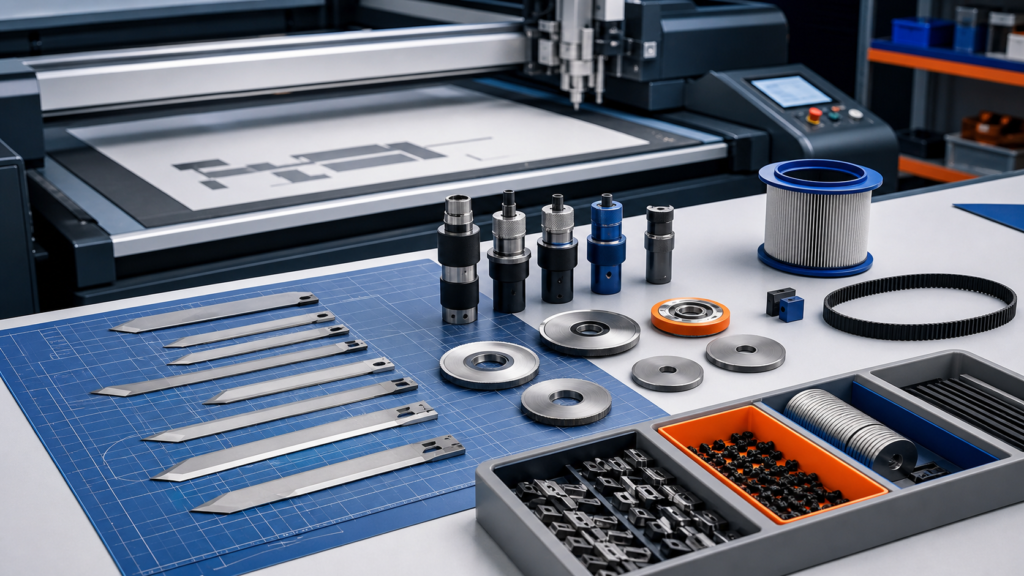
The machine frame is only part of the buying decision. Tool configuration decides what the machine can actually cut, crease, mark, or align.
Oscillating Knife
An oscillating knife is one of the most important tools for flexible and medium-density materials. It is commonly used for foam, leather, textile, corrugated board, and composite flexible materials. Instead of dragging a static blade through the material, the blade moves up and down at high speed, helping it cut thicker or more resistant substrates with cleaner edges.
This tool is especially important when the material is too thick or too soft for a simple drag knife. If your main work includes EVA foam, sponge, PU leather, thick felt, corrugated cardboard, or layered soft materials, an oscillating knife should be tested early. For broader technical context, see this external reference on computer numerical control.
Drag Knife or Tangential Knife
A drag knife or tangential knife is often useful for thinner flexible materials such as paper, film, vinyl, reflective material, and some packaging substrates. These tools are usually simpler and faster for thin materials, but they are not the answer for every job.
For detailed shapes, corners, and thicker materials, tool control becomes more important. If the material twists, pulls, or leaves rough corners, ask whether a tangential tool or another blade type is more suitable.
Creasing Wheel
For packaging, cutting is only half of the job. Corrugated cartons, folding boxes, and display structures also need clean fold lines. A creasing wheel creates controlled crease lines so the packaging sample can fold correctly.
If your application is carton sample making or short-run packaging, do not treat creasing as an optional extra. A digital die-cutting machine configuration should be evaluated by both cutting and creasing performance.
Kiss-Cut Tool
Kiss cutting is used when the top layer must be cut while the backing layer remains intact. This is common for adhesive films, stickers, labels, and some printed media.
If your products include printed film, vinyl, or adhesive materials, ask whether the machine can control cutting depth consistently. A small depth error can either fail to cut the top layer or cut through the backing.
CCD Camera Positioning
Camera positioning is useful when the machine must align cutting paths to printed graphics, registration marks, or existing shapes. It is common in signage, printed fabric, film cutting, and packaging mockups.
If your material is printed before cutting, camera alignment may matter more than raw cutting speed. A fast machine that misses printed contours will still create waste.
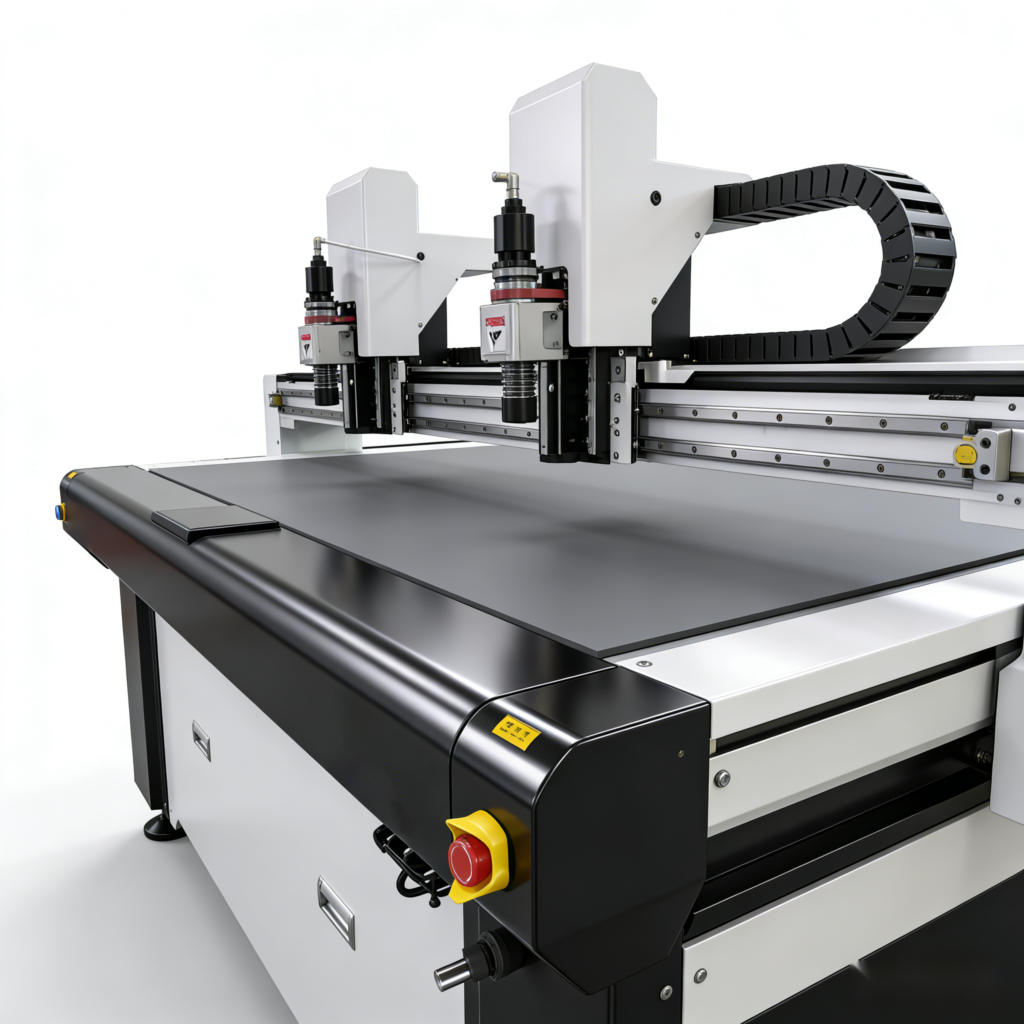
Flatbed or Conveyor: Choose by Workflow
A flatbed machine and a conveyor machine can both be CNC knife cutting systems, but they fit different production rhythms.
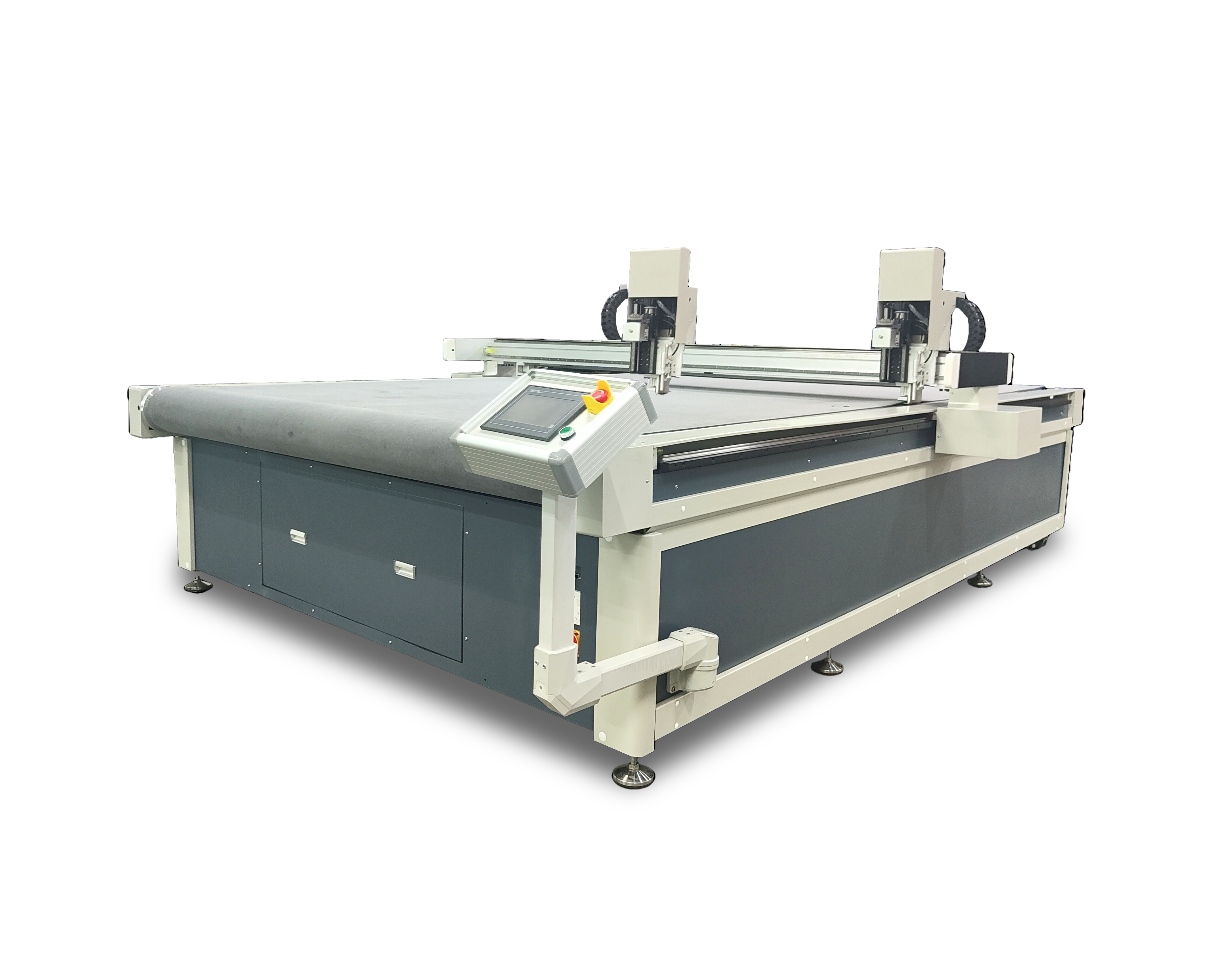
A flatbed table is usually suitable for sheet materials, packaging samples, foam inserts, leather pieces, and short-run production. It gives stable material placement and works well when the operator loads one sheet or panel at a time. For packaging prototypes, foam inserts, and mixed-material workshops, flatbed cutting is often the practical starting point.
A conveyor system is more suitable for roll-fed materials or repeated production. Apparel, textile, technical fabric, and automotive interior materials often benefit from continuous feeding because the operator does not need to manually position every piece. If your material comes in rolls and your jobs repeat throughout the day, conveyor feeding can improve throughput and reduce handling time.
For fabric production, JEKE’s automatic fabric cutter category is more relevant than a general flatbed configuration. The right decision depends on roll width, cutting length, production volume, and whether the work is sample cutting or batch production.
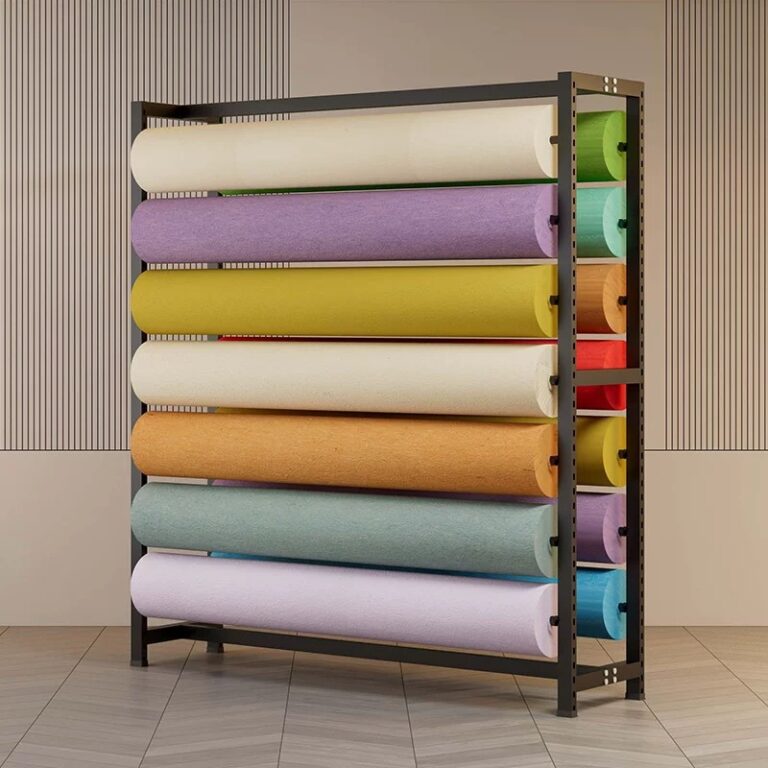
Table Size and Vacuum Holding
Table size is easy to compare, but it is often misunderstood. The largest table is not always the best choice. The useful question is whether the working area matches your common nesting layout and material handling method.
Before choosing a size, check:
- the largest piece you need to cut
- the common material sheet or roll width
- whether multiple parts are nested together
- how much space operators need for loading and unloading
- whether the machine must handle future product sizes
- whether the vacuum zones can hold your material evenly
Vacuum holding matters because flexible materials can shift, lift, wrinkle, or stretch during cutting. Foam, fabric, leather, and corrugated board behave differently on the table. A sample test should check not only whether the blade cuts through the material, but also whether the material stays stable during the entire cutting path.
Three Practical Buying Scenarios
Scenario 1: Apparel Sample Room
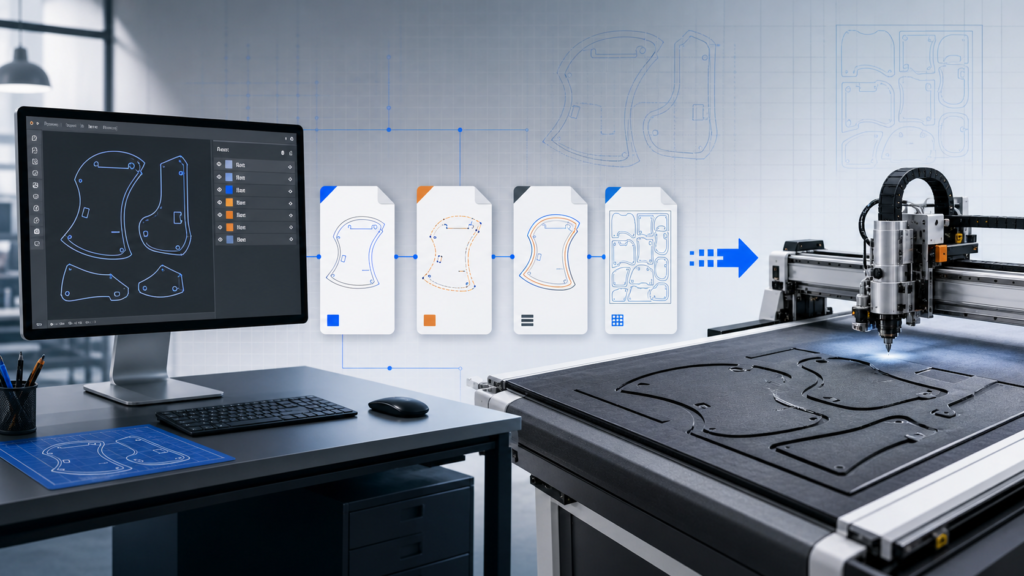
An apparel sample room usually deals with frequent style changes, small batches, and fast pattern updates. The main issue is not only cutting speed. It is the ability to move from digital pattern files to accurate fabric pieces without too much manual template work.
For this type of buyer, the key questions are:
- Is the material in sheets or rolls?
- Is the work single-ply or multi-layer?
- How often do styles change?
- Does the operator need a conveyor system?
- How important is nesting efficiency?
A buyer in this situation should evaluate fabric handling, cutting accuracy, software workflow, and operator training. A lower-cost machine may not be cheaper if it slows down pattern changeover or creates inconsistent cutting quality.
Relevant JEKE page: automatic fabric cutter.
For fabric and garment teams, this broader checklist connects with JEKE’s CNC fabric cutting machine for apparel sample rooms guide, which explains single-ply and low-ply cutting, CAD workflow, conveyor feeding and sample testing in more detail.
Scenario 2: Foam Packaging Inserts
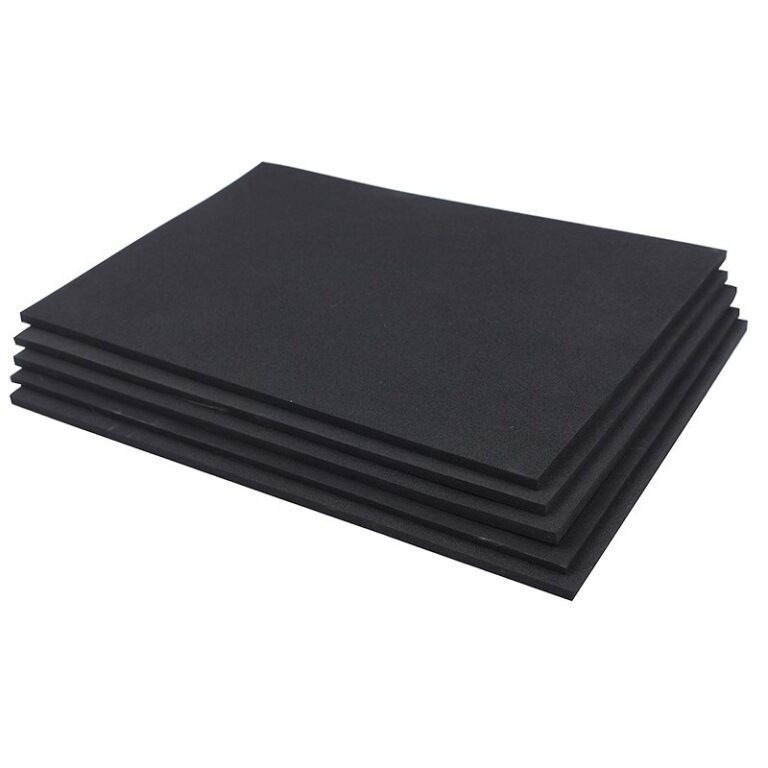
Foam cutting is a good example of why sample testing matters. EVA, EPE, XPE, sponge, and laminated foam can behave very differently. Thickness, density, rebound, and surface finish all affect the cutting result.
For foam packaging inserts, an oscillating knife is often the first tool to test. The goal is not only to cut through the material. The edge should be clean enough for the final insert, and the machine should maintain shape accuracy on inner holes and tight corners.
For this use case, send the supplier real material samples or detailed material data before confirming the machine. A photo alone is usually not enough.
Relevant JEKE page: CNC EVA cutting machine.
Scenario 3: Corrugated Packaging Prototypes
Packaging prototype work is different from simple cutting. A carton sample usually needs cutting lines, crease lines, slots, and sometimes printed alignment. The machine must help the packaging team move from CAD design to a physical sample quickly.
In this scenario, the creasing wheel is critical. Without controlled creasing, the carton may cut correctly but fold poorly. For packaging departments that need samples, displays, and short runs, the tool combination is more important than the machine name.
Relevant JEKE page: digital die-cutting machine.
CNC Knife Cutting vs Laser Cutting for Flexible Materials
A CNC knife cutting machine uses mechanical tools. A laser cutter uses heat. This difference matters for flexible materials.
Knife cutting is often preferred when the buyer wants to avoid burnt edges, smoke, odor, melted surfaces, or heat marks. This can be important for leather, foam, fabric, and some packaging materials. Laser cutting can still be useful for certain materials and applications, but it is not automatically better for every flexible material.
If your decision is between knife cutting and laser cutting, compare the actual edge quality, smoke control, material safety, speed, and maintenance requirements. JEKE also has a related guide on oscillating knife cutter vs laser cutter.
What to Send Before Asking for a Quote
A useful quote needs more than the sentence “I need a cutting machine.” If you want a supplier to recommend a practical configuration, prepare the following information:
- material name
- thickness range
- material density or hardness if available
- sheet or roll format
- maximum cutting size
- common product size
- sample making or production use
- daily output target
- need for creasing, kiss cutting, camera positioning, or conveyor feeding
- file format, such as DXF, AI, PLT, or other CAD files
- photos or videos of the current cutting process
This information helps avoid over-specifying the machine or choosing a configuration that looks cheaper but does not fit the real job.
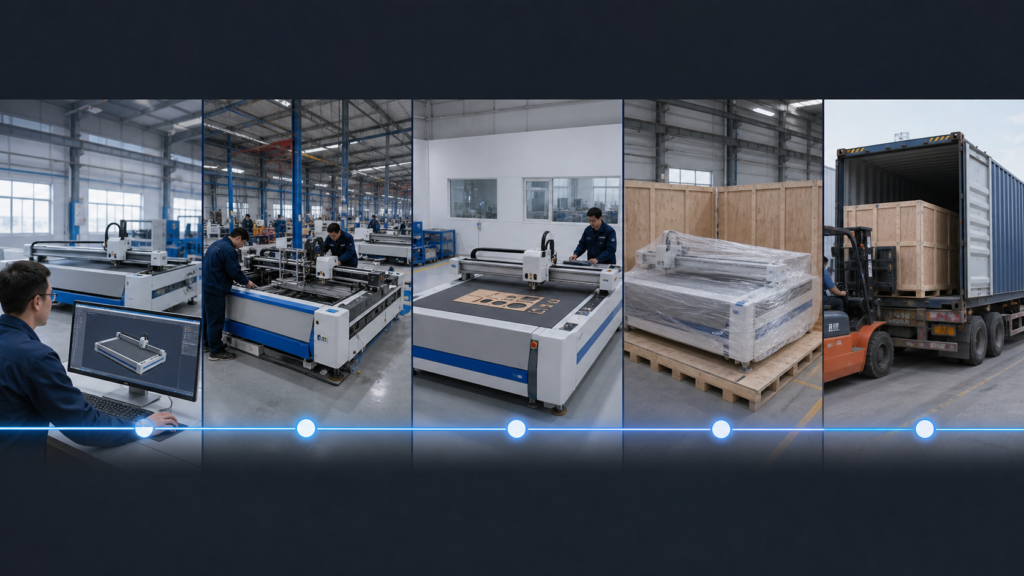
How JEKE Can Help With Sample Testing
For flexible materials, sample testing is often the most practical step before final configuration. A material name alone may not tell the whole story. Two foam sheets with the same thickness can cut differently. Two leather materials can behave differently because of surface finish, backing, or stretch. Printed materials may need camera alignment even if the cutting shape looks simple.
JEKE can review your material list, thickness range, cutting size, and production target, then suggest the tool combination and machine format to test first. For many buyers, this is more valuable than receiving a generic model recommendation.
If you are preparing a project, send your material details, expected cutting size, and production goal through the JEKE contact page. A practical recommendation should start from your material and workflow, not from a fixed catalog answer.
FAQ
Can one CNC knife cutting machine cut fabric, foam, leather, and cardboard?
One machine platform may be able to process all of these materials if it is configured with the right tools and holding system. However, you should not assume one default blade will handle everything. Fabric, foam, leather, and cardboard should be checked separately during configuration.
Do I need an oscillating knife?
You likely need to test an oscillating knife if your materials include foam, leather, corrugated board, thick textile, or other soft to medium-density materials. For thin film or paper, another tool may be more suitable.
Is a CNC knife cutting machine better than laser for flexible materials?
It depends on the material and edge requirement. Knife cutting is often preferred when heat damage, smoke, odor, or melted edges are concerns. Laser cutting may fit other applications, but flexible materials should be tested instead of judged only by machine type.
How do I choose between flatbed and conveyor feeding?
Choose by workflow. Flatbed cutting is usually better for sheet materials, samples, foam inserts, leather pieces, and packaging prototypes. Conveyor feeding is better for roll materials and continuous production, especially fabric and textile applications.
What should I send to JEKE for a useful quote?
Send the material name, thickness, sheet or roll format, maximum cutting size, daily output target, and whether you need creasing, camera alignment, kiss cutting, or conveyor feeding. If possible, include sample photos, current cutting problems, or CAD files.
Conclusion
Choosing a CNC knife cutting machine for flexible materials is not just a price comparison. The right decision comes from matching your material, cutting tool, table format, feeding method, software workflow, and sample testing result.
If your work includes fabric, foam, leather, corrugated board, printed film, or mixed flexible materials, start with a clear material list and a practical buying checklist. Then confirm the configuration through sample testing before making the final decision.
JEKE can help review your material and production requirements, then recommend a CNC knife cutting setup that fits the real application. To move forward, send your material details and cutting target through the Contact Us page.