EVA foam, XPE foam, sponge, PE foam, and other soft foam materials are widely used in packaging, automotive interiors, sports products, luggage, shoes, protective pads, insulation materials, and customized foam inserts. These materials are light, flexible, elastic, and easy to deform, so cutting them accurately can be difficult with traditional manual tools.
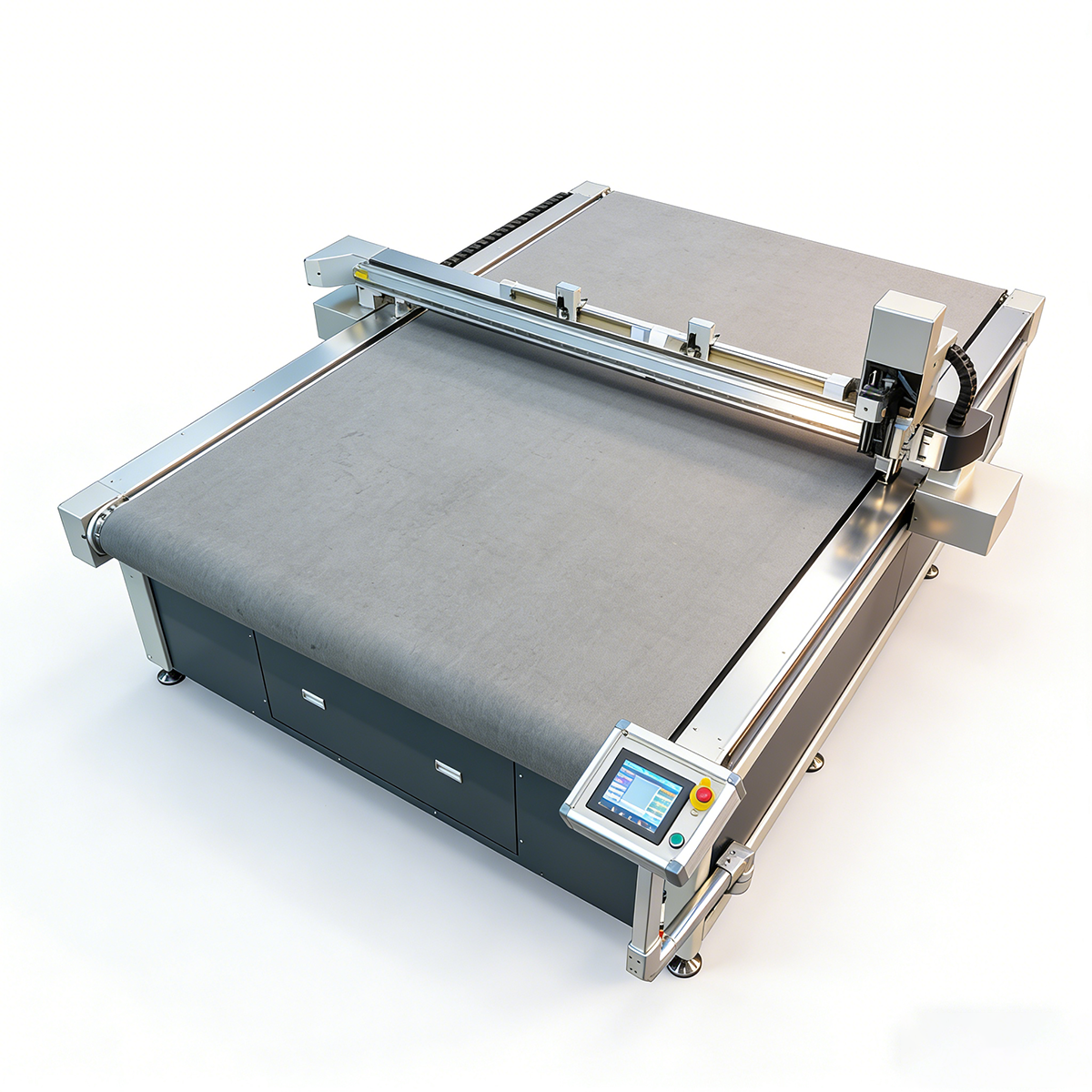
For factories that need to cut different shapes, small batches, customized foam inserts, or frequent sample orders, a CNC knife cutting machine is an efficient solution. It can cut directly from digital files without making cutting molds, which helps reduce cost and improve production flexibility.
A CNC foam cutting machine is especially suitable for EVA foam, XPE foam, sponge, and other flexible materials that require clean edges, accurate shapes, and fast design changes.
Common Foam Materials That Can Be Cut
A CNC knife cutting machine can be used for many foam and sponge materials, including:
- EVA foam
- XPE foam
- PE foam
- Sponge
- PU foam
- EPE foam
- Foam board
- Rubber foam
- Packaging foam inserts
- Automotive foam materials
- Sports protection foam
- Luggage and case foam liners
- Insulation foam materials
Different foam materials have different density, hardness, elasticity, and thickness. The machine configuration should be selected according to the real material and cutting requirements.
Why Foam Materials Are Difficult to Cut
Foam materials look simple, but they are not always easy to cut accurately.
1. Foam Can Deform Easily
Soft sponge and low-density foam can move or compress during cutting. If the material is not fixed properly, the final shape may not be accurate.
2. Thick Foam Requires the Right Blade
If the blade is too short, too weak, or not suitable for the material, the edge may become rough or uneven.
3. Elastic Materials May Rebound
Some foam materials return to shape after cutting. This can affect accuracy, especially for small holes, narrow strips, and detailed shapes.
4. Manual Cutting Is Not Stable
Manual cutting may work for simple shapes, but it is difficult to keep consistency when producing large quantities or complex designs.
5. Traditional Die Cutting Has Mold Cost
Die cutting is efficient for large repeated orders, but every new shape requires a new cutting die. For customized foam packaging, sample making, and small batch production, mold cost can be a problem.
Why Use a CNC Knife Cutting Machine for EVA Foam and Sponge?
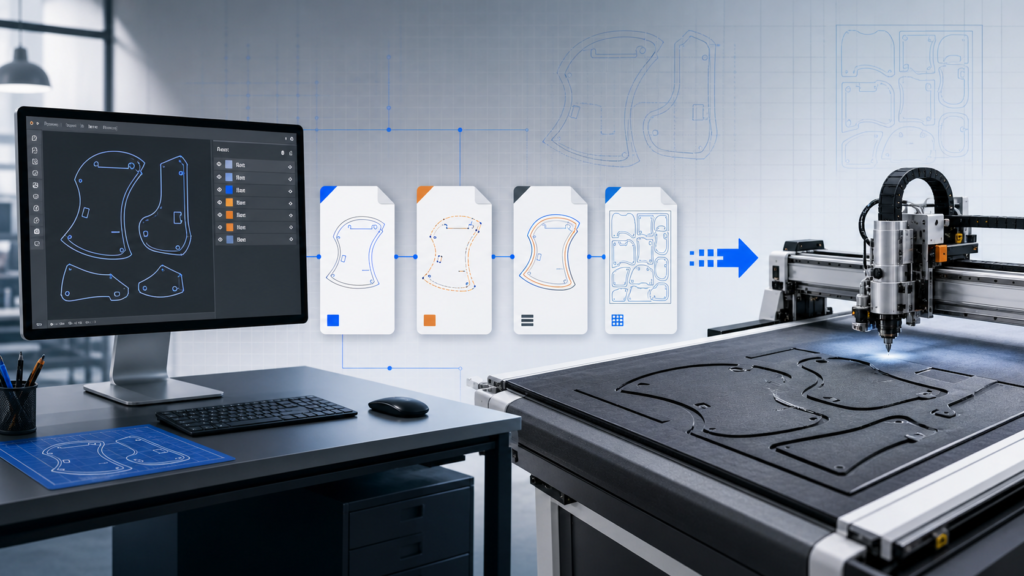
A CNC knife cutting machine uses a blade to cut the material according to a digital file. It is suitable for foam because it does not use heat and does not require a cutting mold.
The main advantages include:
1. No Mold Required
The machine cuts directly from CAD files. When the design changes, you only need to modify the file instead of making a new die.
2. Clean Cutting Edge
Knife cutting can produce a smooth and clean edge on many foam materials, especially when the correct blade and parameters are used.
3. Suitable for Customized Shapes
The machine can cut straight lines, curves, holes, grooves, irregular shapes, and foam inserts.
4. Lower Cost for Small Batch Production
For short runs and customized orders, digital cutting can reduce the cost and time of mold making.
5. Easy to Change Designs
This is important for packaging companies, foam insert manufacturers, and sample rooms that handle many different products.
6. Better Material Utilization
With nesting software, the machine can arrange cutting patterns efficiently and reduce material waste.
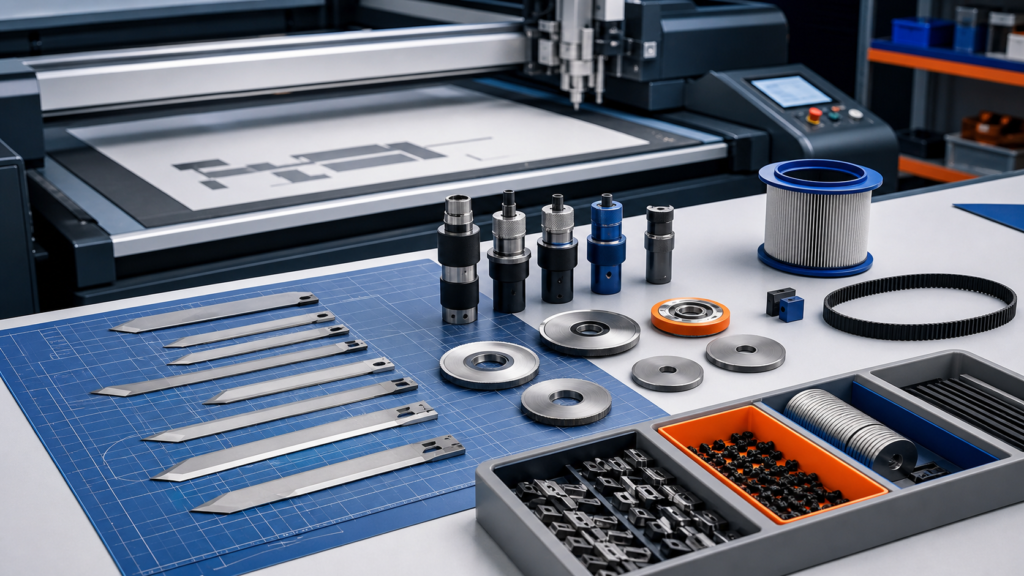
Recommended Cutting Tools for Foam Materials
The right cutting tool depends on the material type and thickness.
Oscillating Knife
The oscillating knife is one of the most commonly used tools for EVA foam, XPE foam, sponge, and soft flexible materials. It moves up and down at high speed to cut the material cleanly.
It is suitable for:
- EVA foam
- XPE foam
- Sponge
- PE foam
- PU foam
- Packaging foam
- Automotive foam materials
Drag Knife
A drag knife can be used for thinner and softer materials. It is suitable for simple shapes and thin sheets.
Round Knife
A round knife may be used for some fabric, textile, or soft roll materials. It is not always the first choice for thick foam, but it can be useful in certain applications.
Punching or Marking Tools
Some foam products may require holes, marks, or positioning lines. In this case, additional tools can be added according to the production process.
Applications of EVA Foam, XPE Foam, and Sponge Cutting
A CNC foam cutting machine can be used in many industries.
Packaging Foam Inserts
Foam inserts are used to protect tools, electronics, instruments, medical devices, gifts, and fragile products. CNC cutting is suitable for customized packaging inserts because every product may require a different shape.
Automotive Interior Materials
EVA foam, XPE foam, and sponge are used in car mats, sound insulation layers, cushioning materials, and interior parts.
Sports and Protection Products
Foam materials are used in sports pads, protective gear, yoga mats, helmet liners, and other soft protection products.
Luggage and Case Liners
Custom foam liners are often used inside tool cases, camera cases, equipment boxes, and flight cases.
Shoes and Footwear Materials
EVA foam is widely used in footwear, insoles, slippers, and sole materials.
Industrial Sealing and Cushioning
Foam and rubber foam materials can be cut into pads, gaskets, spacers, and protective parts.
CNC Knife Cutting vs Laser Cutting for Foam
Laser cutting can cut some foam materials, but it may not be suitable for all applications. Since laser cutting uses heat, it may cause melting, smoke, odor, yellow edges, or surface deformation, especially on certain EVA, sponge, or plastic foam materials.
CNC knife cutting uses a physical blade, so it avoids heat damage. For many foam products that require a clean edge and no burnt smell, knife cutting is often more suitable.
CNC Knife Cutting vs Die Cutting for Foam
Die cutting is useful for large-volume production with the same shape. However, it requires a cutting die, which means additional cost and preparation time.
CNC knife cutting is better for:
- Sample making
- Customized foam inserts
- Small batch orders
- Frequent design changes
- Multiple shapes in one production batch
- New product development
For foam packaging companies, digital cutting helps respond faster to customer requirements.
How to Improve Foam Cutting Quality
To get better cutting results, several factors should be controlled.
1. Use the Correct Blade
Different foam materials need different blade angles, blade lengths, and blade strength.
2. Adjust Cutting Speed
If the speed is too fast, the edge may not be clean. If the speed is too slow, production efficiency will be reduced. The correct speed should be tested according to the material.
3. Control Cutting Depth
The blade should cut through the material without damaging the cutting table.
4. Fix the Material Properly
Vacuum adsorption can help hold the foam in place and reduce movement during cutting.
5. Test Before Mass Production
For new materials, it is recommended to test cutting parameters before starting batch production.
How to Choose the Right EVA Foam Cutting Machine
Before buying a CNC foam cutting machine, you should confirm the following information.
Material Type
Is it EVA foam, XPE foam, sponge, PE foam, PU foam, or rubber foam?
Material Thickness
The thickness affects tool selection and machine configuration.
Material Size
The working table should match the maximum sheet size or roll width.
Cutting Shape
Simple straight cuts, irregular shapes, holes, grooves, and detailed patterns may need different tool settings.
Production Quantity
For sample making or small batches, a fixed table machine may be enough. For continuous production, an automatic feeding system may be better.
Accuracy Requirement
Different applications have different precision requirements. Packaging inserts, automotive parts, and industrial pads may require higher cutting accuracy.
What Information Should You Send for a Machine Recommendation?
To recommend a suitable EVA foam cutting machine, it is better to provide:
- Material name
- Material thickness
- Material size
- Foam density or hardness if available
- Cutting shape or drawing
- Sheet material or roll material
- Required daily production capacity
- Whether you need holes, grooves, marking, or layered cutting
- Photos or videos of your current cutting process
With this information, the supplier can recommend a more suitable machine model, tool configuration, and working table size.
Conclusion
EVA foam, XPE foam, sponge, and other flexible foam materials require a cutting method that is accurate, clean, and flexible. A CNC knife cutting machine is a practical solution for foam packaging, automotive interiors, sports products, luggage liners, shoes, and industrial foam parts.
Compared with manual cutting, CNC cutting improves consistency and efficiency. Compared with die cutting, it reduces mold cost and supports faster design changes. Compared with laser cutting, knife cutting can avoid heat damage, burnt edges, and odor on many foam materials.
If you need to cut EVA foam, XPE foam, sponge, or customized foam inserts, you can send us your material details, thickness, size, cutting drawings, and production requirements. JEKE can help recommend a suitable CNC foam cutting machine solution for your application.
FAQ
1. What machine is best for cutting EVA foam?
A CNC knife cutting machine with an oscillating knife is commonly used for EVA foam cutting. It can cut different shapes without a cutting mold.
2. Can a CNC knife cutting machine cut thick sponge?
Yes. The machine can cut sponge and foam materials, but the suitable blade and machine configuration should be selected according to the thickness and density.
3. Is laser cutting good for EVA foam?
Laser cutting may work for some foam materials, but it can cause smoke, odor, melting, or burnt edges. Knife cutting is often better for clean and heat-free cutting.
4. Do I need a mold to cut foam inserts?
No. A CNC digital cutting machine cuts directly from digital files, so it does not require a traditional cutting die.
5. Can the machine cut customized packaging foam?
Yes. It is suitable for customized foam inserts, tool box liners, protective packaging, and small batch foam production.