
A corrugated cardboard cutting machine is useful when a packaging team needs samples, prototypes, short-run cartons, or frequent design changes without waiting for traditional dies. For packaging work, the machine is not only a cutter. It must also handle creasing, folding lines, slots, inner holes, CAD files, and material testing.
This is why packaging buyers should not choose a machine only by table size or cutting speed. A good packaging workflow starts from the box structure, board thickness, dieline file, creasing requirement, and sample approval process.
If your team is comparing machines for packaging samples or short-run orders, start from JEKE’s Digital Die-Cutting Machine category and the CNC cardboard box sampling machine product direction. This guide explains what to check before asking for a quote.
Quick Answer: When Does a Corrugated Cardboard Cutting Machine Fit?
Use this table as a first screening tool before comparing models.
| Use case | Fit? | Why |
|---|---|---|
| Packaging samples | Strong fit | Fast prototype without physical dies |
| Short-run cartons | Strong fit | Lower setup cost for small orders |
| Printed packaging sheets | Depends | May need camera positioning |
| Heavy corrugated board | Test first | Thickness and flute direction affect cutting and creasing |
| Long stable production | Depends | Traditional dies may still fit very large repeat runs |
The most practical rule is simple: if your packaging job changes often, needs fast samples, or does not justify a physical die, a digital cardboard cutting workflow is worth checking.
What the Machine Must Do Besides Cutting
Corrugated packaging is not only about cutting the outside shape. A carton or display sample usually needs several operations in one workflow.
A packaging cutting machine may need to process:
- Outer cutting lines
- Creasing lines
- Folding lines
- Slots and locking tabs
- Inner holes
- Drawing or marking lines
- Half-cut or kiss-cut details when needed
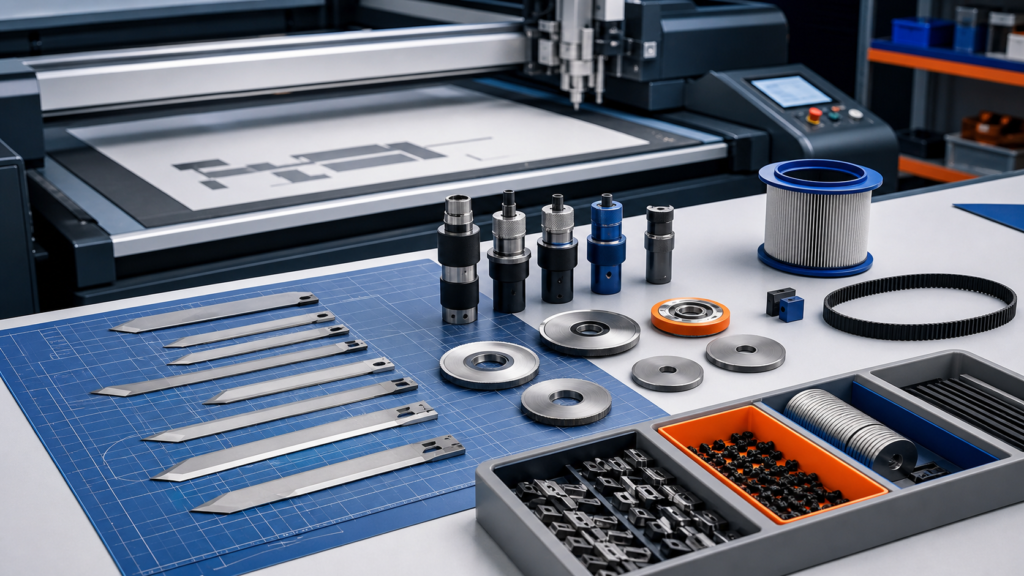
For this reason, the tool configuration matters as much as the machine body. An oscillating knife or tangential knife may handle the cutting path, while a creasing wheel forms folding lines. A drawing pen may mark assembly information. For printed sheets, camera positioning may be needed to align the cut path with the printed graphics.
If a supplier only talks about speed but does not discuss creasing, board thickness, dieline structure, or printed registration, the recommendation is incomplete.
Packaging Samples vs Short Runs
Packaging samples and short-run production are related, but they are not the same job.
Packaging samples are usually made before a design is approved. The customer wants to check size, folding line, structure, locking tabs, display effect, and product fit. In this case, the cutting machine helps the team move from dieline to physical sample quickly.
Short-run packaging is different. The design may already be confirmed, but the order quantity is too small or too changeable for traditional die tooling to be efficient. In this case, the goal is not only one prototype. The goal is to produce small batches with faster setup and less tooling cost.
Both workflows benefit from digital cutting, but the buying focus changes. A sample team may care more about file handling and precise creasing. A short-run production team may care more about table size, feeding, repeated accuracy, and daily output.
For deeper carton sample workflow content, JEKE’s article on a carton box sample making machine is a useful related page.
Corrugated Board Factors That Affect the Result
Corrugated board looks simple, but it can behave very differently during cutting and creasing. Before confirming a machine, test the exact board your team uses.
Important material factors include board thickness, flute direction, paper stiffness, surface coating, printed or unprinted sheets, and whether the material bends cleanly after creasing. A board that cuts cleanly in one direction may crease differently across the flute direction.
Small slots and inner holes also need attention. Packaging structures often include tabs, locks, handles, and small openings. If the cutting tool, vacuum table, or file path is not suitable, these details may tear, shift, or lose accuracy.
Printed packaging adds another layer of risk. If the sheet is printed before cutting, the cut path may need to follow the printed graphics. In that case, camera positioning or registration marks should be discussed before choosing the final configuration.

Dieline and CAD Workflow
A corrugated cardboard cutting machine depends on the file workflow. The machine cannot fix a wrong dieline.
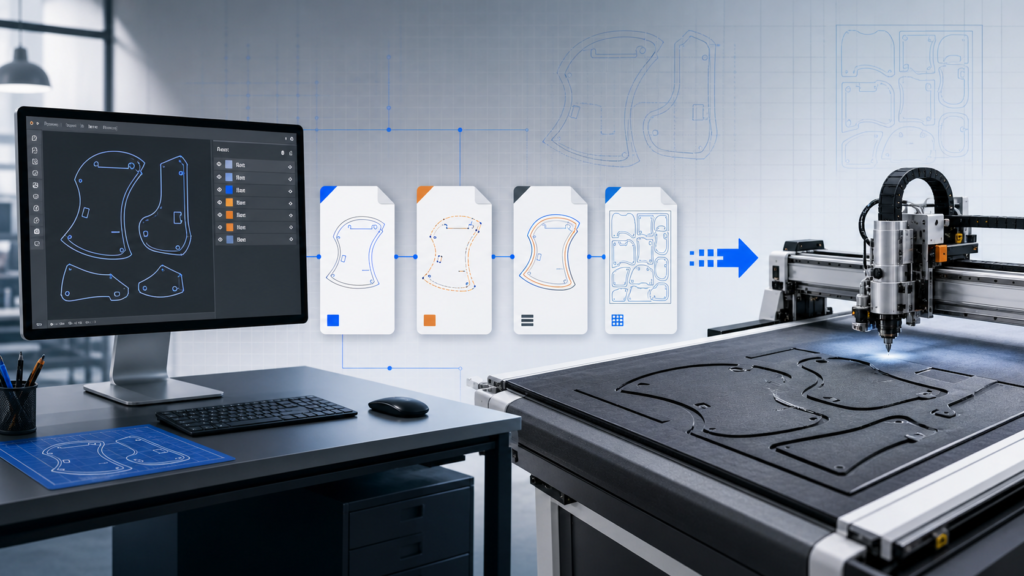
Before buying, confirm how your team prepares packaging files. Common inputs may include CAD files, DXF files, AI files, PDF files, or other dieline formats. The important part is not only whether the file can open. The cutting software must understand which paths are for cutting, which paths are for creasing, and which paths are for drawing or marking.
When preparing a test file, separate these line types clearly:
- Cut line
- Crease line
- Drawing or marking line
- Registration mark
- Fold direction note
This saves time during testing and makes the quote more accurate. If the supplier can test a real dieline instead of a simple rectangle, the result will be much closer to your actual packaging workflow.
Tool Configuration: Knife, Creasing Wheel and Camera
The correct tool combination depends on the packaging job.
For corrugated cardboard and paperboard, a knife tool is used for cutting the shape. A creasing wheel is used to press folding lines so the box can fold cleanly. A pen or marking tool can help mark information during sample making. A camera system may be useful when cutting printed sheets or when visual alignment matters.
Vacuum holding is also important. If the board moves during cutting or creasing, the final sample may not assemble correctly. This is especially important for long panels, display packaging, and structures with many small slots.
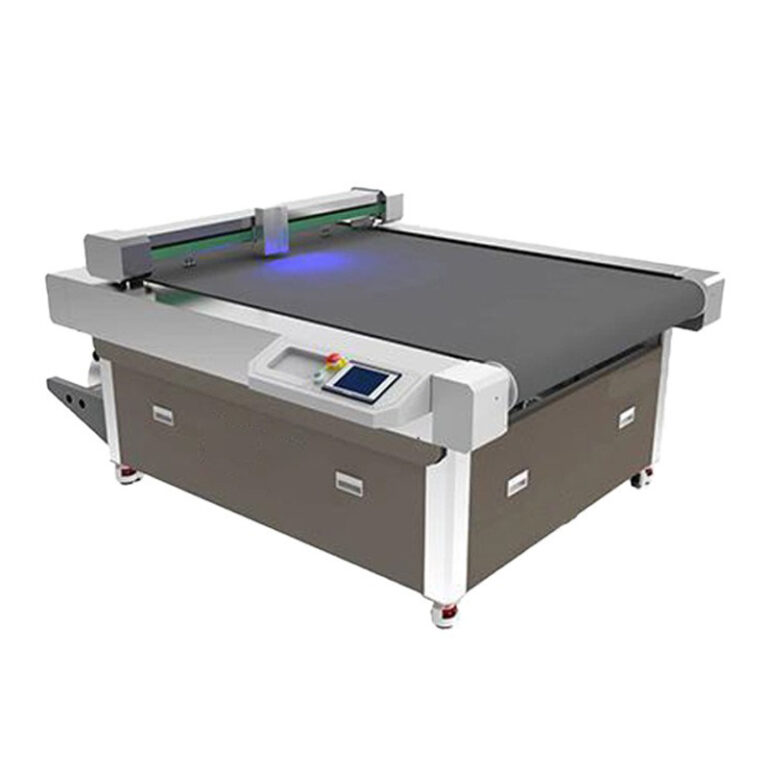
For buyers comparing flatbed packaging equipment, JEKE’s JK-1300PRO Flat die cutting machine and JK-7090 Flatbed Cutting Machine are useful product directions to review.

Three Practical Buying Scenarios
Scenario 1: Packaging design team making prototypes
A design team may need to make several box samples before approval. The customer may change size, folding style, insert structure, or display angle. Waiting for a physical die each time slows the process.
For this workflow, a corrugated cardboard cutting machine should support fast file changes, accurate creasing, and easy sample output. The most important result is a prototype that can be folded and checked quickly.
Scenario 2: Printing factory doing short-run cartons
A printing factory may receive many small orders with different sizes and artwork. If every order needs a traditional die, setup cost and delivery time become a problem.
For this workflow, the machine should handle short-run changes, printed sheet alignment when needed, and repeatable cutting and creasing. The buyer should check whether camera positioning is required for printed sheets.
Scenario 3: Corrugated packaging supplier replacing manual sample cutting
Manual sample cutting can work at the beginning, but it becomes slow and inconsistent when sample requests increase. Small errors in crease position or slot size can affect assembly.
For this workflow, digital cutting can reduce manual variation and make repeated samples easier to control. The key is to test the supplier’s real board material, dieline file, and most common box structure.
What to Send Before Asking for a Quote
A useful quote needs real packaging details. Do not only ask for a machine price.
Send JEKE:
- Board type
- Board thickness
- Sheet size
- Flute direction if relevant
- Sample use or short-run production use
- Dieline file format
- Printed or unprinted material
- Creasing requirement
- Maximum box size
- Daily sample or short-run volume
- Need for camera positioning
- Photos or videos of current manual sample workflow
If you are still comparing the general packaging cutter direction, JEKE’s article on a digital die cutter for packaging can help you understand when digital die cutting fits prototypes and short runs.
JEKE Recommendation
JEKE does not recommend choosing a packaging cutter only by the largest table size or highest cutting speed. For corrugated packaging, the better approach is to match the machine to your material, board thickness, dieline workflow, creasing need, printed registration requirement, and daily sample volume.
If your team mainly makes packaging samples, focus on accurate cutting and creasing, file handling, and fast design changes. If your team handles short-run cartons, also check repeatability, table size, vacuum holding, and workflow speed. If printed sheets are involved, discuss camera positioning before confirming the configuration.
Send JEKE your board samples, dieline file, sheet size, target box size, and production goal. Our team can help check the tool configuration before you confirm the machine.
For a packaging sample cutting test or configuration quote, contact JEKE with your project details.
FAQ
Can a corrugated cardboard cutting machine replace traditional dies?
For samples, prototypes, and short runs, it can often reduce the need for physical dies. For very large and stable production runs, traditional die tooling may still be suitable.
Is creasing necessary for carton samples?
Yes. A carton sample needs folding lines, not only cut edges. Poor creasing can make the sample hard to fold or inaccurate after assembly.
What file should I prepare for packaging cutting?
Prepare a real dieline file with separate cut lines, crease lines, and marking lines. DXF, AI, PDF, or CAD formats may be used depending on the workflow.
Can printed corrugated sheets be cut accurately?
Printed sheets may need camera positioning or registration marks. The exact requirement depends on print accuracy, sheet distortion, and the final tolerance.
What board materials should be tested?
Test the actual corrugated board, cardboard, grey board, paperboard, or honeycomb board used in your production. Thickness and flute direction can affect the result.
What should I send to JEKE before asking for a quote?
Send board type, thickness, sheet size, dieline file, sample or short-run goal, creasing requirement, and whether the material is printed. This helps JEKE recommend the right tool and table configuration.
Conclusion
A corrugated cardboard cutting machine is most useful when packaging teams need fast samples, prototypes, design changes, or short-run cartons without slow die preparation. The best machine choice depends on more than cutting speed. It depends on board behavior, creasing quality, dieline workflow, tool configuration, printed registration, and daily job volume.
Before choosing a model, test your real board, real dieline, and real box structure. That is the most reliable way to select a packaging cutting machine configuration that fits your workflow.