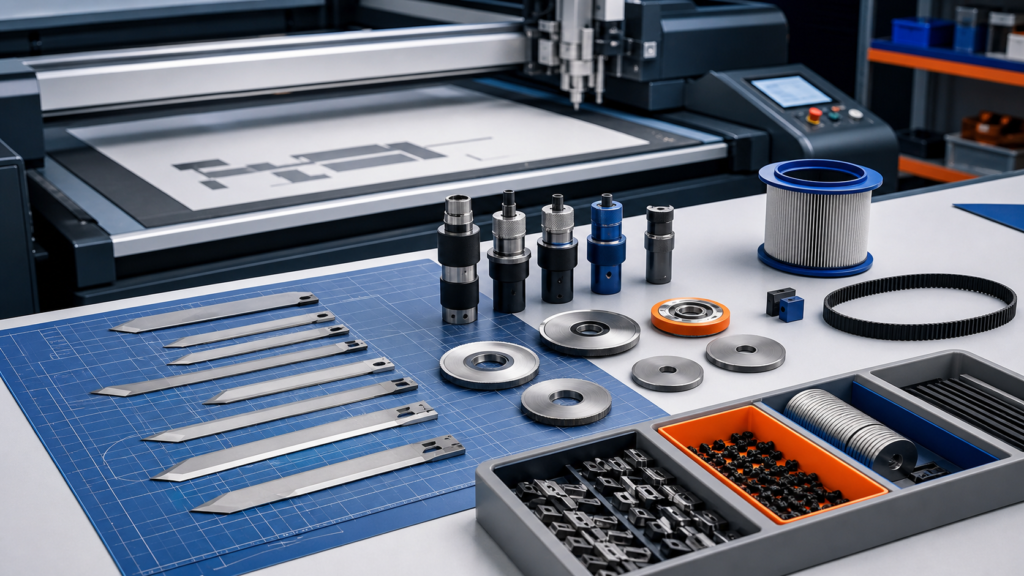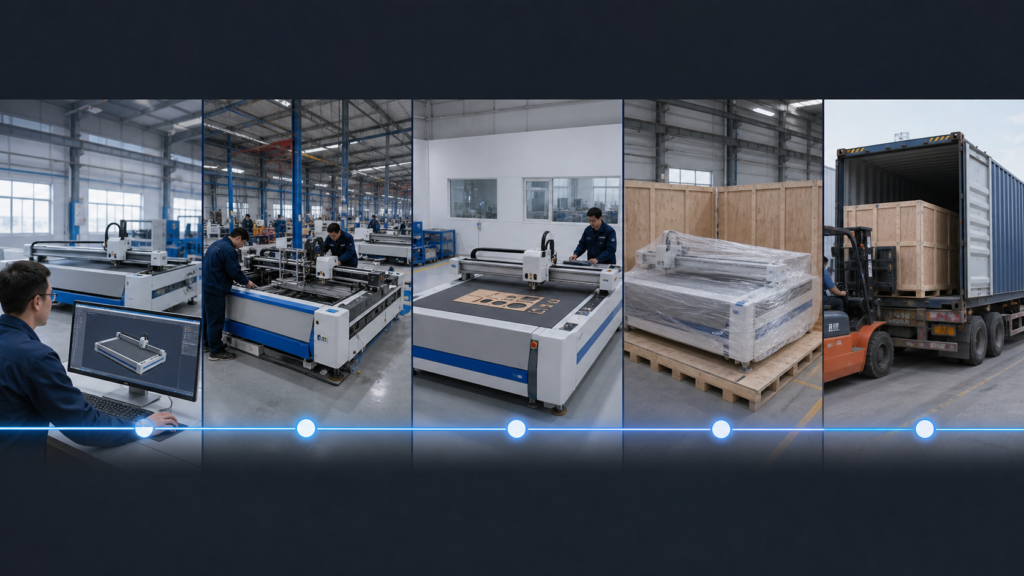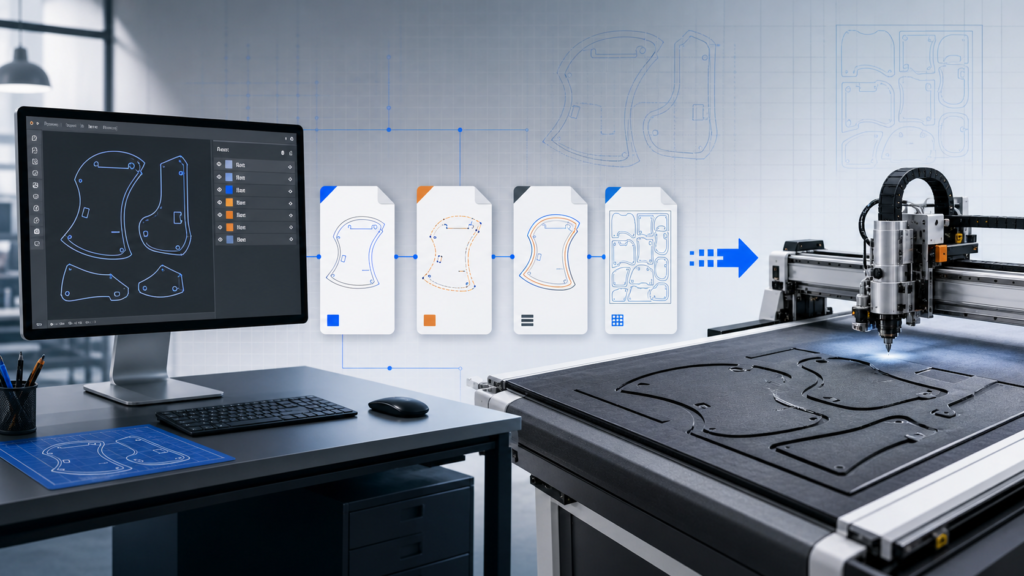
A useful CNC cutter spare parts list is not a generic box of hardware. It should reflect the installed tool heads, material abrasiveness, number of shifts, local delivery time and the cost of stopping production. The first-year order therefore needs three layers: normal consumables, predictable wear items and a small number of critical backups.
Separate consumables, wear items and critical spares
These groups solve different problems. Consumables are expected to be replaced during normal cutting. Wear items are inspected and changed as condition requires. Critical spares are held because a low-frequency failure could stop the line while an international shipment is arranged.
| Stock group | Typical examples | Planning basis |
|---|---|---|
| Consumables | Oscillating blades, rotary blades, marking refills and cutting underlay | Material, geometry and expected cutting hours |
| Wear items | Filters, seals, belts and tool-specific holders | Inspection interval and operating environment |
| Critical backups | Configuration-specific sensor or control item recommended by the supplier | Downtime risk and replacement lead time |
| Maintenance supplies | Approved lubrication and cleaning items | Machine manual and local availability |
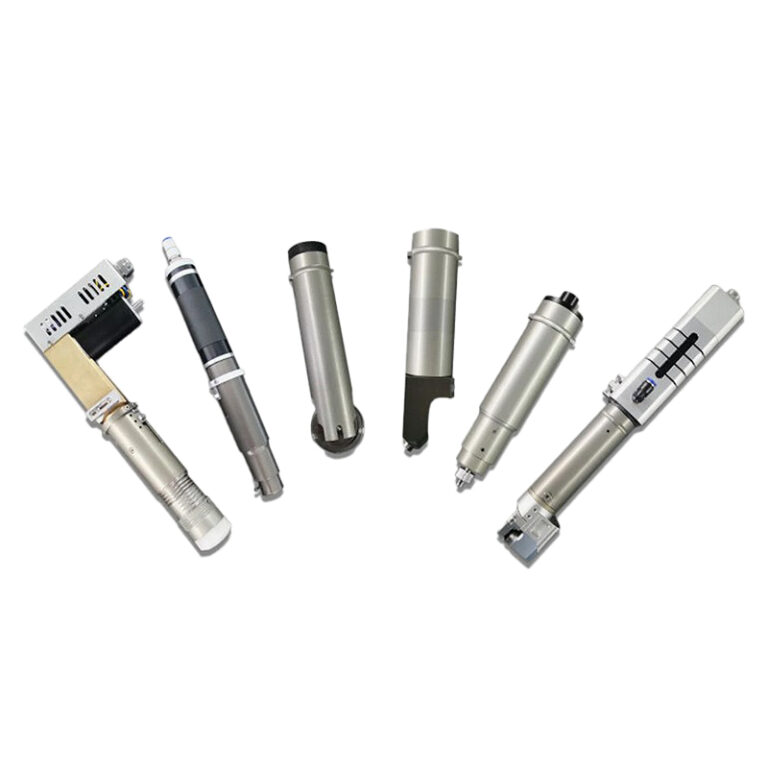
Build the blade quantity from production, not from a round number
Start with the materials the machine will cut during the first year. Dense gasket material, abrasive fiber, corrugated board, leather and foam do not wear a blade in the same way. Intricate patterns with frequent direction changes can also affect useful blade life.
Ask for the blade code used during the sample test and keep that result with the machine configuration. Estimate monthly cutting hours, then apply a cautious replacement assumption until the factory has its own records. After the first few months, replace assumptions with actual blade changes per material and job type.
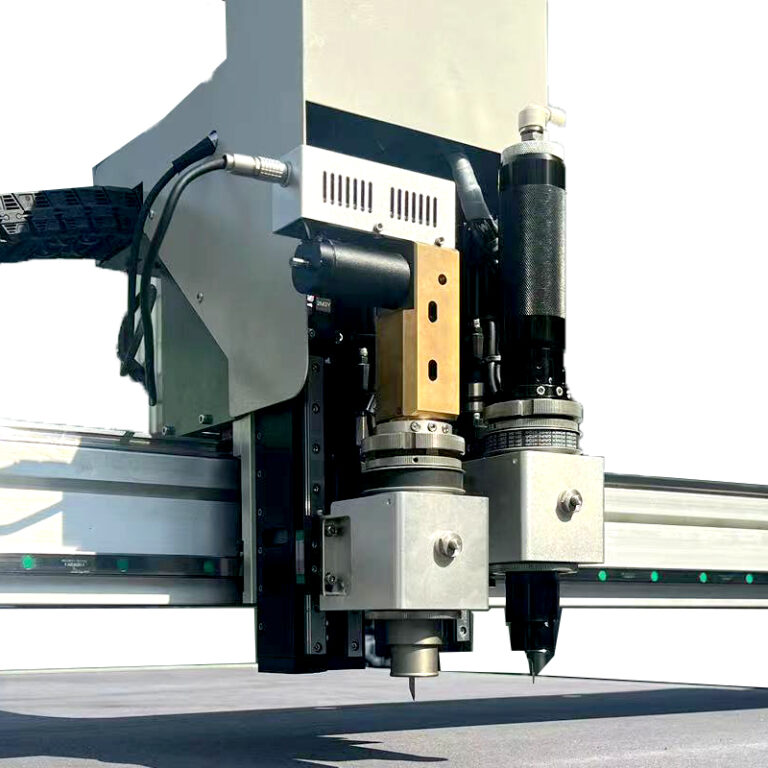
Match every spare to the installed tool package
A list copied from another machine can be unusable even when the machines look similar. Confirm tool model, blade dimensions, connector type and any left/right or size variant. If the machine combines cutting and creasing, record the wheel specification and holder separately.
- Photograph the installed component before shipping.
- Record the supplier part code and plain-English description.
- Note whether replacement requires calibration.
- Confirm which items the operator can replace and which need technical support.
- Keep one controlled master list instead of several supplier spreadsheets.
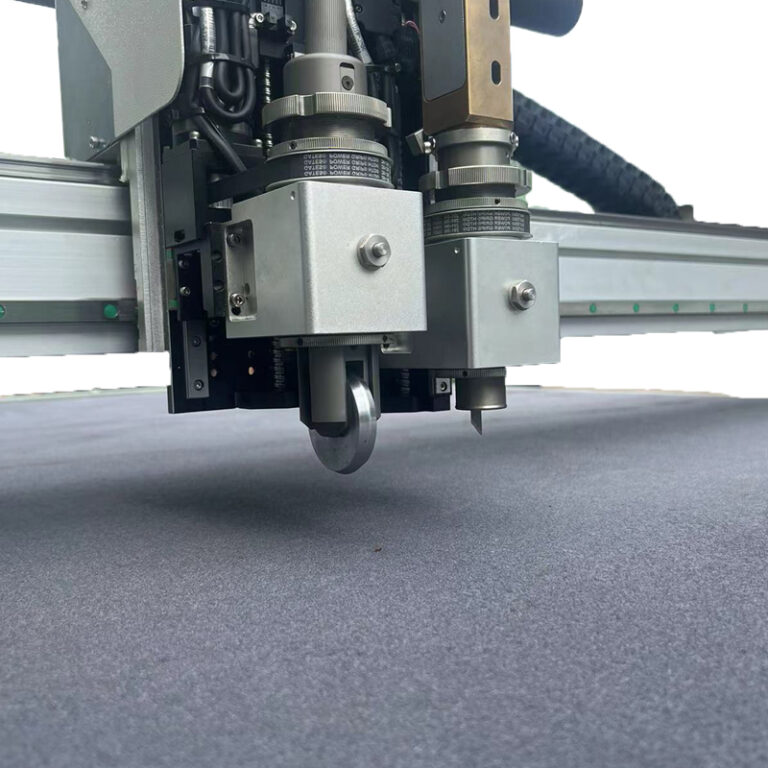
Use downtime risk to decide what stays on the shelf
Stocking every component is expensive and usually unnecessary. Rank a part by failure consequence, likelihood, overseas lead time and whether a local equivalent is safe. A low-cost part that stops the machine and takes weeks to replace can deserve shelf space more than a costly assembly with low failure risk and remote diagnostic support.
Confirm warranty handling before ordering. A spare held on site does not automatically mean the operator should install it without guidance. Record the troubleshooting evidence the supplier needs and the approval process for replacement.
Store small parts as production assets
Blades should remain dry, protected and identified. Separate similar-looking blade types and use first-in, first-out control where packaging has an age or corrosion concern. Keep filters and seals away from dust, heat and direct sunlight. When a part is issued, record the machine, date, running hours, material and reason.
A practical first-order request
Send the supplier the planned materials, shifts, working days and acceptable replenishment time. Ask for a starter list divided into consumables, wear items and critical backups, with part codes and replacement guidance. Compare it with the operating-cost assumptions in the oscillating knife cutter cost guide.
JEKE’s overseas after-sales support guide explains what to confirm before ordering, while the EOT versus POT comparison helps identify tool-specific requirements. Browse the digital cutting machine range or request a configuration-matched spare parts list.