
Thick corrugated board is not defined by thickness alone. Two sheets with the same nominal thickness can behave very differently because of flute construction, liner strength, coatings, recycled content, moisture, and internal crush resistance. Before choosing a digital cutter, define the complete job and test the actual board.
This guide explains the seven questions a packaging or display manufacturer should answer before requesting a machine recommendation.
1. What board are you actually cutting?
Record more than “corrugated cardboard.” A useful material specification includes:
- – Single-, double-, or triple-wall construction
- – Flute type and total measured thickness
- – Liner and medium composition
- – Coated, laminated, printed, or uncoated surface
- – Sheet size and grain/flute direction
- – Whether the material arrives flat, bowed, or moisture-sensitive
This information changes how the sheet is held, cut, and creased. A supplier cannot responsibly recommend a tool from thickness alone.
2. Do you need cutting, creasing, or both?
Packaging work often combines several operations:
- – Through-cutting the outside profile
- – Cutting slots and internal openings
- – Creasing fold lines
- – Kiss-cutting a top layer
- – Marking or drawing assembly information
Do not assume one tool performs every operation. Commercial digital cutters may use separate oscillating knives and creasing wheels. Zünd’s official tooling information, for example, separates creasing tools for single-wall, twin-wall, and double- or triple-wall corrugated board. That does not define the correct JEKE configuration, but it demonstrates why board structure and fold requirements must be specified before tool selection.
3. Can the table hold a porous sheet securely?
Corrugated board can leak air through exposed edges and porous liners. A vacuum table may work well, but performance depends on sheet coverage, board flatness, table zoning, pump capacity, and the remaining open surface.
During a sample test, check whether the sheet moves near corners, narrow bridges, and small internal features. Also check whether temporary tape, clamps, or overlays leave marks. The goal is not simply to hold the largest sheet; it is to keep every critical feature stable without damaging the surface.
4. What does a “clean cut” mean for your product?
Inspect at least four areas:
- 1. The top liner
- 2. The bottom liner
- 3. The exposed flute or core
- 4. Tight corners and small slots
A part can look clean from above while the bottom liner tears or the internal flute pulls away. Define acceptable edge quality before the test. If the board will become retail packaging or a display, photograph both sides and the most difficult internal features.
5. Can the blade reach the material without crushing it?
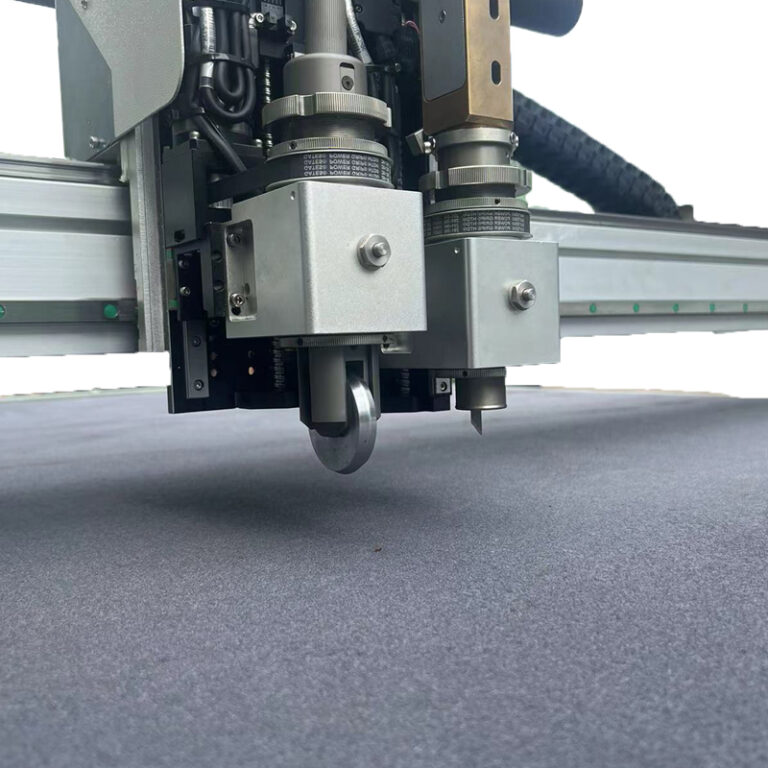
The usable cutting depth must be evaluated together with blade geometry, tool stroke, material compression, and machine clearance. A long blade is not automatically the right blade. Excessive lateral load or the wrong point geometry can reduce corner quality and blade life.
Ask the supplier to identify the exact tool and blade used in the sample—not merely the machine model. Official Zünd blade documentation shows that blades intended for different corrugated constructions have different geometries and maximum cutting depths. The general lesson is transferable: tool-and-material matching matters more than a single maximum-thickness claim.
6. Can the workflow repeat the result?
A successful sample matters only if production can repeat it. Confirm:
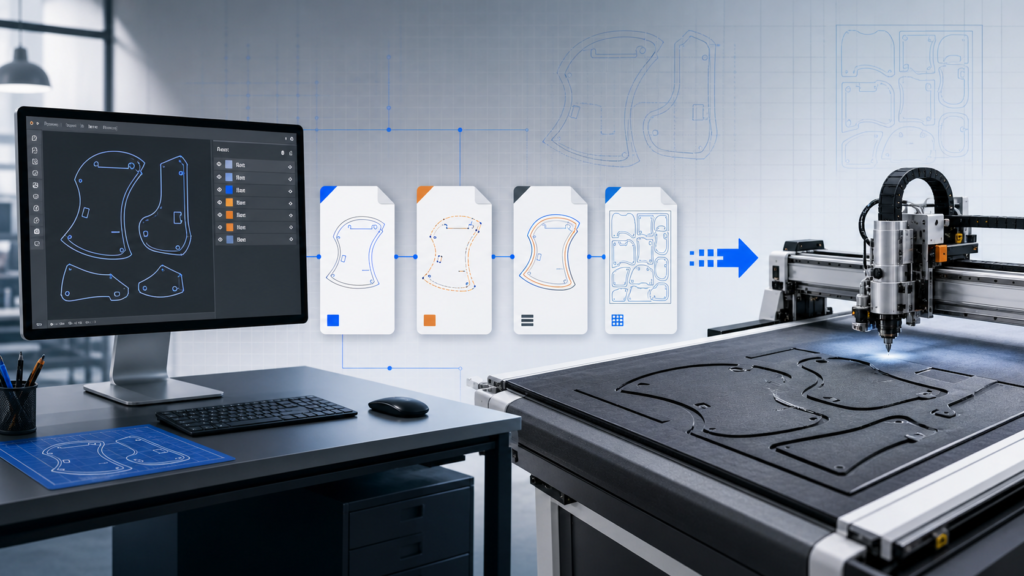
- – Accepted file formats and prepress workflow
- – How cutting and creasing lines are assigned
- – Tool calibration and cutting-depth setup
- – Nesting and sheet utilization
- – Barcode or job identification, if required
- – Changeover time between board types
- – Blade and underlay inspection routines
Request the saved job file and configuration notes from the test. This turns a demonstration into a repeatable process reference.
7. Was the test performed on your actual board?
A forum user cutting 16 mm double-wall corrugated board reported that an oscillating blade solved a problem that a router bit did not. That is useful discovery evidence, not a universal specification. Your board, design, and acceptance standard may be different.
Send representative sheets, including difficult lots, and include the smallest slot, tightest corner, longest crease, and largest panel in the test file. Ask for an unedited video plus close-up photos of both surfaces and the internal core.
A practical sample-test checklist
Before comparing quotations, give each supplier the same information:
| Item | What to record |
|---|---|
| Material | Construction, flute, coating, measured thickness |
| Sheet | Maximum and typical size |
| Operations | Full cut, crease, kiss cut, mark |
| Quality | Acceptable tear, crush, surface mark, corner tolerance |
| Volume | Jobs per day, parts per sheet, batch variation |
| Files | Current design and prepress formats |
| Evidence | Tool, blade, settings, video, edge photos |
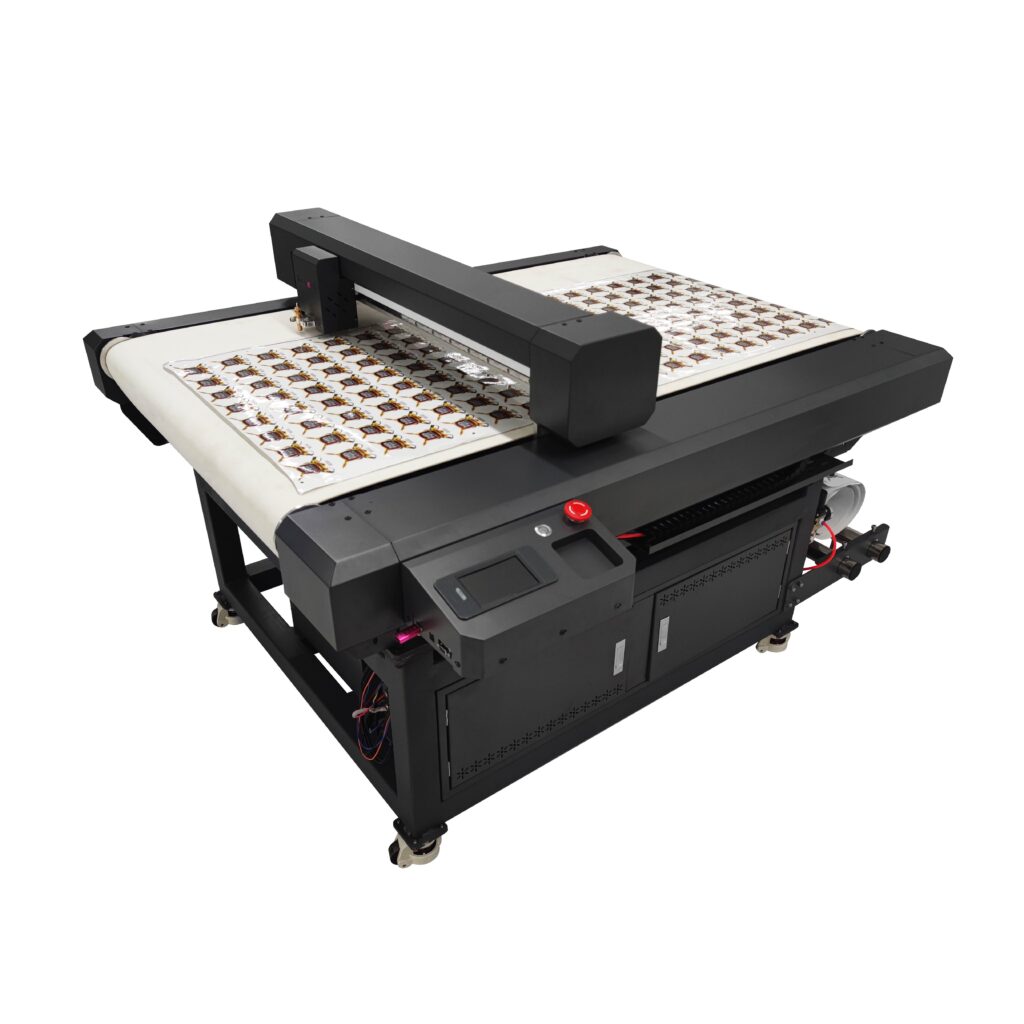
Frequently asked questions
Is an oscillating knife always required for thick corrugated board?
No. The correct tool depends on board construction, thickness, feature size, edge requirement, and machine platform. An oscillating knife is one common option for demanding board, but it should be selected through a material test.
Can the same cutter crease and cut corrugated board?
Many modular digital cutters can use separate cutting and creasing tools. Confirm which tools, wheel profiles, and software assignments are available on the exact configuration you are considering.
What should I send JEKE for a cutting test?
Send the actual board, measured thickness, maximum sheet size, design file, required operations, daily output, and photos of acceptable and unacceptable edges. Request a documented configuration rather than a general “can cut” answer.
Related JEKE resources
Continue your evaluation with the corrugated cardboard cutter buyer guide, packaging prototype cutting workflow, JEKE 2516 cardboard box cutting machine, request a material sample test.