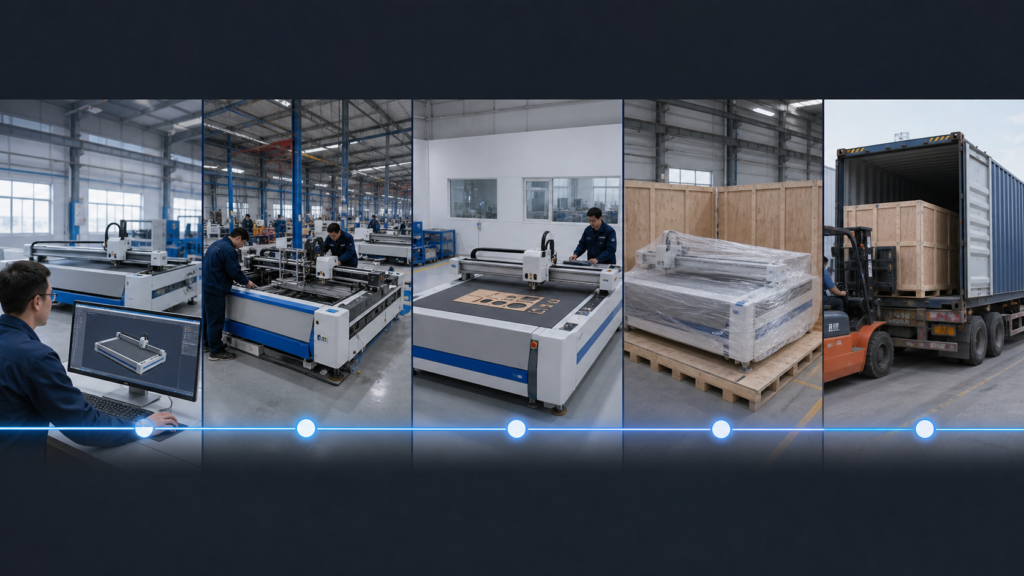
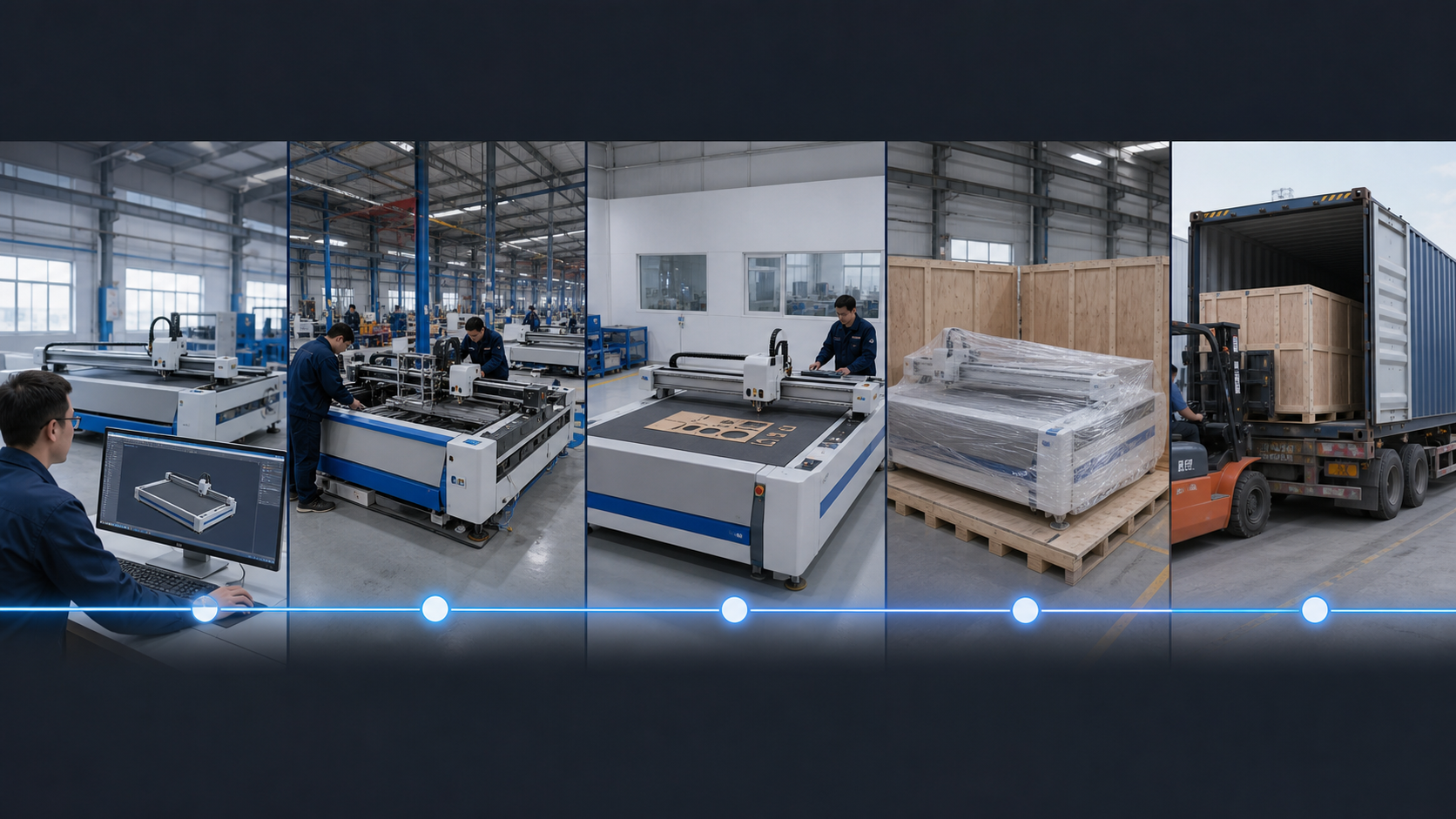
A reliable CNC cutter delivery timeline is built around completed milestones, not one promised calendar date. Configuration approval, buyer-supplied sample files, machine production, acceptance testing, packing documents and international transport all have different owners. If one input remains open, the next stage may move even when the machine frame is ready.
Milestone 1: freeze the commercial and technical scope
The deposit should connect to a final configuration sheet. Confirm working area, fixed or conveyor table, tool heads, camera option, vacuum system, electrical standard, software, accessories, spare parts, packing method and destination information. Changes after this point may affect production sequence and cost.
The buyer should also provide material samples, drawings and the required output early. A sample that arrives after assembly can delay the only test that matters: whether the configured machine suits the real work.

Milestone 2: production and configuration assembly
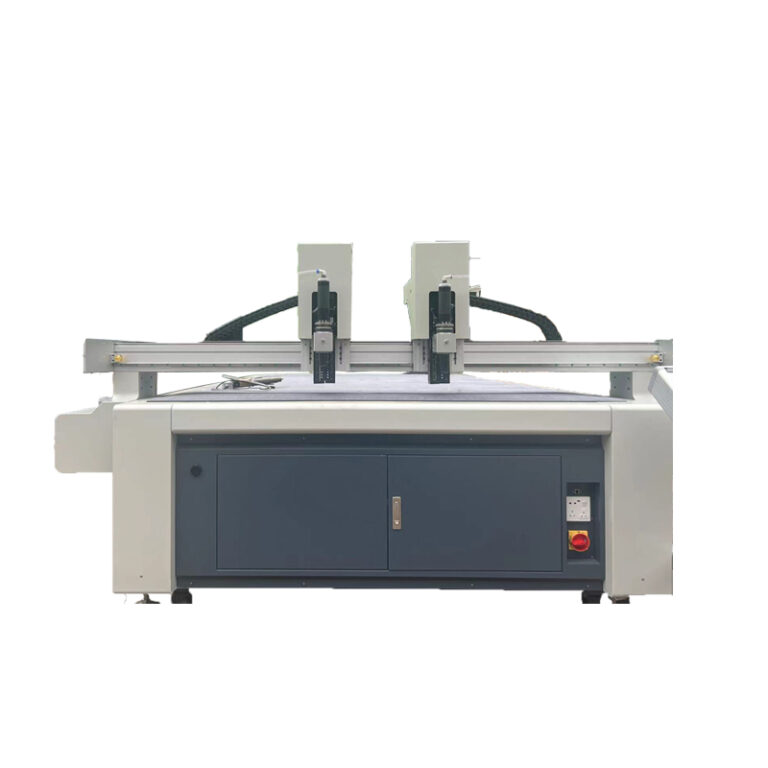
Machine production is more than placing a tool head on a standard table. The selected working area, feeding system, control components, pump, camera and accessories must be assembled as one configuration. The supplier should identify the machine so later photographs and test records can be traced to the same unit.
| Stage | Supplier output | Buyer input or decision |
|---|---|---|
| Configuration freeze | Final specification and scope list | Approve voltage, table, tools and destination |
| Production | Configured machine and identity record | Answer open technical questions promptly |
| Testing | Functional and material-test evidence | Approve sample criteria and review evidence |
| Packing | Packing list, crate and accessory photographs | Confirm consignee and document requirements |
| Handover | Manuals, files and support channel | Prepare site, operator and unloading plan |
Milestone 3: functional checks and material acceptance
Functional checks cover power-on, homing, travel, tool recognition, hold-down, feeding where fitted, safety devices and basic software communication. Material acceptance then uses the agreed sample, file and quality criteria. These are separate checks; a machine can move correctly but still need a different blade, hold-down method or parameter for the buyer’s material.
Review the test record before authorizing packing. If a correction is required, keep the original observation and retest evidence. The supplier deposit checklist shows which commercial and technical items should already be documented.
Milestone 4: export packing and document control
Packing begins only after critical acceptance items close. Ask for photographs of the machine before wrapping, moisture protection, internal fixing, completed crate, marks and the separately packed accessories. Compare the packing list against the final configuration and spare-parts list.
Commercial invoice, packing list, transport document and any destination-specific paperwork should use consistent model, quantity, weight and consignee information. Document corrections are easier before cargo handover than after arrival.
Milestone 5: transport is a range, not a production promise
International transport depends on route, carrier, port conditions, customs and final delivery arrangements. Separate factory completion, cargo handover, estimated departure, estimated arrival and delivery to the buyer’s site. This prevents a port estimate from being mistaken for an installation date.
Milestone 6: prepare installation before the machine arrives
Confirm unloading equipment, doorway and floor access, operating space, electrical supply, compressed air where required, network or computer, extraction or vacuum arrangements, and the people who will receive training. JEKE’s installation requirements guide can be used as a site checklist.
For a traceable quotation and timeline, send destination, voltage, material, maximum format and required tools through the JEKE contact page. Compare suitable systems in the digital cutting machine category and confirm ongoing responsibilities in the after-sales support guide.