
Direct answer: Calculate the break-even run length by comparing the fixed cost and variable cost of both methods for the same packaging job. If digital cutting has lower fixed cost but higher variable cost, the break-even quantity is: (die-process fixed cost − digital-process fixed cost) ÷ (digital variable cost per unit − die variable cost per unit). Use your own quotations, labor rates, cycle times, waste and revision history. There is no universal quantity where every job should switch.
Digital cutting and steel-rule die cutting solve different production problems. Digital cutting removes the need to manufacture a physical die for each design and can change from one CAD file to another quickly. A die process can achieve a lower variable cost on stable repeat production. The crossover depends on the job—not on a generic claim such as “digital is always cheaper below 500 pieces.”
Use the same cost boundary for both methods
Decide whether the calculation covers only converting, or the complete process from approved dieline to finished blank. Then use the same boundary for both alternatives.
| Cost category | Digital cutting | Steel-rule die process |
|---|---|---|
| Design-specific setup | File preparation, tool assignment, test cut and first-piece approval | Die design, manufacture, delivery, mounting, makeready and first-piece approval |
| Equipment time | Cutting and creasing time per sheet or part | Press time per sheet or impression |
| Labor | Loading, registration, unloading, sorting and changeover | Die setup, makeready, feeding, stripping, unloading and changeover |
| Consumables | Blades, creasing inserts, cutting underlay and relevant energy | Die wear, rule repair, counter material and relevant press consumables |
| Material loss | Nesting waste, test sheets and failed pieces | Makeready sheets, layout waste and failed pieces |
| Design changes | File revision and new first-piece approval | Die modification or replacement plus new makeready |
| Storage and control | Digital file version control | Physical die storage, retrieval, identification and disposal |
The break-even formula
Let:
- FD = fixed cost for the digital job.
- VD = digital variable cost per acceptable unit.
- FS = fixed cost for the steel-rule die job.
- VS = die-process variable cost per acceptable unit.
- Q = quantity of acceptable units.
Digital total cost = FD + Q × VD
Die-process total cost = FS + Q × VS
When VD is greater than VS, the crossover is:
Break-even Q = (FS − FD) ÷ (VD − VS)
If the denominator is zero or negative, the simple crossover model does not produce the expected result. Recheck the scope and data instead of forcing a break-even number.
Blank worksheet for one packaging job
| Input | Digital cutting | Steel-rule die | Source of data |
|---|---|---|---|
| File/die preparation | _____ | _____ | Internal time or supplier quote |
| Test and makeready material | _____ | _____ | Observed sheets × material cost |
| Setup labor | _____ | _____ | Observed hours × loaded labor rate |
| Cycle cost per acceptable unit | _____ | _____ | Measured cycle, cavities and shop rate |
| Consumables per unit | _____ | _____ | Replacement interval and purchase cost |
| Expected scrap/rework | _____ | _____ | Job history or controlled trial |
| Revision probability/cost | _____ | _____ | Historical design-change data |
| Break-even quantity | _____ acceptable units | Calculated from the defined model | |
Calculate per SKU and per version
A physical die is tied to a design. If a campaign has ten sizes or language versions with different cut geometry, the fixed tooling cost may repeat. A high annual volume divided among many low-volume versions can behave like a short-run portfolio.
Create one calculation for every geometry that needs its own die. Then calculate the portfolio. Do not use total annual cartons as the denominator if the tooling cannot be shared.
Add the cost of revision and waiting
Break-even math often ignores change. Record how many designs are revised after a physical sample, how often a die must be modified, and what production waits while a new tool is made. For urgent launch samples, the economic effect of lead time may matter even when it is not booked as a machine cost.
Keep this separate from unsupported “time saved equals revenue” claims. Use an actual internal value only when the business can explain how the delay affects overtime, missed delivery, press scheduling or customer approval.
Use acceptable units, not attempted units
Variable cost should be divided by accepted output. If a process produces warped creases, registration errors or pieces that require hand trimming, include the rework and rejected material. The fastest nominal cycle is not the lowest cost when the part fails downstream.

Digital cutting and dies can coexist
Many packaging operations use digital cutting for structural design, prototypes, urgent replacements, short runs and highly variable work, then move stable higher-volume jobs to a die process. The decision rule should route each job to the process with the right combination of cost, lead time, quality and available capacity.
Validate the assumptions with a controlled trial
- Select three representative jobs: a simple repeat, a complex short run and a frequently revised design.
- Use the actual substrate, dieline and quality standard.
- Record complete setup, makeready, cutting/creasing, unloading and inspection time.
- Count accepted output, waste and rework.
- Run the formula for each job and test how the answer changes when quantity or revisions change.
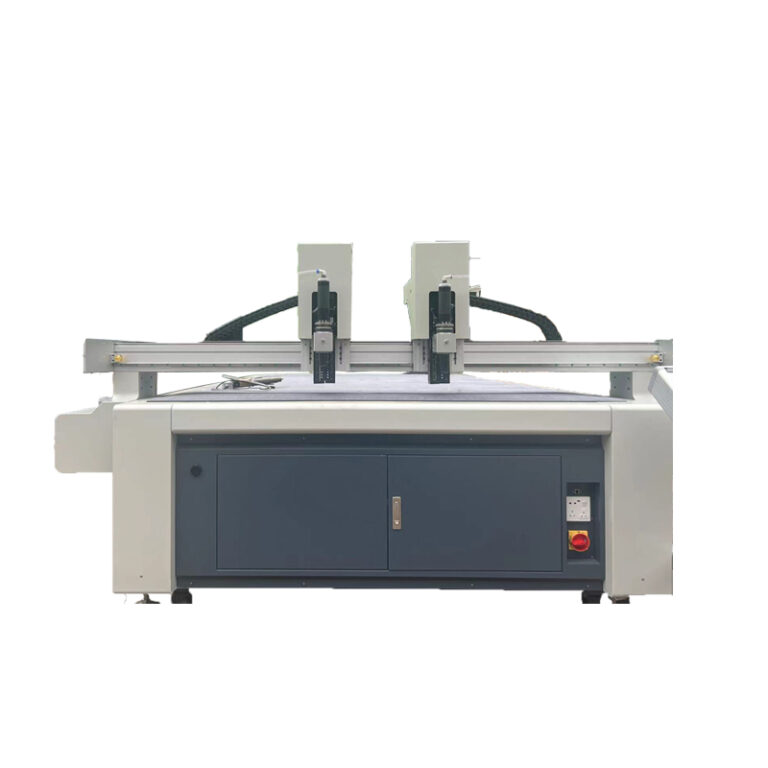
Build the cost model alongside the digital die cutter use-case guide, packaging prototype cutting workflow, flexible-material cutter selection guide, and 2516 cardboard box cutting machine page.
How JEKE can support the digital-cutting side of the comparison
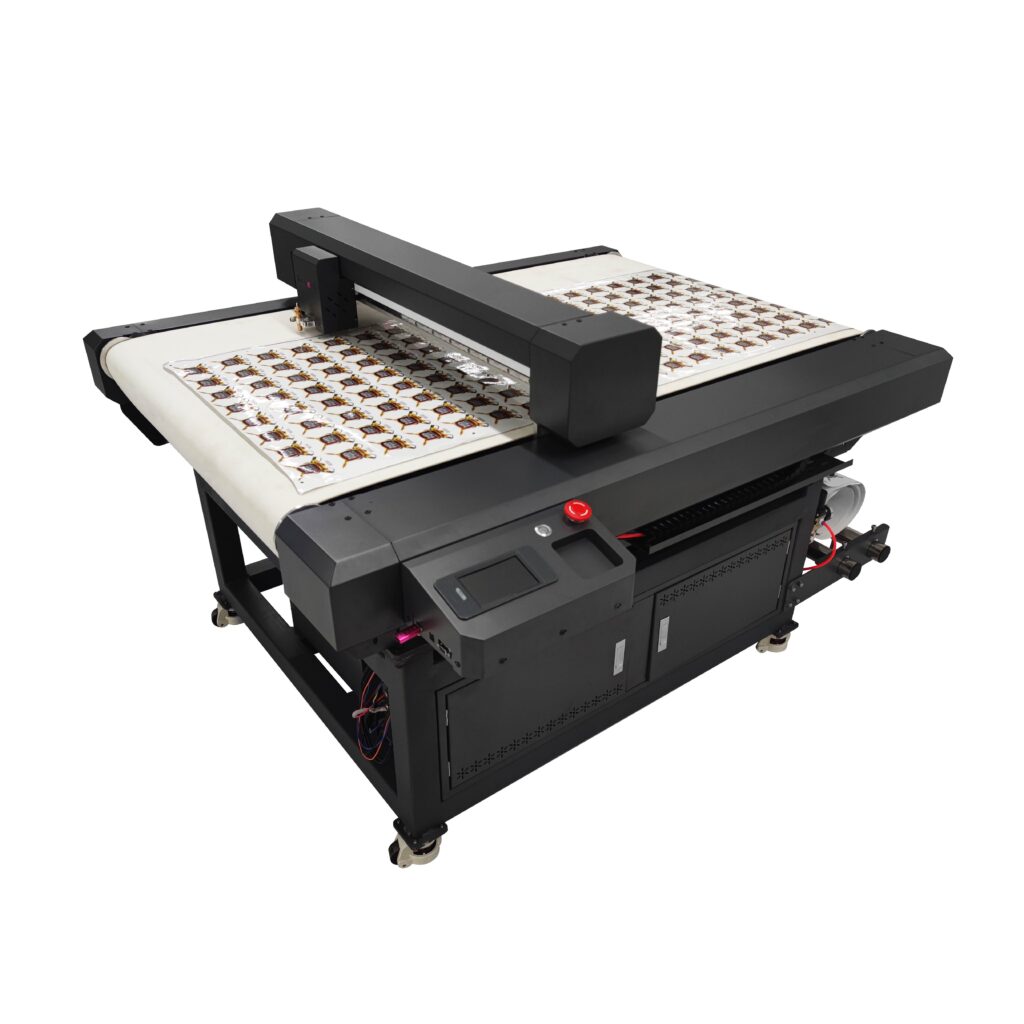
JEKE digital cutting systems can be configured for packaging and display materials including corrugated cardboard, cardboard, grey board and honeycomb board. A useful cost comparison requires a real cutting and creasing test so the buyer can measure setup, cycle, material handling, consumables and accepted output for its own job.
Compare your real packaging jobs with JEKE by sharing representative dielines, board specifications, order quantities, revision frequency and current die-process costs.
Frequently asked questions
What is the normal break-even quantity for digital cutting?
There is no reliable universal quantity. It changes with die cost, cavities, makeready, digital cycle time, labor, material, waste, revisions and the number of SKUs.
Should machine purchase price be included?
Include an allocated machine or shop rate if the decision is about owning the process. If the comparison uses supplier job quotes, use the quoted prices consistently and avoid adding capital cost twice.
Does every design revision reset die cost?
Only if the geometry change requires modification or replacement. Record the actual rule used by the die supplier and the factory’s revision history.
Is die cutting always cheaper for high volume?
A die process often has a variable-cost advantage on stable, repeat work, but the conclusion still depends on cavities, press utilization, quality, tooling life and change frequency. Calculate the actual job.
Sources and further reading
- Printing United Alliance: Traditional die cutting versus digital die cutting
- Procedia Manufacturing: On-demand corrugated cutting and creasing context
- Arrow Systems: Transparent fixed-cost and variable-cost break-even formula
All cost fields must be replaced with the buyer’s own data. This article does not state a JEKE ROI or universal break-even quantity. Last reviewed: August 20, 2026.