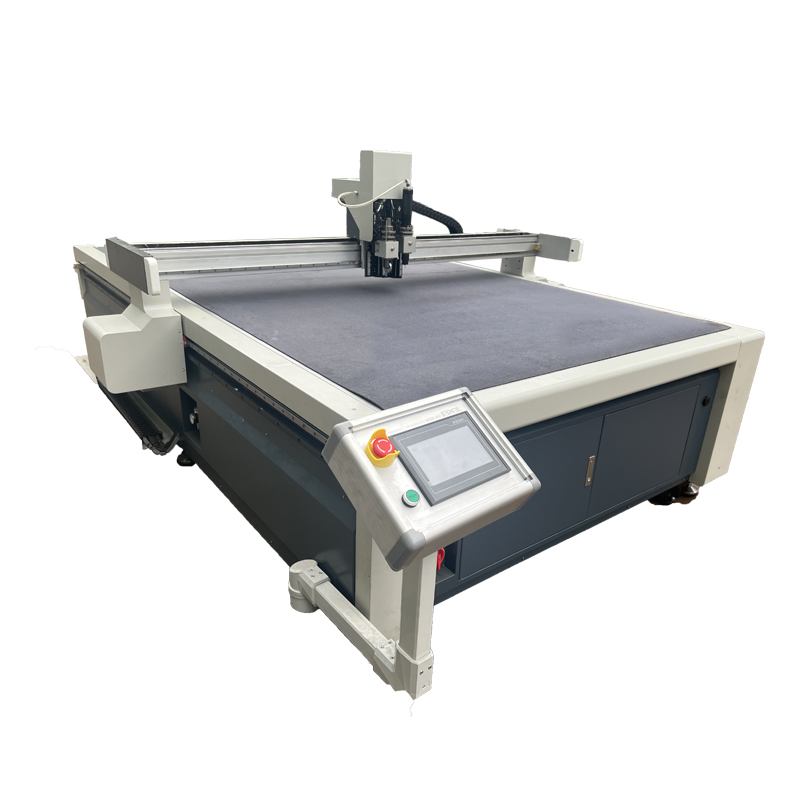
Direct answer: A new digital cutting distributor should start with one or two applications that match its existing customer base, local materials, demonstration ability and technical-service capacity. Leather goods and footwear, automotive interiors, made-to-order apparel, and packaging prototypes or short runs are practical categories to assess. Do not launch all applications at once or choose only by national market size.
The first application should create a repeatable process: identify the customer problem, collect the right technical information, test the material, recommend a configuration, demonstrate the result and support the installed machine. A broad catalog without this process creates enquiries that the distributor cannot qualify or service.
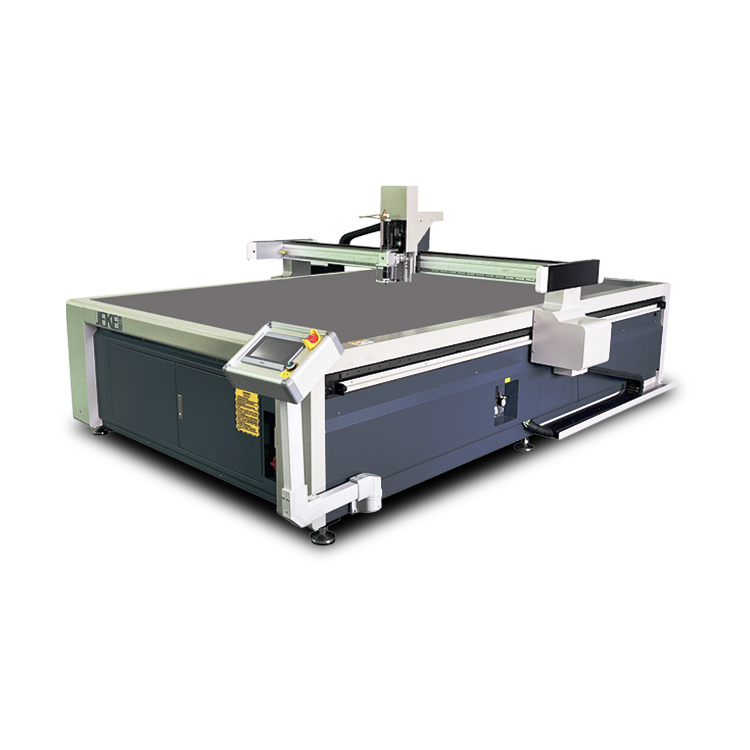
Start from the customers you already know
List the industries, materials and production managers already in your network. A distributor serving printing and display companies has a different starting point from one serving footwear factories or automotive trim suppliers.
For each existing customer group, ask:
- Which materials are cut today?
- Are they cut manually, by dies, laser, router or another process?
- Where do customers lose time: tooling, changeovers, nesting, quality or labor?
- Are orders prototypes, short runs, many variants or stable mass production?
- Which part would make a convincing local demonstration?
- Can the distributor support installation, training, consumables and first-line diagnosis?
Score each application before committing
| Criterion | Low score | High score |
|---|---|---|
| Existing access | No relationships or application knowledge | Active customers and trusted technical contacts |
| Problem clarity | General interest in automation | Visible cost, delay, quality or flexibility problem |
| Sample availability | Materials and drawings are difficult to obtain | Representative samples and files are readily available |
| Demo repeatability | Every project is unrelated and highly customized | A core material/tool workflow repeats across prospects |
| Service readiness | No trained technical person or local response process | Named staff can install, train and perform first-line diagnosis |
| Evidence strength | Only generic brochures | Local samples, reports, videos and reference workflows |
| Commercial fit | Long sales effort with weak decision access | Identifiable buyers and a clear evaluation process |
Use a simple 1–5 score for each criterion and document the evidence. The score is a planning tool, not a market-size claim. Revisit it after real customer interviews and sample tests.
Application 1: leather goods and footwear
This application can fit distributors with relationships in shoe, bag, upholstery or leather-goods factories. The sales conversation should focus on material variation, defects and quality zones, grain direction, small features, paired parts, nesting and visible-surface protection.
Demo sample set: natural hide with marked defects, synthetic leather roll, shoe-upper pattern, bag components and a test report linking quality rules to cut parts.
Capability required: material inspection, appropriate cutting and punching/marking tools, hold-down knowledge, sample reporting and part sorting.
Application 2: automotive interiors
This application can fit distributors serving carpet, seat, insulation, trim or custom-vehicle suppliers. Automotive interiors involve several material behaviors: carpet backing, porous felt, compressible foam, visible leather and composite structures.
Demo sample set: car-mat contour, acoustic felt with small features, foam or insulation profile, seat material, punch/mark operation and a multi-material tool test matrix.
Capability required: tool selection by material behavior, vacuum diagnosis, large-part sizing, roll or sheet handling and downstream assembly understanding.
Application 3: made-to-order apparel and sample rooms
This application can fit distributors already working with garment software, sewing equipment, fabric inspection or apparel automation. Strong early prospects are not defined only by factory size; they have high style variety, samples, personalized orders, frequent changes or printed/motif fabrics.
Demo sample set: plain single-ply fabric, stretch knit, stripe/plaid, digitally printed panel, sample-room marker and an order-to-cut workflow.
Capability required: fabric handling, single-ply versus low-ply qualification, roll feeding, nesting, vision where applicable, marking and part identification.
Application 4: packaging prototypes and short runs
This application can fit distributors serving printers, packaging designers, display producers and sample departments. The customer problem is often not only cutting; it includes creasing, V-cutting, kiss-cutting, printed registration, rapid revision and the economics of dies.
Demo sample set: corrugated carton, folding carton, grey-board or honeycomb V-cut, printed registration sample and a break-even worksheet using the customer’s own costs.
Capability required: CAD layer preparation, creasing tests, board/flute identification, camera registration where needed and a clear boundary between prototypes, short runs and mass die production.

Choose one anchor application and one adjacent application
An anchor application uses the distributor’s strongest customer relationships and technical knowledge. An adjacent application reuses part of the same machine, tool or service capability without requiring an entirely new sales organization.
For example, a distributor with packaging and display customers might begin with corrugated and grey-board work, then expand into foam packaging inserts. A distributor serving upholstery may start with leather and fabric, then add selected automotive trim materials. The expansion should follow tested material behavior, not a claim that one machine is universal.
Build a minimum viable demo library
For each selected application, prepare:
- Three to five representative materials with specifications.
- One diagnostic coupon and one real production-style part.
- A completed sample-test report with pass/fail criteria.
- A short unedited workflow video.
- A tool and configuration explanation.
- A customer discovery questionnaire.
- A list of excluded or unproven materials.
- A clear path for sending difficult tests to the manufacturer.
Train sales and service together
Industrial channel programs commonly combine market support, product training, sales tools, hands-on technical training and spare-parts capability. A sales team that cannot recognize an application risk will create poor quotations. A technician who never sees the original customer requirement will struggle to commission the correct workflow.
Run joint exercises in which sales staff collect the requirement, an application person designs the test, and a technician explains installation and support needs.
Do not use these as market-entry evidence
- A generic global market-growth percentage with no local segment data.
- A list of every material the machine may cut.
- A competitor price collected without equivalent configuration and service scope.
- A successful factory video with no material, tool or acceptance information.
- An exclusivity promise before targets and responsibilities are defined.

Use the application scorecard with the JEKE application and material overview, leather cutting machine guide, apparel sample-room buying checklist, and cardboard box cutting machine page.
How JEKE can work with a potential distributor
JEKE focuses on oscillating knife cutting machines and automatic multi-layer cutting systems for leather, textiles, foam, rubber, felt, carpet, gasket materials, composites and packaging/display materials. JEKE supports material-based selection, sample cutting, remote technical support, training and customized configurations. The applicable product, service and commercial scope must be confirmed for each market.
Map your local digital cutting applications with JEKE by sharing your country, current customer industries, product portfolio, demo capability and technical-service team.
Frequently asked questions
Should a new distributor begin with the largest local industry?
Not automatically. A smaller segment with existing relationships, clear pain, available samples and service readiness may produce a more repeatable first sales process.
How many applications should be launched at first?
Usually one anchor application and one closely related application are easier to demonstrate and support than a broad launch. The exact number depends on staff and existing expertise.
Does a distributor need a local demo machine?
It depends on market expectations, sales volume, available space and service capability. If a demo machine is not available, define a fast and traceable process for testing materials with the manufacturer.
What should determine the next application?
Use enquiry quality, completed tests, conversion, service load and adjacent material capability. Do not expand only because a material appears on a catalog list.
Sources and further reading
- Atlas Copco: Distributor sales tools, market intelligence and training support
- Hypertherm: Product, sales and technical-service training for channel partners
- ABB: Channel roles combining product availability, application expertise, training and service
Last reviewed: August 20, 2026.