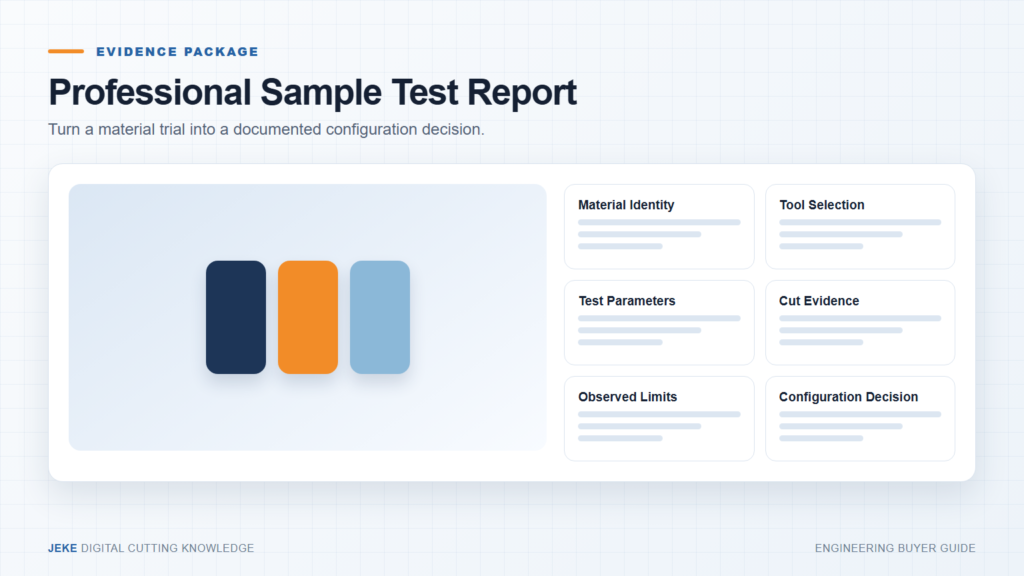
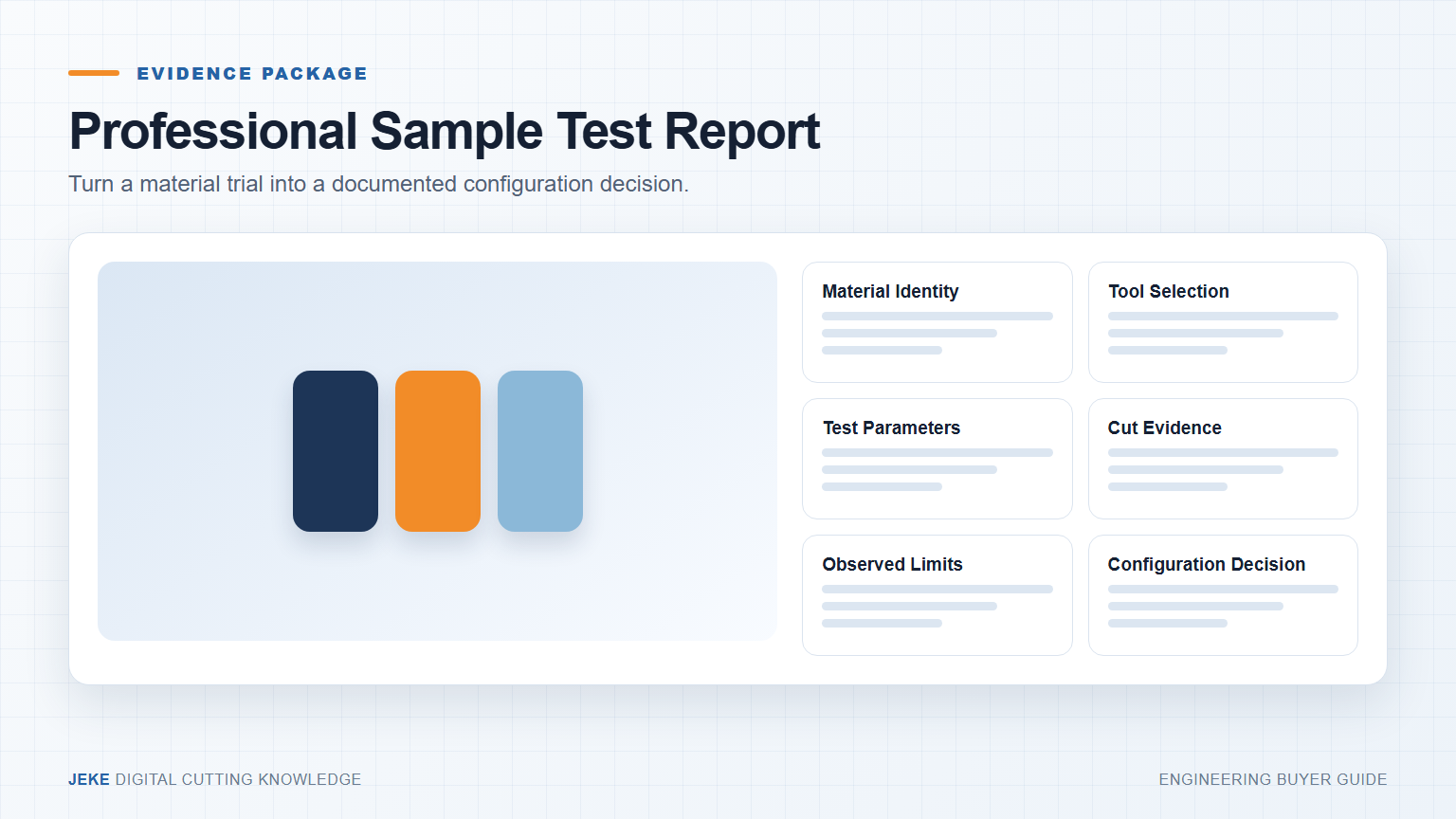
A professional CNC cutting sample test report should allow a buyer to understand what was tested, how it was tested, what the sample revealed and why a configuration was recommended. A video proves that cutting occurred; it does not preserve the decisions behind the result.
Give the sample a traceable identity
Start with buyer reference, material name, construction, thickness range, sheet or roll size, visible side and intended product. Photograph the sample before cutting and assign an identifier that also appears on the digital file and finished pieces. If several materials look similar, label each one separately.
Record the job file and test geometry
List the file name, format, units and revision. Explain whether the file came directly from the buyer or was cleaned before import. The report should identify the difficult features being evaluated: small holes, tight corners, long cuts, repeated parts, printed contours, crease lines or cavities.
A useful test contains both representative production geometry and a diagnostic feature. If every shape is easy, the report cannot reveal the limits that affect configuration.
Connect every observation to a controlled setting
| Report section | Information to capture | Decision supported |
|---|---|---|
| Material | Construction, thickness, direction and surface sensitivity | Hold-down and handling |
| Tool | Tool type, blade or wheel and calibration | Tool-head configuration |
| Process | Speed, depth, pressure or relevant machine setting | Starting production recipe |
| Evidence | Video, both-side photographs and measured samples | Quality verification |
| Limits | Features that failed, deformed or need another method | Risk and retest plan |
| Recommendation | Table, tool, camera, feeding and support assumptions | Quotation scope |

Show observations, not only a pass label
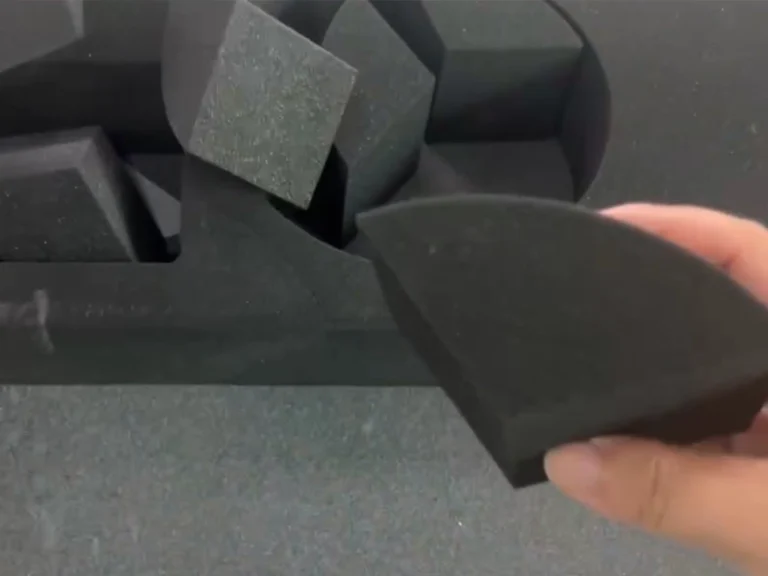
Edge quality can include fraying, compression, melting, burrs, verticality, surface marks and incomplete corners. Dimensional checks should state the method and sample location. For a packaging sample, crease depth and folding behavior may matter more than one overall dimension. For foam, cavity fit and recovery may be the functional result.
Use three result categories where helpful: acceptable for the stated requirement, acceptable after an identified adjustment, or not confirmed and requiring another test. This is more informative than forcing every trial into pass or fail.
Document limits and changes openly
If the operator changes a blade, reduces speed, adds a protective layer or edits the path, record the change and reason. Do not present the final successful attempt as if earlier problems never occurred. The progression helps the buyer understand how sensitive the process is and what the future operator must control.
End with a configuration decision
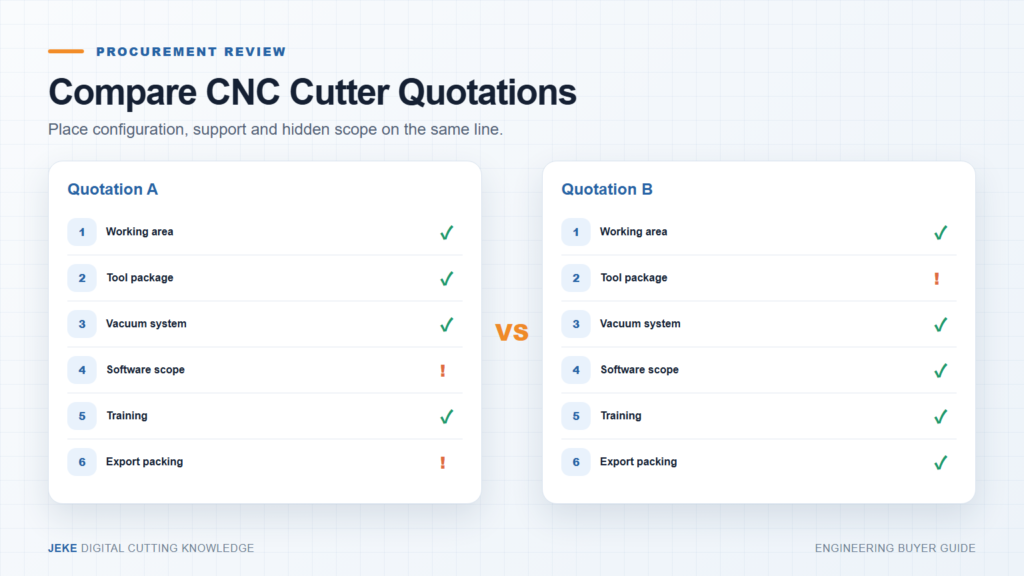
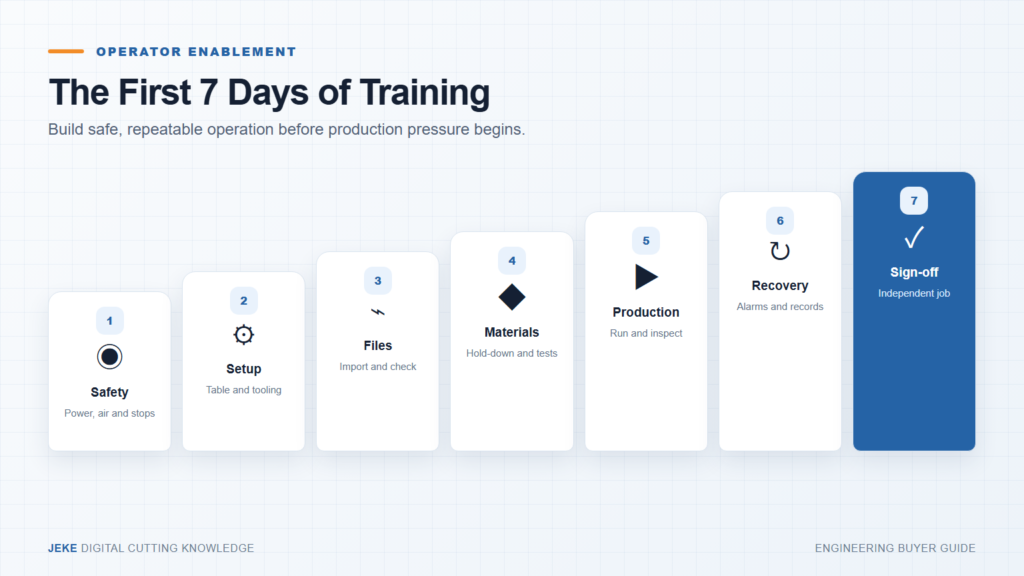
The conclusion should translate evidence into working area, tool package, hold-down, feeding, camera, software and training requirements. It should also list unanswered questions. The quotation can then refer to the report instead of relying on general statements.
Before sending material, follow the material testing preparation guide and the accurate quotation input checklist. JEKE’s sample-to-configuration case shows how test evidence affects selection. Browse digital cutting systems or request a documented sample test.