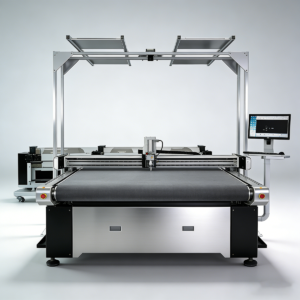
Automotive interior manufacturing involves many flexible and semi-flexible materials, such as car floor mats, leather, PU, EVA foam, XPE foam, sound insulation cotton, trunk mats, rubber sheets, and cardboard templates. These materials are widely used in car interiors, seat covers, floor protection, acoustic insulation, sealing parts, and customized automotive accessories.
For manufacturers, the main challenge is not only cutting these materials into the right shape, but also improving efficiency, reducing material waste, and handling different designs without making new cutting dies every time.
This is why many automotive interior factories are moving from manual cutting and traditional die cutting to CNC digital knife cutting machines. A CNC cutting machine can cut different automotive materials with high precision, flexible production, and lower mold cost, especially for small and medium batch orders.
Common Automotive Interior Materials That Can Be Cut
A CNC knife cutting machine is suitable for many materials used in automotive interior production, including:
- Car floor mats
- Car trunk mats
- Automotive leather
- PU leather
- PVC leather
- EVA foam
- XPE foam
- Sponge foam
- Sound insulation cotton
- Rubber sealing sheets
- Carpet materials
- Cardboard templates
- Composite interior materials
These materials usually have different thickness, hardness, surface texture, and flexibility. A good automotive interior cutting solution should be able to handle multiple materials on one machine by changing cutting tools and adjusting cutting parameters.
Why Traditional Cutting Methods Are Not Always Efficient
Many automotive interior manufacturers still use manual cutting, die cutting, or laser cutting. Each method has its own limitations.
Manual cutting is flexible, but it depends heavily on workers’ experience. It is slower, less stable, and may lead to inconsistent cutting edges. For customized car mats or different vehicle models, manual cutting can also increase labor cost and production errors.
Die cutting is efficient for mass production, but it requires cutting molds. When the design changes or the order quantity is small, mold cost becomes a serious problem. For factories handling many different car models, making a new die for every shape can be expensive and time-consuming.
Laser cutting is suitable for some materials, but it may not be ideal for leather, foam, carpet, rubber, and some interior materials because it can produce burnt edges, smoke, odor, or surface discoloration.
For these reasons, a CNC knife cutting machine is often a better choice for automotive interior materials.
Why CNC Knife Cutting Is Suitable for Car Floor Mats
Car floor mats often require accurate contour cutting, stable edge quality, and flexible shape changes. Different car models have different mat shapes, hole positions, curves, and edge details. With a CNC car floor mat cutting machine, manufacturers can cut directly from digital files without making a physical mold.
The main advantages include:
1. No Cutting Die Required
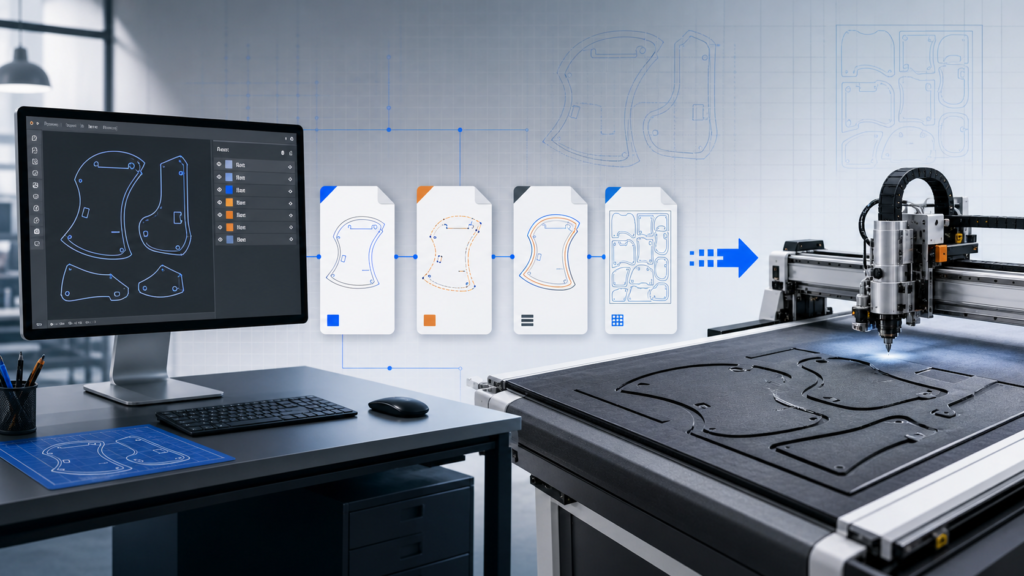
Digital cutting allows the machine to cut according to CAD files. This is useful for customized car mats, small batches, and new vehicle model development.
2. Better Shape Accuracy
The machine follows the digital cutting path, which helps reduce human error and improve repeatability.
3. Suitable for Different Mat Materials
The same machine can be configured to cut carpet mats, EVA mats, rubber mats, PVC mats, and composite floor mat materials.
4. Faster Sample Development
When a new design is needed, the operator can modify the digital file and start cutting quickly. This is helpful for automotive accessory manufacturers and OEM sample development.
5. Lower Material Waste
With nesting software, the machine can arrange cutting patterns more efficiently and help improve material utilization.
Recommended Machine Configuration for Automotive Interior Cutting
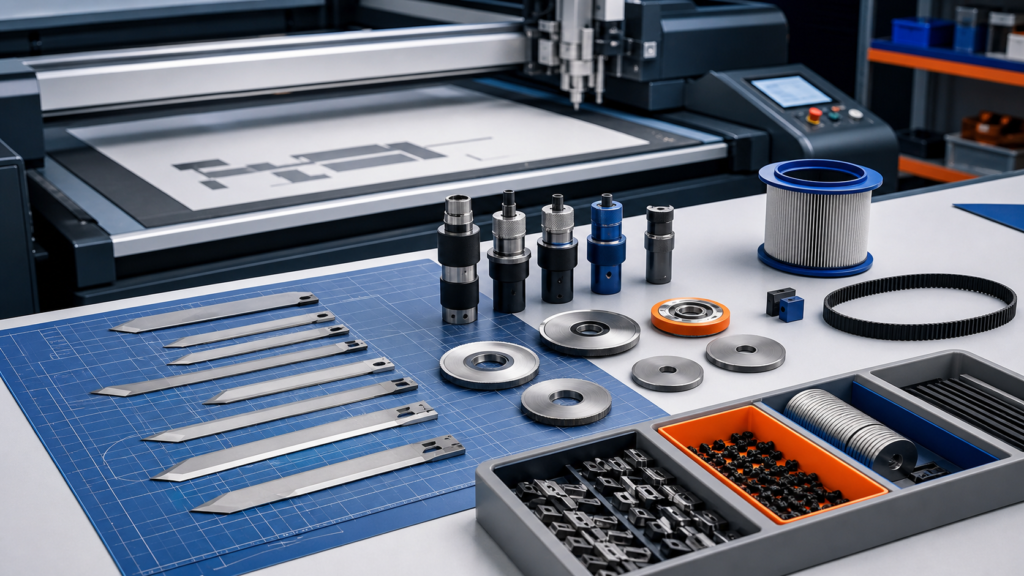
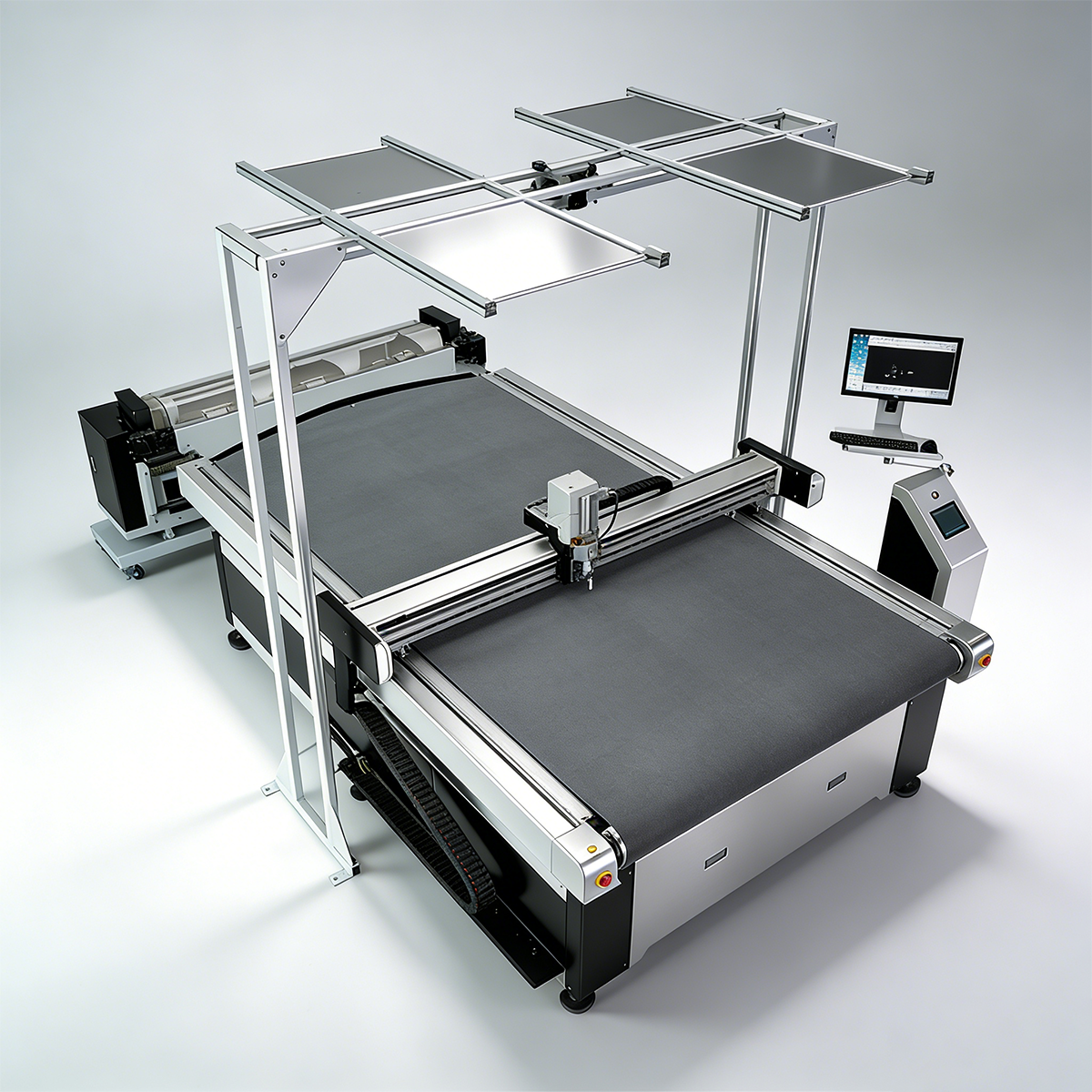
For car floor mats and automotive interior materials, the recommended solution is usually a CNC digital cutting machine with an oscillating knife system.
A typical configuration may include:
- Oscillating knife for flexible and semi-flexible materials
- Drag knife for thin materials
- Round knife for fabric or textile materials
- Creasing tool for cardboard templates
- Marking pen for production labels or sewing marks
- Vacuum table for material fixation
- Conveyor table for roll materials
- CCD camera system for printed materials or contour cutting
- Nesting software for material saving
- Automatic feeding system for continuous production
The final configuration depends on the customer’s material type, thickness, maximum cutting size, daily production quantity, and cutting shape complexity.
Applications in Automotive Interior Production
A CNC cutting machine can be used in many automotive interior production scenarios.
Car Floor Mat Cutting
The machine can cut carpet mats, EVA mats, rubber mats, and PVC mats for different vehicle models.
Seat Leather and PU Cutting
For seat covers and upholstery materials, knife cutting helps avoid burnt edges and surface damage.
EVA and XPE Foam Cutting
EVA foam and XPE foam are widely used in automotive cushioning, insulation, and mat layers. A CNC knife cutter can cut different shapes without molds.
Sound Insulation Cotton Cutting
Sound insulation materials are often soft and fluffy. CNC cutting can improve shape consistency and reduce manual trimming work.
Trunk Mat Cutting
Trunk mats usually have large sizes and irregular shapes. Digital cutting is suitable for customized production.
Rubber Sealing Material Cutting
Rubber sheets can be cut into gaskets, sealing strips, pads, and other automotive parts.
CNC Knife Cutting vs Laser Cutting for Automotive Materials
For many automotive interior materials, knife cutting is cleaner and more suitable than laser cutting. Laser cutting uses heat, while knife cutting uses a physical blade. This means knife cutting can avoid many heat-related problems.
For leather, foam, carpet, rubber, and composite interior materials, laser cutting may cause:
- Burnt edges
- Smoke
- Bad smell
- Surface marks
- Material deformation
- Dark cutting edges
CNC knife cutting can provide a cleaner edge and is often more suitable for materials that are sensitive to heat.
How to Choose the Right Car Floor Mat Cutting Machine
Before choosing a CNC cutting machine, manufacturers should confirm several important details.
1. Material Type
Different materials require different cutting tools. Carpet, rubber, EVA foam, PU leather, and sponge may need different blade types and cutting parameters.
2. Material Thickness
Thickness affects tool selection, cutting speed, and machine power. Thick foam or rubber may require a stronger oscillating knife.
3. Maximum Material Size
The working area should match the largest mat or interior part you need to cut.
4. Production Quantity
For small batch production, a fixed table machine may be enough. For roll materials or continuous production, a conveyor feeding system is more suitable.
5. Cutting Shape
If the shape includes holes, curves, notches, or positioning marks, the machine should be configured with the right tool and software.
6. Printed or Non-Printed Material
If the material has printed patterns or requires contour cutting, a CCD camera positioning system may be needed.
What Information Should You Provide Before Getting a Quote?
To recommend the right automotive interior cutting solution, it is better to provide the following information:
- Material name
- Material thickness
- Maximum material size
- Cutting shape or drawing file
- Roll material or sheet material
- Daily production requirement
- Whether the material has printed patterns
- Whether you need marking, punching, or creasing
- Required cutting accuracy
With this information, the supplier can recommend a more accurate machine model and configuration.
Conclusion
For car floor mats and automotive interior materials, a CNC knife cutting machine is a flexible and efficient solution. It helps manufacturers reduce mold cost, improve cutting consistency, shorten sample development time, and handle different materials on one machine.
Whether you cut car mats, leather, PU, EVA foam, XPE foam, sound insulation cotton, trunk mats, carpet, or rubber sealing materials, a digital cutting machine can help improve your automotive interior production workflow.
If you are looking for a suitable car floor mat cutting machine or automotive interior CNC cutting solution, you can send us your material size, thickness, cutting shape, and production requirement. JEKE can recommend a suitable CNC cutting machine configuration based on your real application.
FAQ
1. What is the best cutting machine for car floor mats?
A CNC knife cutting machine with an oscillating knife is commonly used for car floor mats, especially for EVA mats, carpet mats, rubber mats, and customized automotive mats.
2. Can one machine cut different automotive interior materials?
Yes. By changing cutting tools and parameters, one digital cutting machine can cut leather, PU, EVA foam, XPE foam, carpet, rubber, sponge, and sound insulation materials.
3. Is CNC knife cutting better than laser cutting for car mats?
For many flexible automotive materials, CNC knife cutting is more suitable because it does not burn the edge or create smoke and odor like laser cutting may do.
4. Do I need a cutting die for CNC car mat cutting?
No. CNC digital cutting works directly from digital files, so it does not require traditional cutting dies.
5. Can the machine cut customized car mat shapes?
Yes. The machine can cut customized shapes according to CAD drawings or digital cutting files.
Suggested Image Alt Text
- CNC cutting machine for car floor mats
- Automotive interior material cutting machine
- Oscillating knife cutting machine for car mats
- Digital cutting solution for automotive leather and foam
- CNC knife cutting machine for EVA car mats