Embark on a journey of knowledge as you navigate through our rich collection of articles.
Die Cutting vs. Digital Cutting for Leather: Which Fits Small-Batch Production?
09/08/2026
Amanda Ye
Die cutting often fits stable leather parts produced repeatedly after a die and process have been validated. Digital knife cutting often fits prototypes, many low-volume SKUs, and designs that change frequently. Neither method is automatically better for every leather workshop.
The correct choice depends on pattern life, batch size, material variation, part geometry, quality requirements, operator skills, upstream files, and downstream handling. A workshop may also use both methods: dies for mature repeat work and digital cutting for development or variable orders.
Define the leather part and production pattern
Start with the job rather than the machine:
Natural hide, bonded leather, or consistent sheet material
Thickness range, finish, stretch, and surface sensitivity
Holes, notches, narrow strips, tight corners, and edge expectations
Number of SKUs and parts per order
Repeat-order frequency and expected pattern life
Frequency and cost of design revisions
Required identification, sorting, and downstream assembly
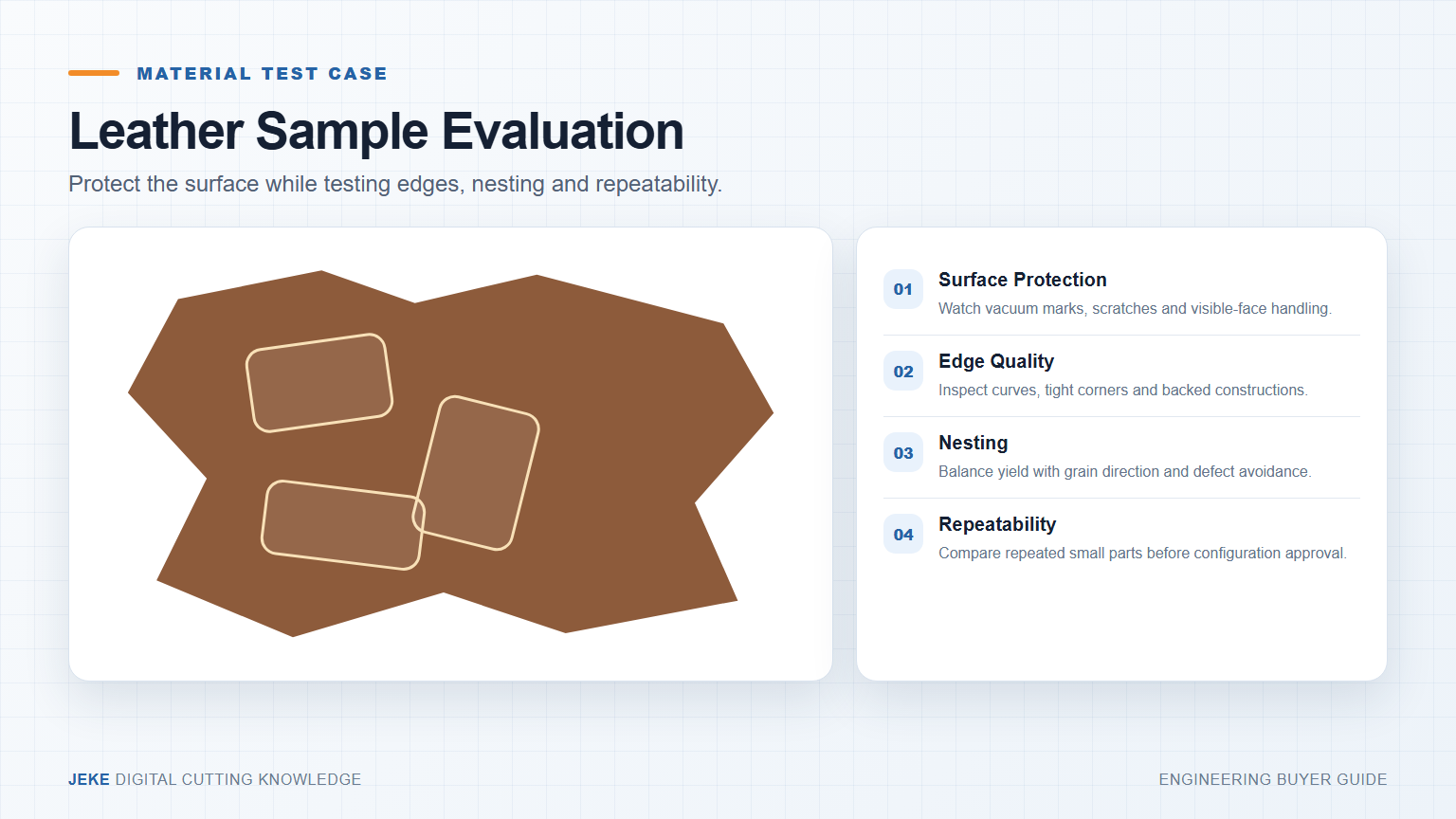
Natural hides may vary in outline, thickness, stretch, colour, and defects. Consistent sheet materials can behave differently. A result obtained from one leather should never be treated as proof for every leather type.
How the two processes differ
Die cutting
Die cutting uses a physical die and a press to reproduce a fixed cutting pattern. Once the die, material placement, press conditions, and quality standard are established, it can suit repeated runs. New or revised parts normally require a new or modified die plus storage and maintenance.
Digital knife cutting
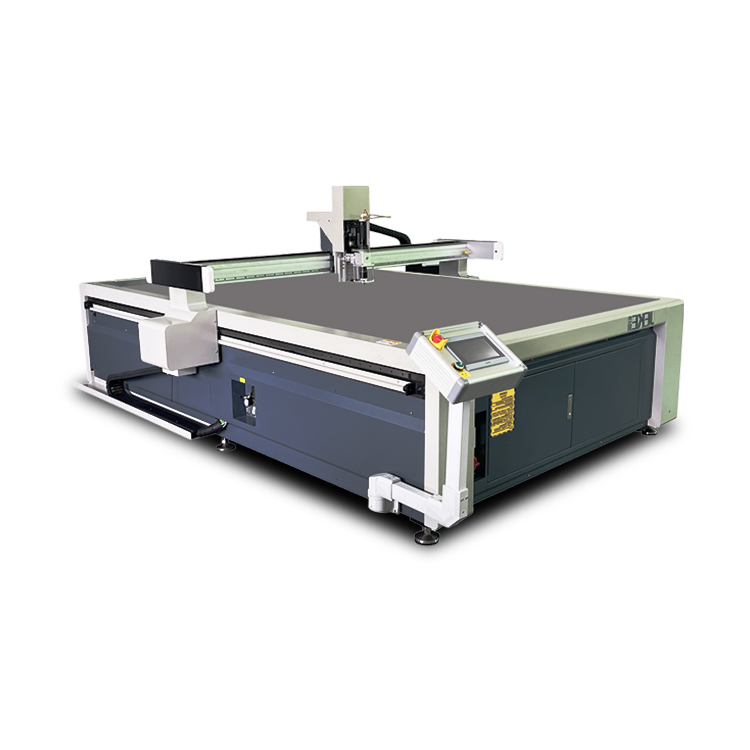
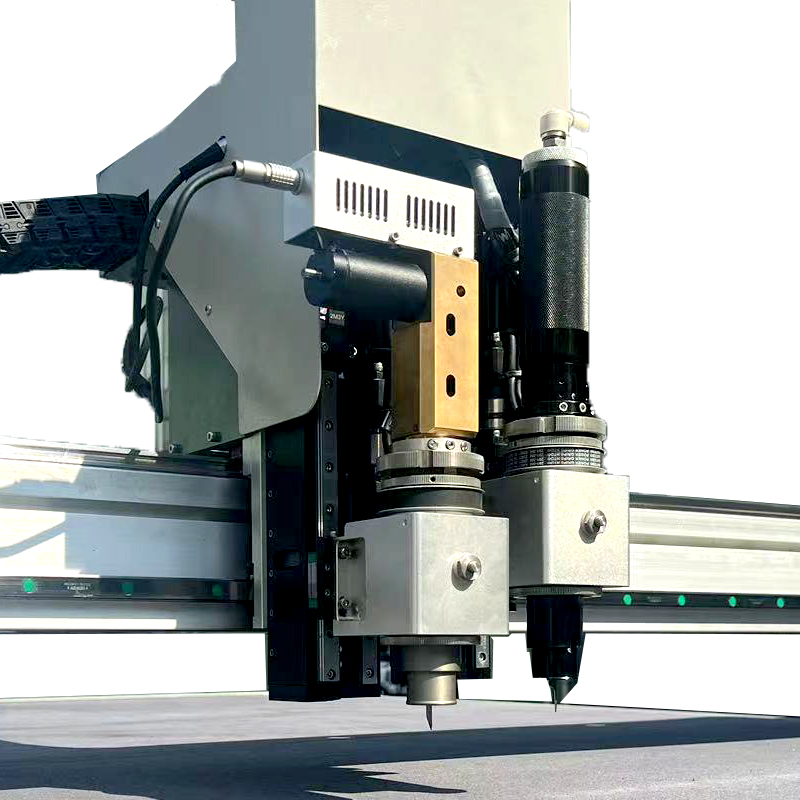
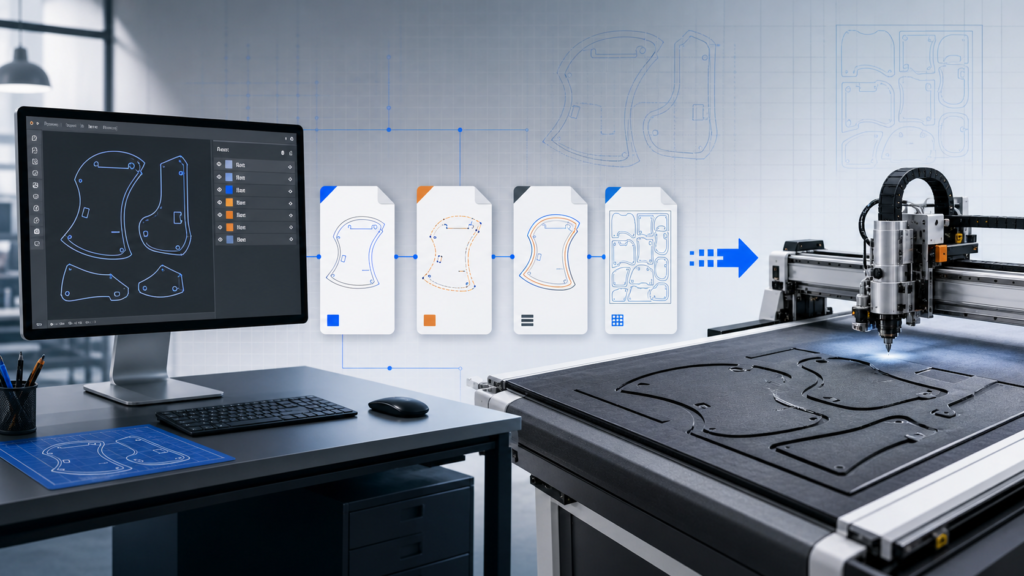
Digital cutting converts a file into a toolpath. The workflow also includes file preparation, tool selection, material placement, hold-down, machine settings, part identification, and handling. Changing a digital pattern may avoid creating a new physical die, but it does not remove setup, training, testing, or material-control requirements.
This comparison does not cover laser cutting. Leather workshops comparing knife and laser processes should treat heat effect, fumes, material composition, and extraction as a separate decision.
When die cutting may fit better
Die cutting may deserve priority when designs are stable, repeat quantities are high, and the validated die can be used over a long pattern life. The decision should still include:
Die design and manufacturing lead time
Validation and adjustment
Storage, identification, and retrieval
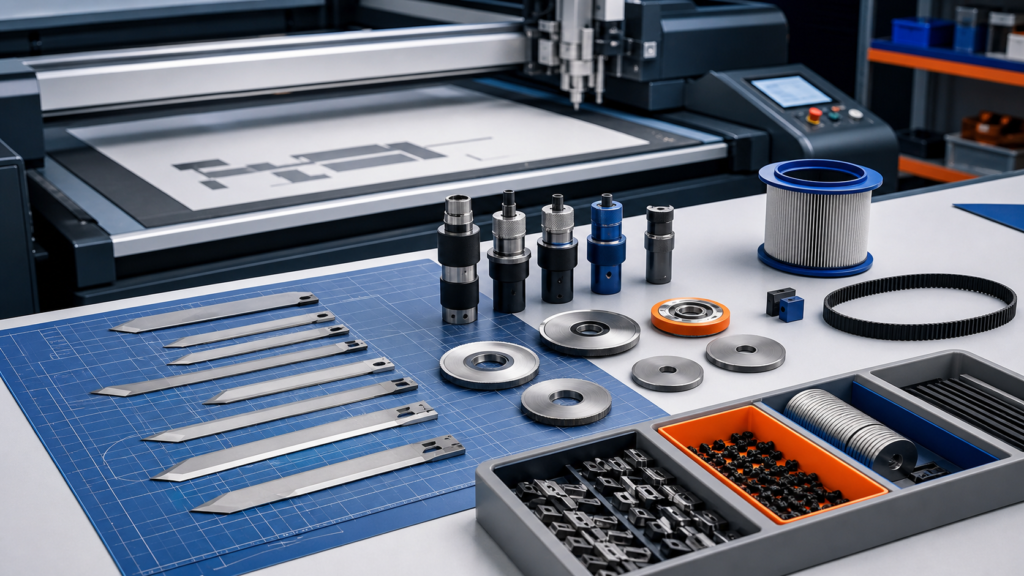
Maintenance or replacement
Cost and delay when a pattern changes
Press operation and material placement
Do not assume that the cycle time of one press stroke represents the full job. Material inspection, placement, part removal, sorting, and quality checks remain part of production.
When digital cutting may fit better
Digital cutting may be attractive for prototypes, frequent revisions, many SKUs, or small batches where physical die creation would repeat often. It can move from a revised file to a revised toolpath, subject to file, tool, hold-down, and machine limitations.
The flexibility has operational requirements. Someone must prepare files, assign tools, place and secure leather, check direction or defects, verify settings, and inspect parts. A digital process is not automatically easy for an untrained operator.
Compare the complete workflow
Workflow stage
Die cutting questions
Digital cutting questions
Pattern preparation
How long does a die take to create and validate?
What file cleanup and toolpath work is needed?
Revision
Must the die be modified or replaced?
Can the file change be validated without new hardware?
Material inspection
How are defects and usable areas marked?
How are outline, defects, and placement handled?
Setup
What press, die, and placement setup is required?
What tool, hold-down, settings, and origin setup are required?
Production
How are repeated parts removed and checked?
How are cut parts identified, sorted, and checked?
Storage
How are dies stored and maintained?
How are files, settings, and job records controlled?
Measure the elapsed workflow from approved pattern to accepted, sorted parts. Cutting speed alone cannot answer the process question.
Material variation can change the decision
Natural leather can make material inspection and placement a major part of the job. If contour capture, defect marking, projection, nesting, or automatic identification is proposed, confirm that the exact system and configuration provide those functions. A competitor's workflow description is evidence that the market considers these steps—not proof that JEKE or every digital cutter includes them.
Hold-down must also be tested. Stretch, curl, surface finish, porosity, part size, and tool forces can affect movement and marks. Record the table method and settings used for each sample.
A decision matrix for small batches
Production condition
Die cutting may fit
Digital cutting may fit
Stable design and long pattern life
Strong candidate
Still possible; compare full workflow
Frequent pattern revisions
Repeated die changes may add burden
File-based changes may be useful
Many low-volume SKUs
Die creation and storage can multiply
Flexible job switching may be useful
Highly variable hides
Placement remains important
Digital inspection workflow may help if verified
Limited digital skills
Familiar die process may be simpler
Training and file workflow must be planned
Mixed mature and experimental products
Use dies for stable repeats
Use digital cutting for development and variable work
The table identifies what to test; it does not guarantee a cost, speed, or quality outcome.
Run a fair sample test
Use actual leather, production files, and representative difficult features. Include corners, holes, narrow areas, long curves, surface-sensitive zones, and repeated parts.
For each test, record:
Leather type, thickness range, finish, and condition.
File version and part geometry.
Tool, settings, hold-down, and placement method.
Setup, cutting, removal, identification, and sorting steps.
Accepted parts, rejects, rework, and the inspection method.
Unedited front, back, edge, corner, and hole photographs.
Repeat the job sufficiently to observe consistency. Do not turn one successful demonstration into a universal performance claim.
Questions to ask a digital cutting supplier
Which leather types and difficult features have documented test evidence?
Which tool, table, hold-down, software, and operator steps were used?
What is standard, optional, model-specific, or unavailable?
How are files, settings, and repeat jobs stored and controlled?
If contour or defect capture is proposed, what are its workflow limits?
What training, maintenance, and sample-acceptance process applies?
Frequently asked questions
Is die cutting faster for every leather job?
No universal conclusion is possible. A validated die may suit stable repeat work, while pattern preparation, material handling, revisions, sorting, and inspection affect the complete result.
Does digital cutting eliminate dies in every workshop?
No. Some workshops may retain dies for mature repeat jobs and use digital cutting for prototypes, frequent revisions, or low-volume SKUs.
How should cost be compared when designs change frequently?
Record die creation, revision, storage, setup, labour, digital file preparation, tools, maintenance, training, rejects, and downtime over the same workload and period. Use your own figures rather than a generic ROI claim.
Can natural-hide defects be handled automatically?
Some systems describe contour and defect-capture workflows, but availability and performance must be verified for the exact machine, software, sensors, configuration, leather, and operating process.
What belongs in a leather sample test?
Use actual materials and files, define acceptance criteria, record tools and settings, test difficult features and repeats, and inspect both surfaces, edges, corners, holes, and sorted parts.
Next step: define a comparable leather test
Send JEKE your actual leather, part files, batch size, SKU count, revision frequency, and edge requirements to define a documented sample-test plan. The test must identify the proposed configuration and cannot guarantee that digital cutting will be faster, cheaper, or more material-efficient.