
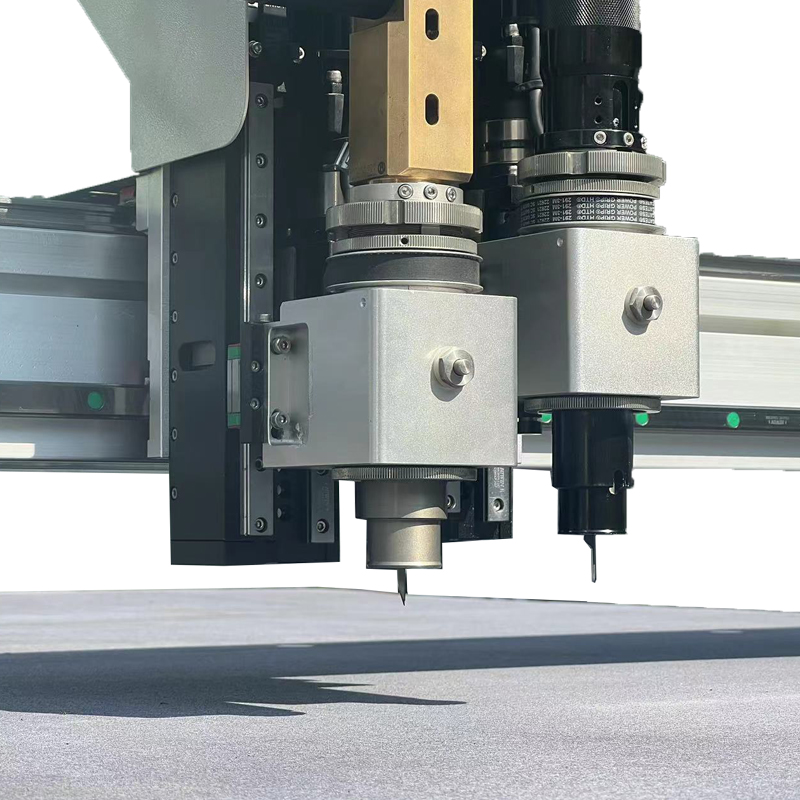
Choose handbag stiffener cutting tools through separate trials for each construction. Fiberboard, plastic sheets and laminated reinforcements can behave differently even at similar thickness. Inspect the edge, released geometry and the part’s fit inside the finished bag before releasing one setup across the range.

Group materials by construction and operation
List stock identity, thickness, grain or direction and any adhesive or backing. Identify simple outlines, slots and any required crease or partial-depth feature. Ask the supplier to explain the proposed knife and support for each group. Record whether the blank goes straight to assembly or needs another finishing step.
| Construction | Check on the trial |
|---|---|
| Fiber-based board | Edge breakup, dust and behavior near narrow bridges |
| Flexible plastic | Burrs, curl and shape after release |
| Adhesive-backed laminate | Separation, residue and liner requirements |
| Folded reinforcement | Hinge location, fold consistency and appearance in the bag |
Evaluate concealed parts in the finished assembly
Cut a body stiffener, a narrow handle reinforcement and a difficult slot from production files. Check whether the parts fit pockets or laminated areas without forcing. Have the assembly team inspect bulging, sharp edges showing through the cover and mismatched fold locations. Keep adhesive curing or later forming conditions in the evaluation where they influence fit.
Compare accepted sets per sheet and include sorting, tool changes and any edge cleanup. Retain a labeled reference for each material group. When the supplier changes board grade or laminate construction, review the approved recipe instead of relying on nominal thickness alone. Confirm the qualified tools and operations in the purchase scope.
Frequently asked questions
Can the leather-cutting tool handle every reinforcement?
Validate each stock and operation. A satisfactory leather edge does not establish the finished result on a stiff board or adhesive-backed sheet.
Should the hidden edge still have an appearance limit?
Define functional limits such as surface telegraphing, fit and loose fragments with the assembly team.
What makes the sample report useful?
Identify the material, file, tool, finished-part result and any manual work needed before assembly.
Related equipment and application guides
Explore the JEKE digital cutting machine range and material application overview. For the related decision, read Best CNC Leather Cutting Machine for Bags, Shoes and Automotive Interiors.
Discuss your cutting project with JEKE
Consider JEKE for a material-led digital cutting equipment evaluation. Ask the team to connect your application requirements with a documented machine configuration and sample-testing plan.
Send JEKE each stiffener construction, thickness and patterns with the intended folding and assembly requirements. Contact JEKE to request a configuration review and discuss sample testing. Confirm material suitability, included options and acceptance criteria in the written proposal.