A car mat cutting machine is not only a faster way to cut floor mats. For automotive interior production, it changes how a factory handles vehicle model files, material usage, sample testing and short-run orders. The real question is not simply whether a machine can cut a mat shape. The question is whether the cutting workflow can keep the contour accurate, protect the visible surface, reduce template work and handle different car models without making a physical die for every design.
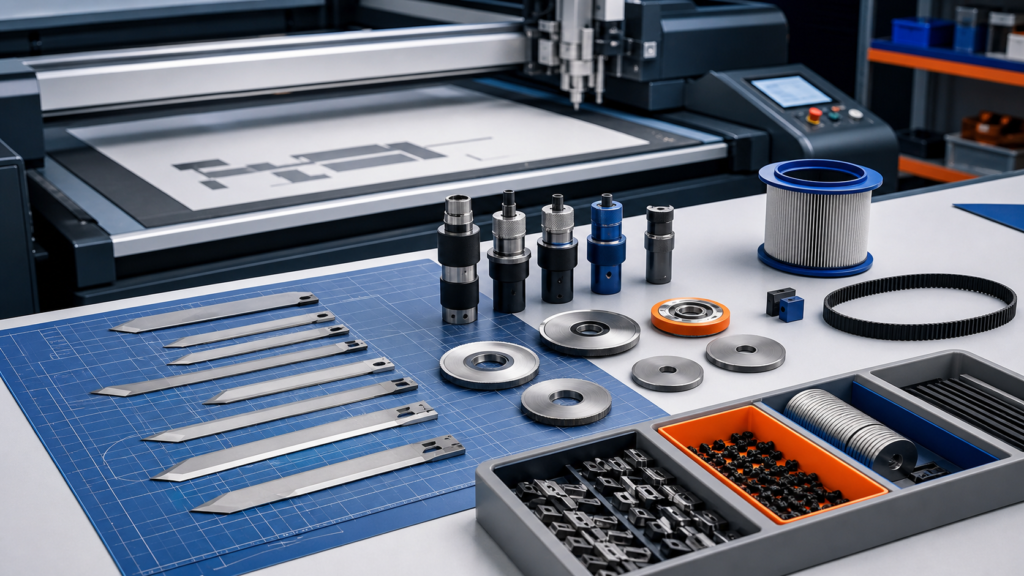
Car floor mats, trunk mats and interior soft parts can use EVA, XPE, TPE, PVC, carpet, felt, artificial leather, leather, foam-backed materials or composite sheets. These materials behave differently under the knife. Some compress. Some stretch. Some move on the table. Some need clean visible edges. That is why a car mat cutting machine should be selected by material, working size, tool configuration and production target.
If you are comparing the wider automotive interior workflow, first review JEKE's automotive interior cutting machine guide. This article focuses specifically on car mat, carpet and floor mat production.
Quick Answer: What Setup Fits Different Car Mat Jobs?
Use this table as a first filter before asking for a quote.
| Production need | Better first direction | What to test |
|---|---|---|
| Custom car mat shop | CNC car mat cutting machine with digital files | model change speed and contour accuracy |
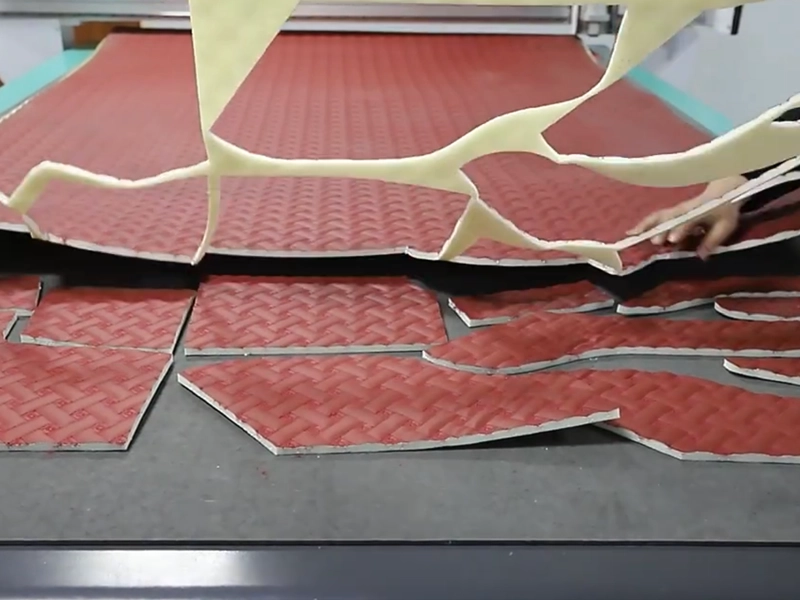
| EVA, XPE or TPE mats | Knife cutting table with strong holding | thickness, rebound and edge quality |
| Carpet and felt mats | CNC carpet cutting machine | material movement and edge cleanliness |
| Leather car mats | Knife cutter with surface protection | visible marks and cutting accuracy |
| Trunk mats | Larger table or suitable working area | largest pattern size and repeatability |
| Mixed automotive interiors | Flexible digital cutting system | tool change and material database |
For a small custom shop, fast file change may be more important than maximum cutting speed. For a supplier making repeated batches, repeatability and material holding become more important. For thick EVA or soft carpet, the tool and table setup must be tested with real material, not only with a thin sample sheet.
What a Car Mat Cutting Machine Does in Production
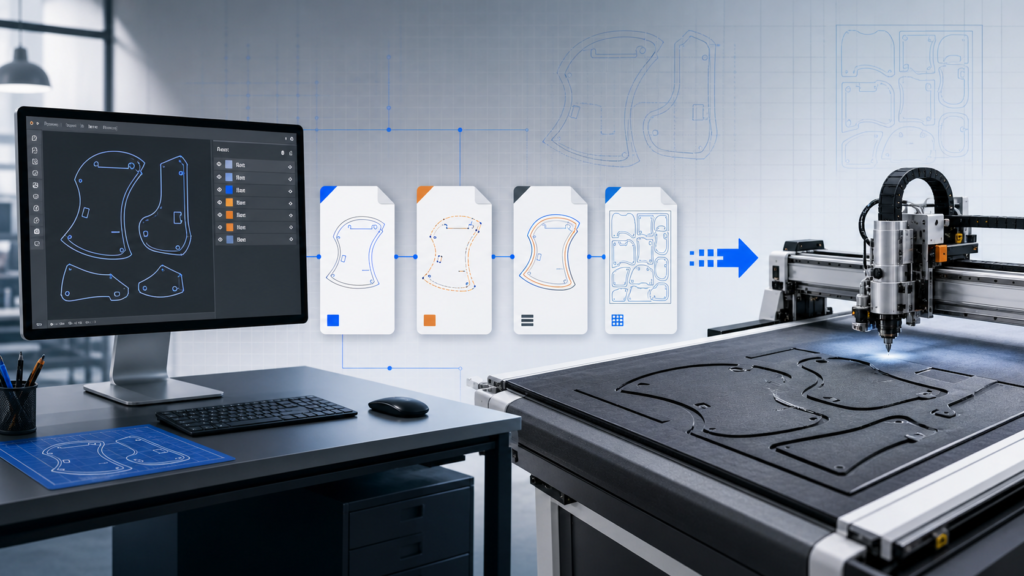
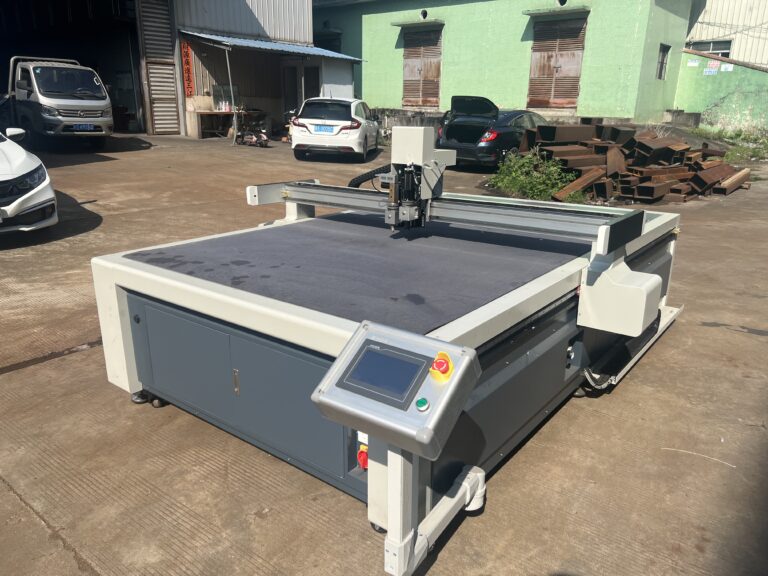
A CNC car mat cutting machine cuts digital patterns directly from a file. The operator imports the vehicle model pattern, places the material on the table, sets the cutting tool and parameters, then cuts the contour, holes, notches and marking points required for the mat design.
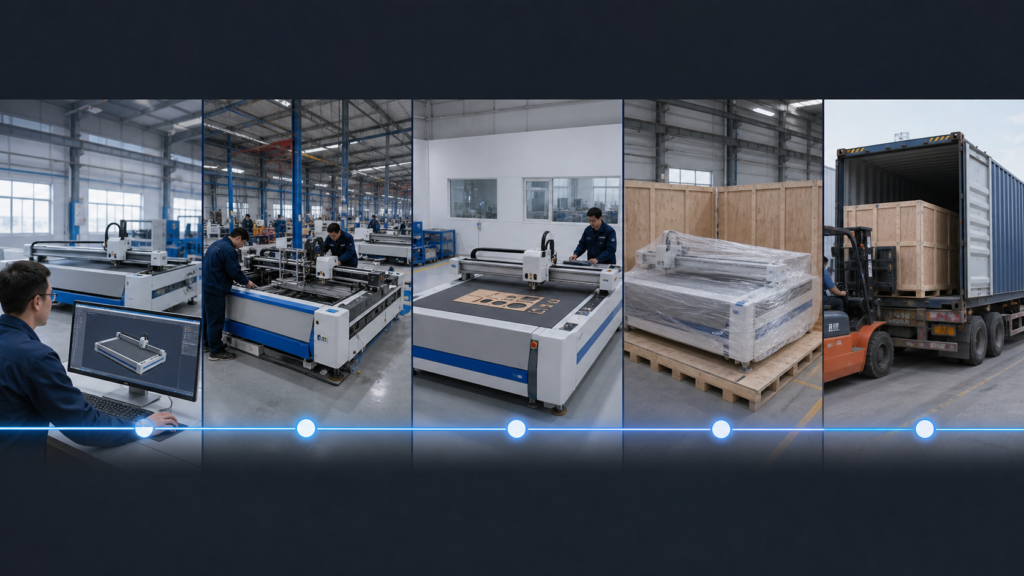
A practical workflow usually includes:
- pattern file preparation
- material placement
- vacuum or mechanical holding
- tool and cutting depth setting
- contour cutting
- notch or hole cutting
- sample fit check
- batch repeat cutting
This workflow is useful when a factory handles many vehicle models or custom orders. Instead of preparing a physical template or cutting die for every shape, the operator can change the file and cut a new model. For car mat production, this can reduce setup time and make small-batch production more realistic.
For JEKE's product direction, review the CNC Carpet Cutting Machine page when comparing table size and machine configuration.
Materials That Need Different Cutting Tests
Different car mat materials require different tests. A machine demo that cuts one material well does not automatically prove the best setup for every automotive interior material.
EVA, XPE and TPE car mats
EVA, XPE and TPE mats may be thicker than common fabric or leather materials. They may also rebound after cutting. The buyer should test whether the knife can cut through the material cleanly without dragging the edge or leaving obvious deformation.
Key checks include:
- thickness range
- edge smoothness
- corner accuracy
- hole and notch quality
- whether the material moves during cutting
- whether multiple passes are required
If your production also includes foam packaging or cushioning materials, JEKE's CNC foam cutting machine guide may help you compare the material behavior.
Carpet, felt and loop mats
Carpet and felt mats can be more difficult to hold flat than rigid sheets. Fibers may move, and the edge may need special attention. The cutting test should use the same backing and thickness as the real production material.
For carpet mats, check:
- material holding
- fiber movement
- edge cleanliness
- cutting of curves and inner holes
- repeatability between several pieces

Leather and artificial leather mats
Leather and artificial leather car mats need visible surface protection. The issue is not only whether the knife cuts through. The buyer should also check surface marks, pressure from material holding and whether the edge looks acceptable after sewing or binding.
For leather-focused cutting, also review JEKE's CNC leather cutting machine article.
Trunk mats and composite backing materials
Trunk mats may be larger than front floor mats. Some materials include composite backing, foam, carpet or layered structures. In this case, table size, material support and cutting stability are critical.
The buyer should send the largest pattern size before confirming the working area. A table that is comfortable for small car mats may not be enough for trunk mats or large interior panels.

How CNC Knife Cutting Improves Automotive Interior Production
CNC knife cutting improves car mat production in several practical ways.
First, it reduces manual template work. A digital pattern can be modified and reused, which is useful when the factory serves many vehicle models or custom orders.
Second, it reduces the need for physical dies in sample rooms and short runs. Die cutting can still make sense for very high-volume repeated production, but digital cutting is more flexible when designs change often.
Third, it improves repeatability. Once the file and parameters are correct, the same pattern can be cut again with consistent contour and hole positions.
Fourth, it supports mixed automotive materials. A car mat producer may also cut trunk mats, seat cover materials, soft interior panels or sound insulation materials. A flexible CNC knife platform can help the factory handle more than one product type.
Fifth, it avoids heat-related cutting issues on many soft materials. For materials where heat, smoke or edge discoloration is a concern, knife cutting is often a practical cold cutting method.
Machine Configuration Points to Check
The right car mat cutting machine depends on the complete configuration, not only the machine name.
Table size and working area
Choose the working area based on the largest pattern, not the average mat size. Front floor mats may be smaller, while trunk mats and large interior pieces may require more space.
Before requesting a quote, prepare:
- largest front mat size
- largest rear mat size
- largest trunk mat size
- sheet or roll width
- whether the material must be rotated on the table
Vacuum holding and material movement
Material movement is one of the most important tests for soft car mat materials. Carpet, leather, EVA and composite materials may react differently under vacuum or mechanical holding.
If the material moves during cutting, the final contour may be inaccurate even if the machine itself is precise.
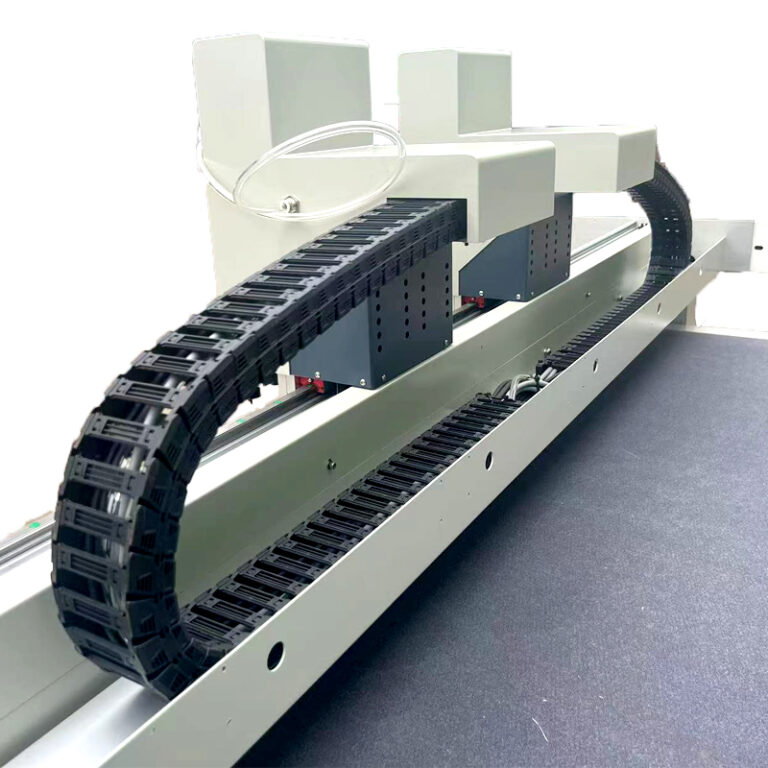
Tool configuration
Common tool questions include:
- Do you need an oscillating knife for thicker or softer materials?
- Is a pneumatic knife required for dense or thick material?
- Can a drag knife handle thin backing material?
- Do you need marking, punching or reference notches?
- How easy is it to change parameters between materials?
The tool decision should be based on real samples. For example, a thin carpet mat and a thick EVA mat may need different blade settings.
File workflow and nesting
Car mat production often involves many vehicle models. A good workflow should make it easy to import, store and reuse pattern files. Nesting may also matter when material cost is high or when several small pieces are cut from one sheet.
For broader machine comparison, use JEKE's Digital Cutting Machine category as a starting point.
Three Practical Production Scenarios
Scenario 1: Custom car mat shop
A custom shop may receive many orders for different vehicle models. The main challenge is not only cutting speed. The bigger challenge is fast model change, accurate contour and repeatable small-batch production.
For this case, the buyer should test real vehicle files, not only a simple rectangle or sample curve. The cutting result should be checked by fit, not only by edge appearance.
Scenario 2: Automotive accessory supplier
An accessory supplier may cut floor mats, trunk mats, leather mats and carpet mats. The material range is wider, so the machine should be tested with several materials before confirmation.
For this case, focus on tool versatility, table size, material holding and parameter storage. If the machine can switch between materials efficiently, it can support more product lines.
Scenario 3: Interior production factory
An interior production factory may cut car mats together with seat cover materials, soft panels, leather, foam or insulation materials. The machine is part of a wider production system.
For this case, compare the car mat cutting workflow with other automotive interior needs. The goal is to avoid buying a machine that only solves one narrow job while leaving other soft material cutting problems unchanged.
Quote Checklist Before You Contact JEKE
To get a useful recommendation, send practical production details.
Prepare:
- material type: EVA, XPE, TPE, PVC, carpet, felt, leather, artificial leather or composite
- material thickness
- sheet, roll or piece format
- largest mat or trunk mat size
- smallest holes, notches or details
- expected daily output
- file format or sample drawing
- whether you cut custom orders or repeated batches
- surface protection requirements
- current cutting method and main problem
If possible, send real material samples and a pattern file. A sample test can show whether the tool, table and cutting parameters match your actual production.
JEKE Recommendation
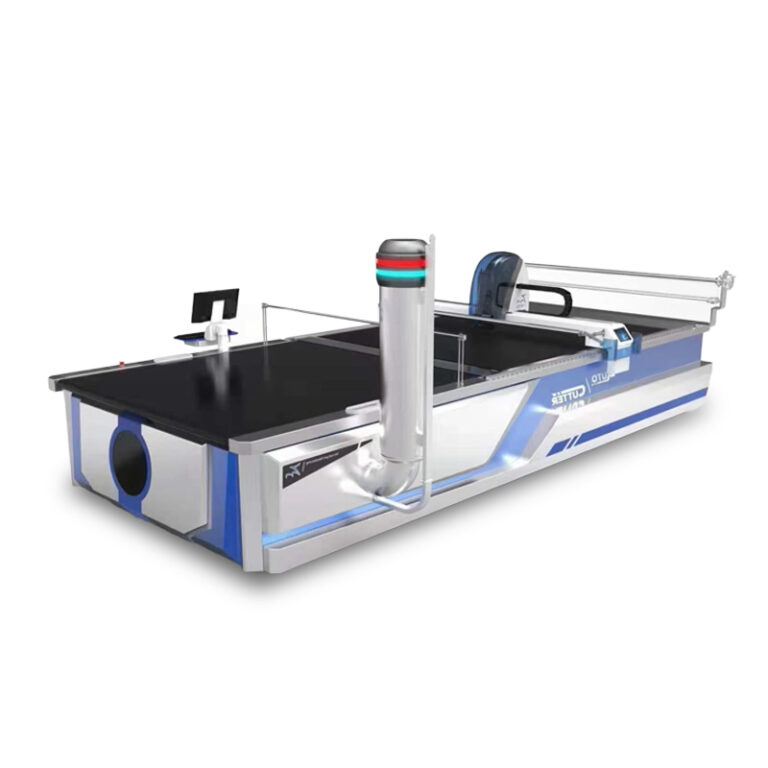
JEKE recommends choosing a car mat cutting machine by production workflow, not by machine name alone.
If your business is custom car mats, focus on file workflow and model change speed. If your production is EVA or TPE mats, focus on thickness, rebound and edge quality. If you cut carpet or felt, focus on material holding and fiber edge behavior. If you also cut leather or automotive interior materials, check whether the machine can support multiple tools and material parameters.
Before confirming the final configuration, send JEKE your material samples, thickness, largest mat size, pattern files and daily production target through the JEKE contact page. Our team can help compare the right CNC knife cutting setup for your car mat and automotive interior workflow.
FAQ
Can one machine cut EVA mats and carpet mats?
One machine platform may support both, but the tool and parameters may be different. EVA, XPE, TPE and carpet materials should be tested separately before confirmation.
Is knife cutting better than laser for car mats?
For many soft automotive materials, knife cutting is a practical cold cutting method. Laser suitability depends on the material and edge requirement. Buyers should test real material before choosing.
What table size should I choose?
Choose the table size according to the largest front mat, rear mat or trunk mat pattern. Do not select the table only by the average mat size.
Can the same machine cut trunk mats and seat cover materials?
It may be possible if the table size, tool configuration and material holding match both jobs. Test the largest trunk mat and the softest seat cover material before deciding.
Do I need nesting software?
Nesting can help when material cost is important or when several pieces are cut from one sheet. It is especially useful for custom orders and mixed model production.
What should I send for sample testing?
Send material samples, thickness, pattern files, largest part size, smallest details, target output and any visible surface requirements.
Conclusion
A car mat cutting machine can improve automotive interior production when it matches the real material and workflow. The value is not only faster cutting. It can reduce manual template work, support model changes, improve repeatability and help factories handle more short-run or custom orders.
Before buying, test the actual material, largest pattern and production file. Then confirm the table size, tool setup and workflow with JEKE based on the result.