Choosing a CNC leather cutting machine is not only about replacing manual cutting. Bags, shoes and automotive interior parts use different leather types, different pattern sizes and different production logic. A machine that works well for shoe upper samples may not be the best match for large car seat panels. A setup that works for artificial leather rolls may need a different workflow for genuine leather hides with natural defects.
The right machine decision starts with the material, pattern file and production target. Buyers should check edge quality, nesting, part repeatability, visible surface marks, table size and whether the workflow is mainly sample room, short run or production.
This guide explains how to choose a CNC leather cutting machine for bags, shoes and automotive interior materials. If you are still comparing flexible-material knife cutting systems in general, start with JEKE’s CNC knife cutting machine buyer checklist first, then use this article to narrow the leather configuration.
Quick Answer: Which Leather Cutting Setup Fits Your Production?
Use this table as a first decision filter.
| Production need | Better first direction | What to test |
|---|---|---|
| Bag sample room | CNC leather cutting machine with knife tool | Pattern accuracy and edge finish |
| Shoe upper cutting | Digital cutter with nesting workflow | left/right consistency and size sets |
| Genuine leather cutting | Cutter with nesting and defect planning | material yield and visible surface marks |
| PU or artificial leather roll cutting | Cutter with stable feeding workflow | roll handling and repeatability |
| Automotive interior panels | Larger table or production cutter | large pattern accuracy and material holding |
| Mixed leather and soft materials | Flexible digital cutting system | tool change and material database |
If you mainly cut small leather goods, pattern accuracy and quick style changes may matter most. If you cut car interior parts, working area and repeatability become more important. If you cut genuine leather, nesting and defect avoidance can affect material cost more than cutting speed alone.
What a CNC Leather Cutting Machine Actually Does
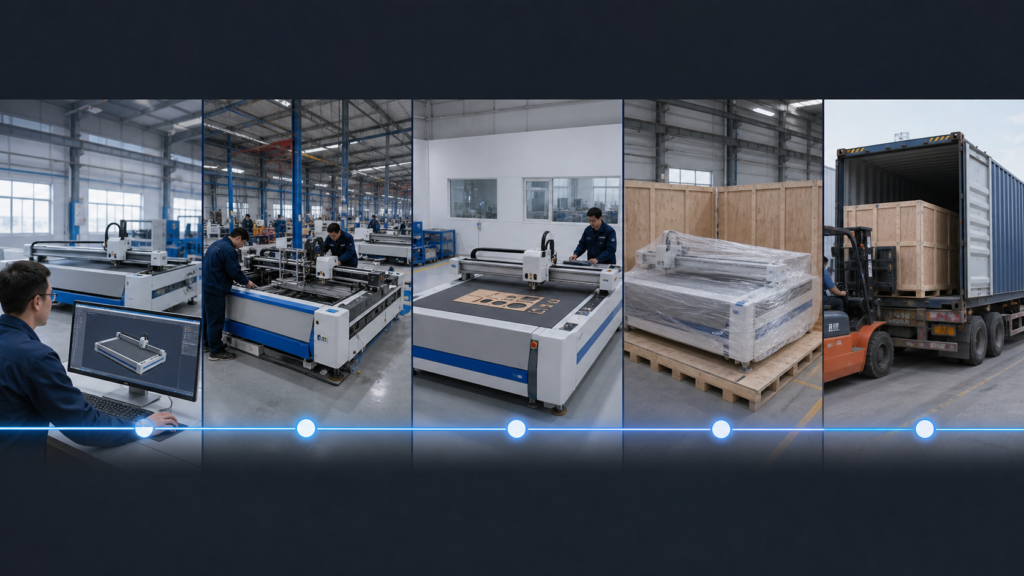
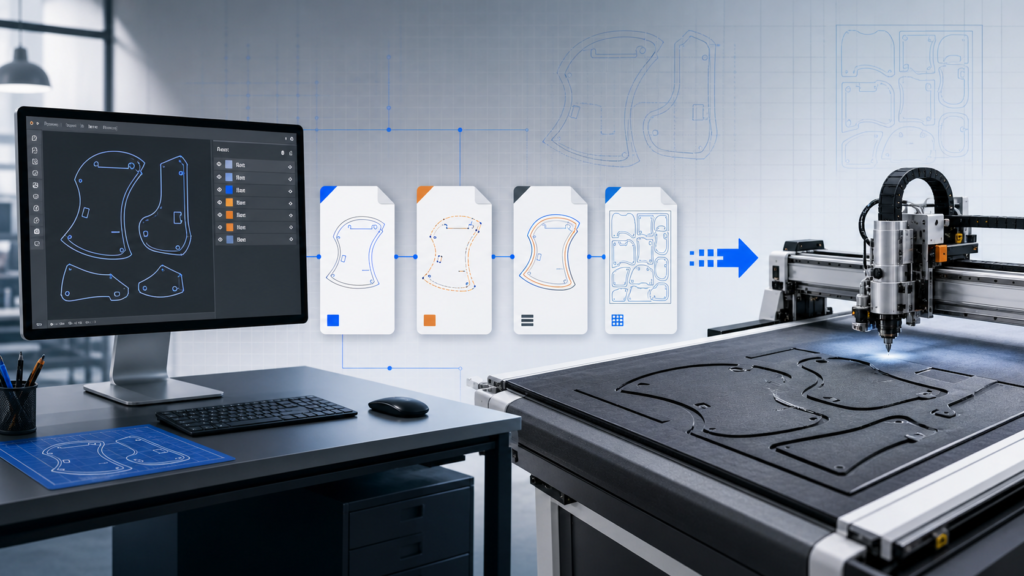
A CNC leather cutting machine cuts leather patterns from digital files. The operator imports a pattern, places the material on the table, sets the tool and cutting parameters, then cuts the required pieces.
This workflow is useful for:
- bag panels, straps and accessories
- shoe uppers, lining and sample pieces
- automotive seat and interior trim parts
- furniture upholstery pieces
- leather sample rooms
- short-run custom leather goods
Compared with manual cutting, digital cutting can improve repeatability and reduce operator dependency. Compared with physical dies, it is more flexible for sample rooms, custom orders and frequently changing styles.
For JEKE’s leather-focused product direction, review the CNC leather cutting machine page before choosing the exact table size and tool configuration.
Genuine Leather vs PU Leather vs Automotive Interior Materials
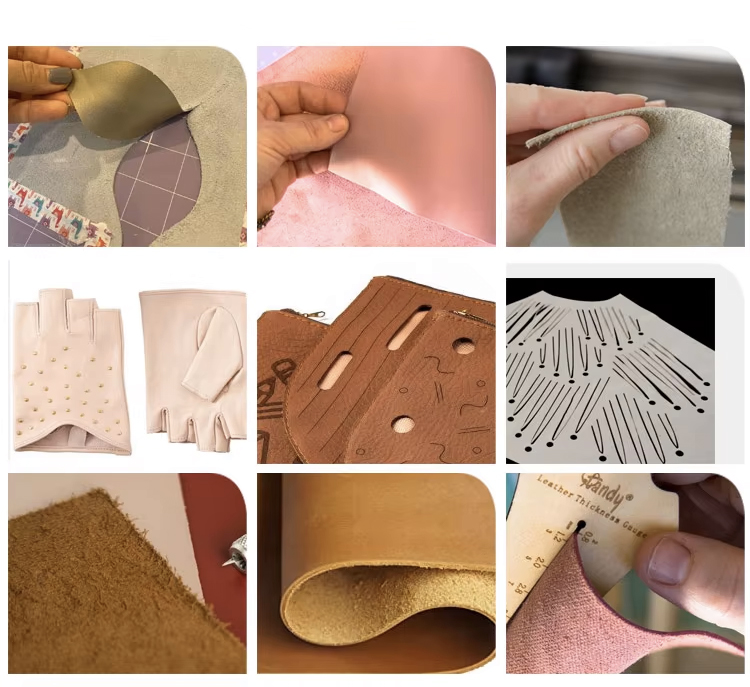
Different leather materials cut differently. Genuine leather may have natural marks, thickness variation and irregular hide shapes. PU leather and artificial leather may come in rolls or sheets and may be more consistent. Automotive interior materials may include leather, artificial leather, foam-backed materials, carpet or composite soft materials.
| Material type | Common use | Cutting concern | What to test |
|---|---|---|---|
| Genuine leather | bags, shoes, premium goods | defects, stretch, irregular hide shape | nesting, visible surface marks, edge finish |
| PU leather | bags, shoes, furniture, interiors | roll stability and surface marks | feeding, edge quality, repeatability |
| Microfiber leather | shoes, bags, upholstery | density and layered structure | blade choice and small-part accuracy |
| Artificial leather | leather goods and interiors | coating behavior and backing | cutting marks and edge finish |
| Automotive interior material | seats, trim, mats, soft panels | larger pieces and mixed backing | table size, holding and repeatability |
This is why buyers should not send only the word “leather” when asking for a quote. The supplier needs to know whether the material is genuine leather, PU leather, microfiber leather, artificial leather or a composite interior material. Thickness, roll format, surface requirement and pattern size all change the recommendation.
Bags and Shoes: Why Pattern Accuracy and Nesting Matter
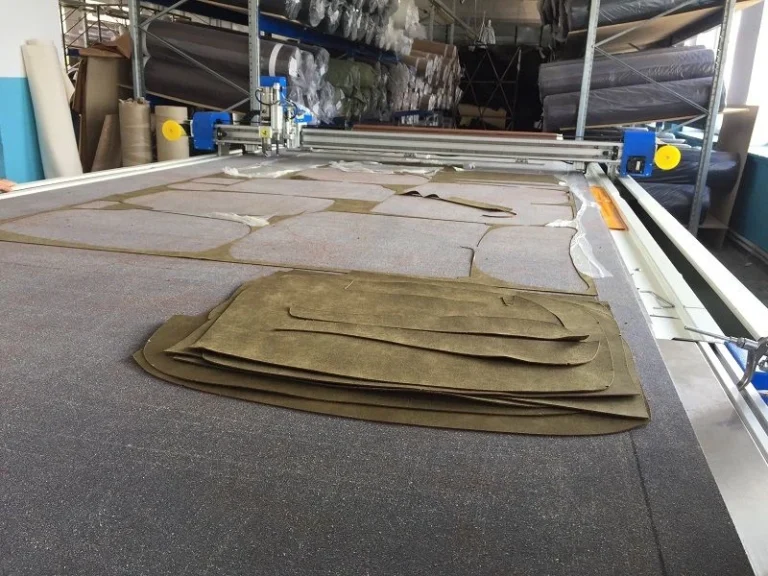
Bag and shoe production often includes many small and medium-sized parts. A bag may need front panels, side panels, straps, reinforcement pieces and lining. A shoe workflow may need uppers, lining, size sets and left/right matching.
For these jobs, a CNC leather cutting machine should be checked for:
- accurate pattern cutting
- clean edges on visible parts
- small notches or reference marks
- repeatability between sizes
- stable cutting of lining or backing materials
- nesting efficiency
- easy file change for new styles
For genuine leather, nesting is more than saving space. The operator may need to avoid visible defects, scars or weak areas. For artificial leather, the workflow may focus more on repeated roll cutting, batch consistency and fast style changes.
When the job includes many styles and small batches, digital cutting can reduce the time lost in die preparation and manual cutting setup.
Automotive Interior: Why Large Panels and Repeatability Matter
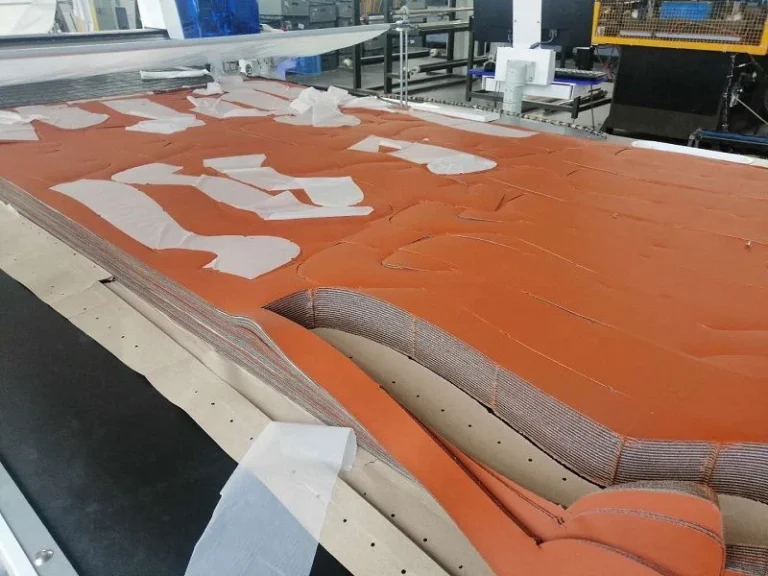
Automotive interior cutting usually has a different priority. Instead of only small pieces, the workflow may include larger panels for seat covers, trim, car mats, soft interior parts or composite materials.
Important checks include:
- working area for large patterns
- material holding on larger sheets
- repeatability across multiple sets
- cutting of notches and positioning features
- visible surface protection
- whether foam-backed or composite materials are included
If your project includes leather, foam and other interior materials, review JEKE’s automotive interior cutting machine guide for broader material and workflow context.
Tool, Table and Nesting Configuration
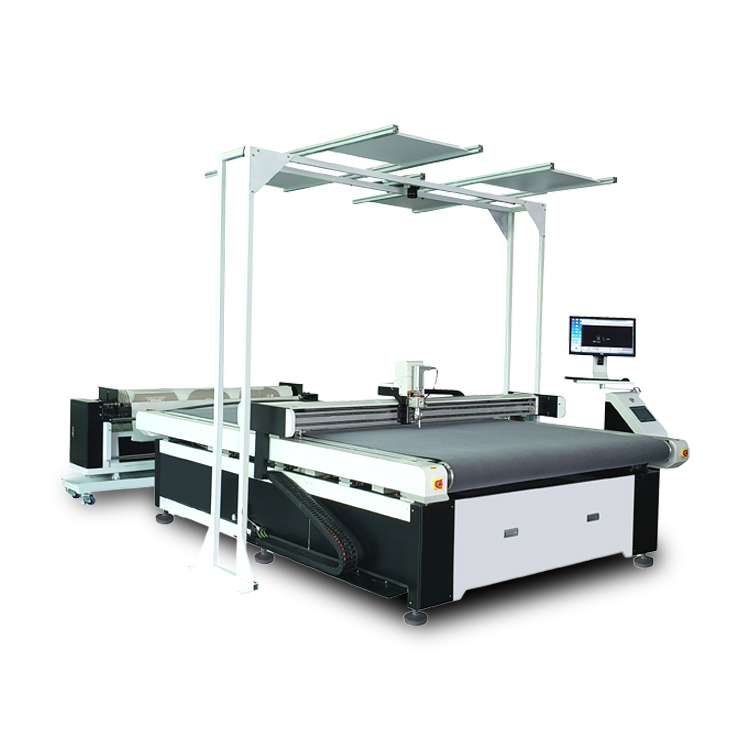
The tool and table configuration should match the material and workflow.
Common configuration questions include:
- Do you cut single-layer or multi-layer material?
- Is the material genuine leather hide, sheet or roll?
- Do you need projection, marking or nesting support?
- What is the largest pattern size?
- Do the parts include small holes, notches or reference marks?
- Is the visible surface easy to mark or scratch?
- How often do styles change?
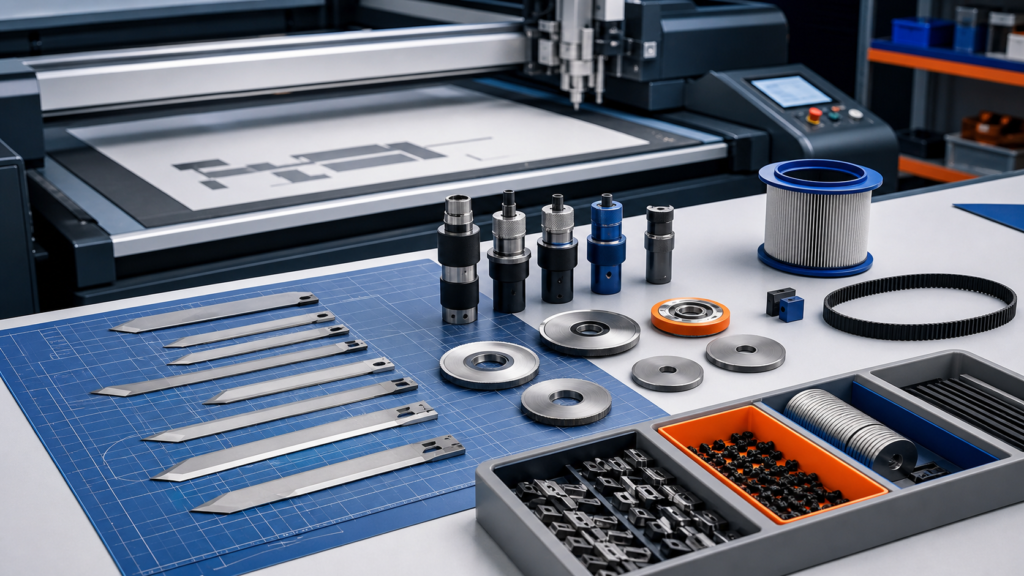
An oscillating knife is often used for many leather and artificial leather materials. A drag knife may fit some thinner materials, but it must be tested with the real material and part shape. Marking tools or punching tools may be useful when the pattern includes reference marks or holes.
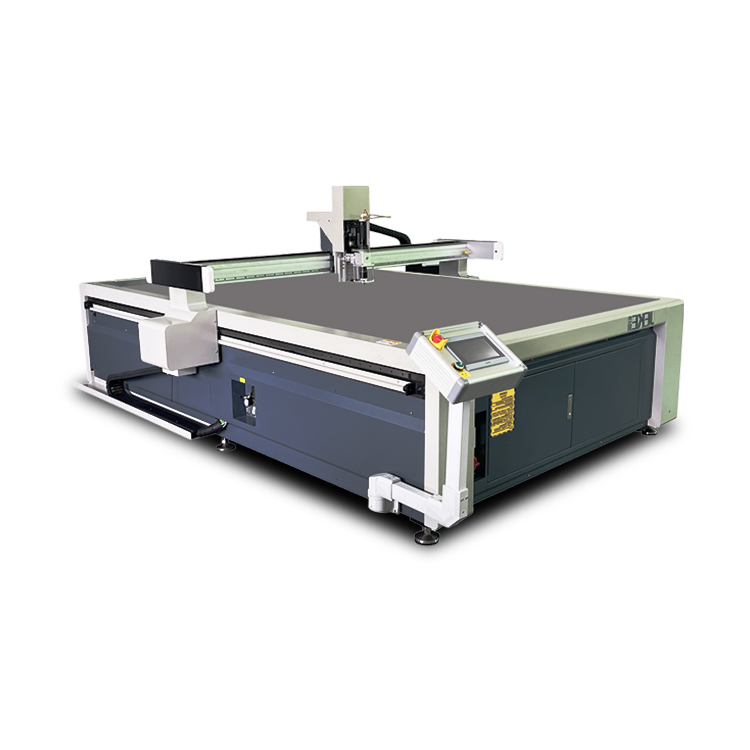
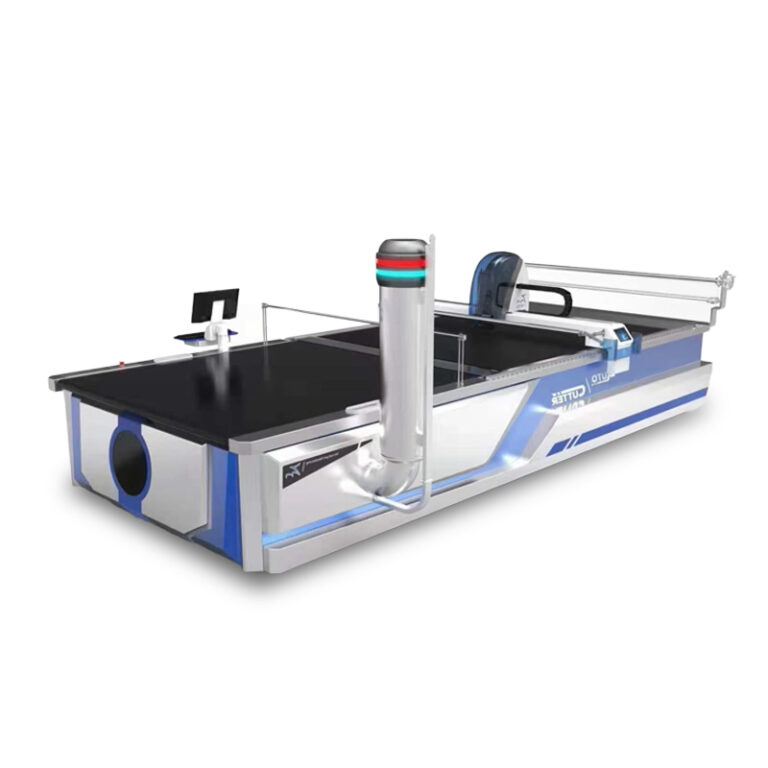
For product directions, compare the JK-2025 Automatic Knife Cutting Machine and the JK-2225 CNC Computer Cutting Machine depending on table size, material type and production target.
Quality Checks Before Buying
Leather cutting quality should be checked with real patterns, not only by cutting a simple square.
Before confirming a machine, test:
- edge smoothness
- corner accuracy
- small holes and notches
- left/right pattern consistency
- leather stretch or movement
- visible surface marks
- repeatability across several pieces
- nesting result and material utilization
- sample fit after sewing or assembly
For bags and shoes, small pattern errors can affect assembly. For automotive interiors, large parts must stay consistent across multiple sets. For genuine leather, the cutting result should be judged together with nesting and defect avoidance.
Three Practical Buyer Scenarios
Scenario 1: Bag factory with many styles and small batches
A bag factory may cut many styles in small or medium quantities. The buyer needs fast pattern changes, clean visible edges and efficient use of leather or artificial leather.
For this case, focus on file workflow, nesting, small-part accuracy and sample turnaround speed.
Scenario 2: Shoe upper workshop with size sets
A shoe workshop may cut uppers, lining and multiple size sets. The challenge is repeatability and consistent left/right parts.
For this case, test several sizes, not only one sample. Check whether the machine can handle material type changes, size sets and lining materials efficiently.
Scenario 3: Automotive interior supplier
An automotive interior supplier may cut larger pieces and mixed soft materials. Some jobs may include artificial leather, foam-backed material, carpet or composite layers.
For this case, table size, material holding and repeatability matter. The buyer should test large patterns and real material stacks before confirming the final configuration.
What to Send JEKE Before Asking for a Quote
To get a useful recommendation, send practical production information.
Prepare:
- material type: genuine leather, PU leather, microfiber leather, artificial leather or composite material
- thickness
- roll, sheet or hide format
- largest pattern size
- smallest part size
- pattern file or sample drawing
- expected cutting quantity
- single-layer or multi-layer requirement
- visible surface requirement
- nesting or defect marking requirement
- current manual cutting or die cutting pain point
For general machine comparison, review JEKE’s Digital Cutting Machine category. For leather-specific projects, send material samples and pattern files through the JEKE contact page.
JEKE Recommendation
JEKE recommends choosing a CNC leather cutting machine by workflow, not by machine name alone.
If your production is bags or shoes, focus on pattern accuracy, nesting and style change speed. If your work is automotive interiors, focus on table size, material holding and repeatability. If your material is genuine leather, include nesting and defect planning in the test. If your material is artificial leather roll goods, test feeding and batch consistency.
Before confirming the machine, send JEKE your material type, thickness, pattern files, largest part size and production target. Our team can help compare the right digital cutting configuration for your leather goods or automotive interior workflow.
FAQ
Can one CNC leather cutting machine cut genuine leather and PU leather?
One machine platform may support both, but the workflow can be different. Genuine leather may need nesting and defect planning, while PU leather may need stable roll or sheet processing.
Is knife cutting better than laser for leather?
For many leather and artificial leather materials, knife cutting is a practical cold cutting method. Laser suitability depends on material, edge requirement and heat effect. Buyers should test the real material before choosing.
Can the same machine cut bags and shoes?
It may be possible if the table size, tool, nesting workflow and material handling match both product lines. The buyer should test real bag parts and shoe upper parts before confirming.
Do automotive interiors need a larger table?
Often yes, because automotive interior patterns can be larger than shoe or small leather goods parts. The table size should be chosen based on the largest pattern and production workflow.
Do I need nesting software?
If material cost is important or you cut genuine leather with irregular shapes, nesting support can be valuable. For repeated artificial leather roll cutting, nesting and file workflow still affect efficiency.
What should I send for sample testing?
Send material samples, thickness, pattern files, largest and smallest part size, quantity target and any visible surface requirements.
Conclusion
A CNC leather cutting machine can support bags, shoes and automotive interior materials, but the best configuration depends on the real workflow. Material type, table size, nesting, visible surface quality and pattern repeatability all matter.
Do not choose only by machine name. Start with your leather material, pattern files and production target, then test the cutting result before confirming the final machine configuration.