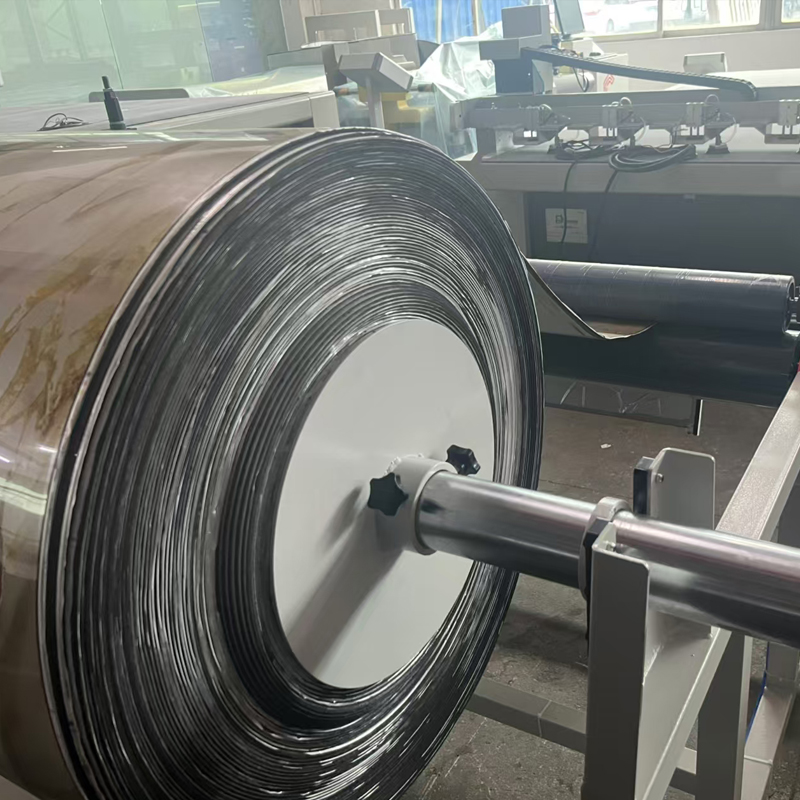
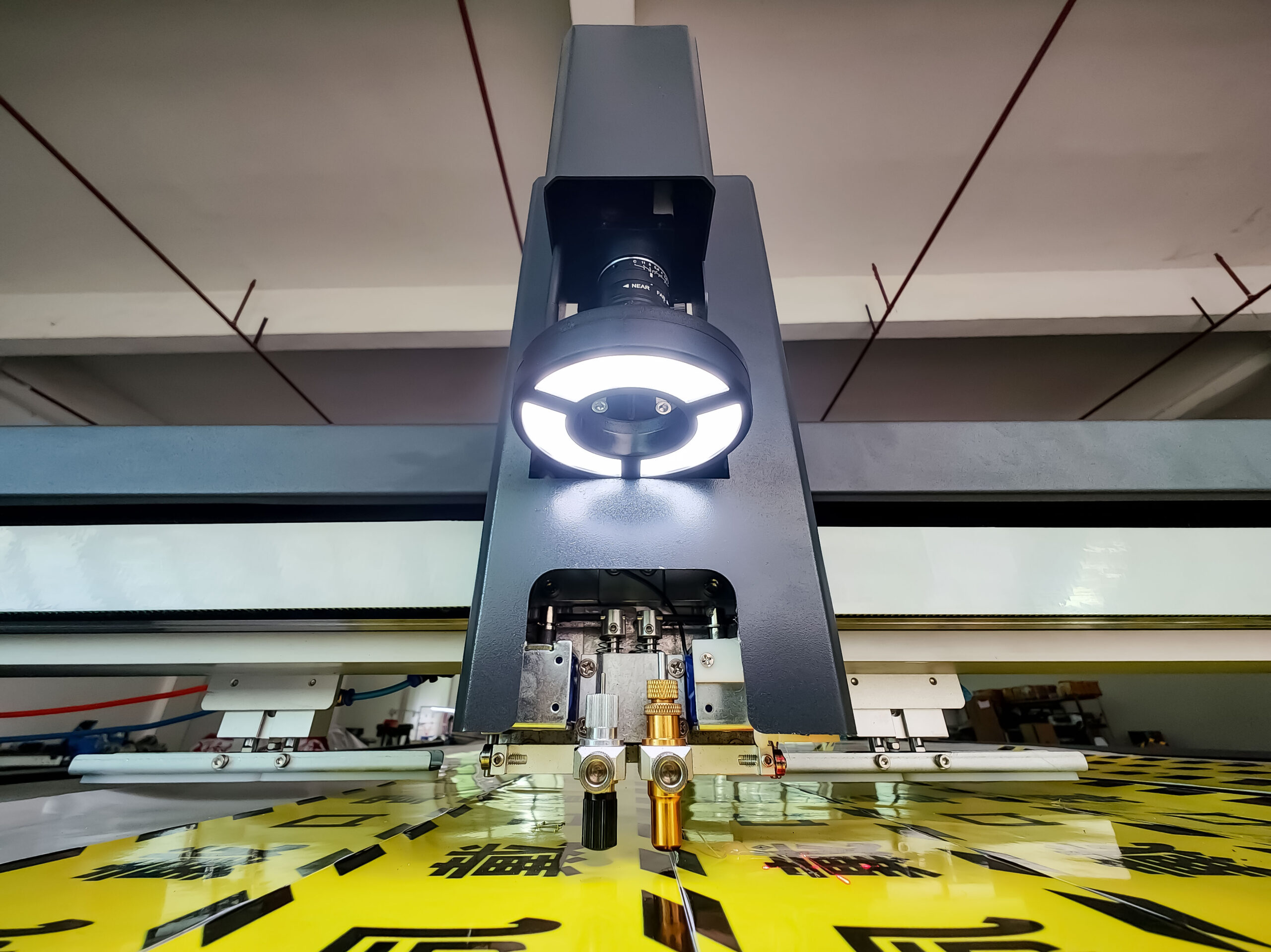
Keep protective film during cutting only when the complete film, print and substrate stack passes registration, cutting and removal tests. Compare the final exposed surface with a film-off control. The useful result is a protected, correctly cut sheet that peels and finishes as the customer requires.
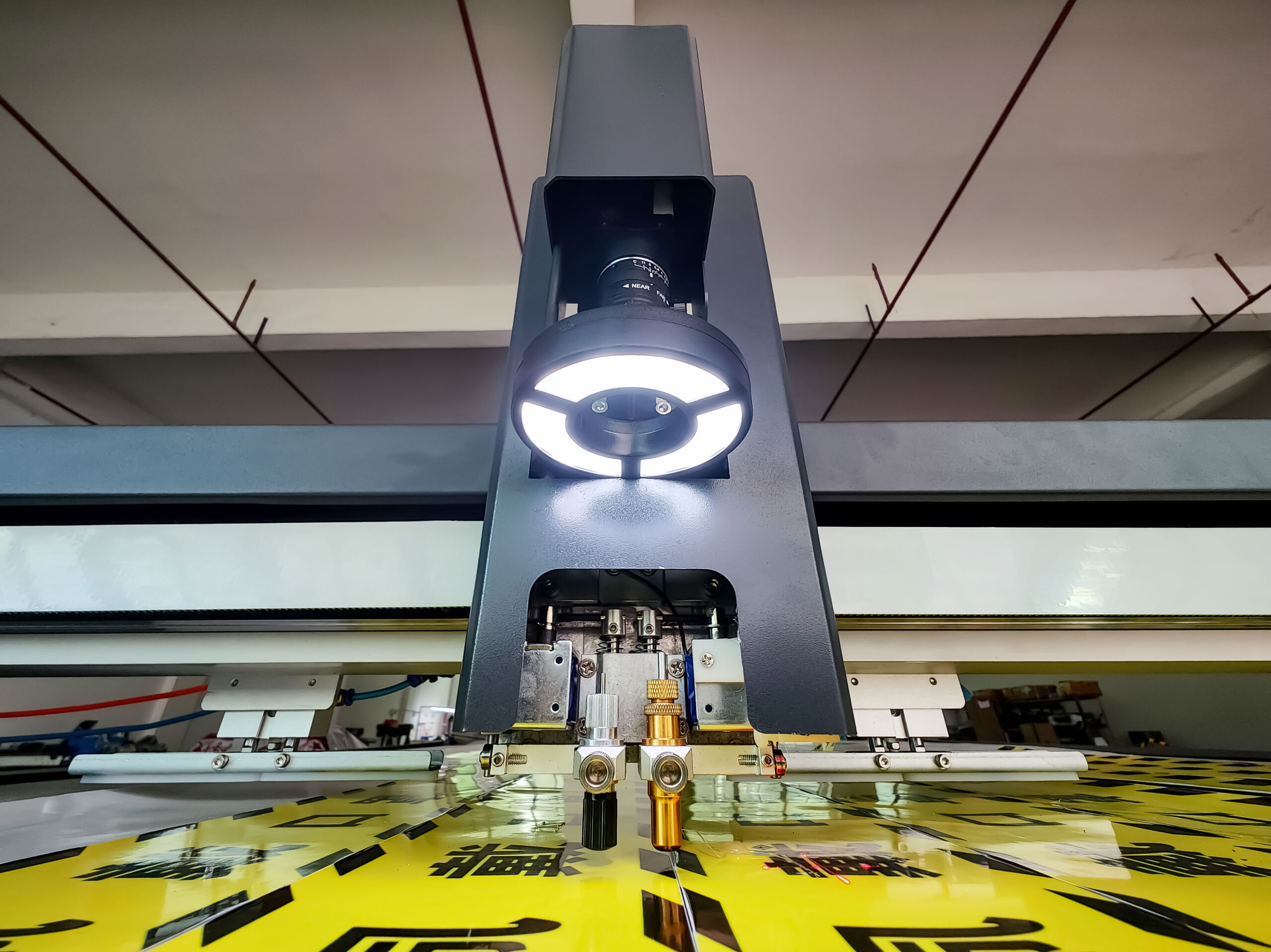
Define the protection and cutting sequence
Record film type, adhesion, print or coating, substrate and whether the film is applied before or after printing. Decide when the customer expects it to be removed. Ask the material and equipment suppliers which stack is suitable for the proposed process. If registration marks sit beneath the film, demonstrate reading under the actual lighting and surface conditions.
| Test | What to observe |
|---|---|
| Registration | Mark visibility and cut alignment across the sheet |
| Edge separation | Whether the film bridges corners or pulls the printed face |
| Removal | Peel behavior, residue and any lifting of print or coating |
| Finishing | Exposed surface appearance after the normal downstream process |

Compare two workflows on identical sheets
Cut a film-on sample and a film-off control from the same print batch. Include narrow borders, corners and small cutouts. Record the tool, support and intended depth for each. Inspect the print before processing and after removing the film so pre-existing marks do not become cutting defects in the report. Keep removal direction and timing consistent with the production workflow.
Measure cut-to-print alignment at more than one location and inspect whether the film stretches, traps fragments or remains attached where separation is required. Continue through any folding, assembly or surface-finishing step in the actual order. Include film removal labor and scrap in the cost comparison. Recheck a new film or adhesive even if its nominal thickness is similar.
Frequently asked questions
Will camera registration always read through a clear film?
Test the actual stack. Surface reflections, marks and lighting influence the observed result.
Should the film remain intact after cutting?
Specify the intended handoff. Some jobs need separately protected parts, while others retain a carrier until a later step.
What should I send to JEKE?
Send production sheets with and without film, the artwork and the cut path. State when the film is removed and provide an acceptable exposed-surface sample.
Plan a sample trial with JEKE
Contact JEKE with the trial details above. Explore the digital cutting machine range and check the material application overview for context.
Related guide: How Do You Contour Cut Double-Sided Printed Boards Without Misaligning the Back?.