A rubber gasket cutting machine is useful when a factory needs clean, repeatable gasket shapes without making a physical die for every order. Rubber gaskets often include inner holes, bolt holes, narrow rings, irregular contours and material variations, so the right machine is not only about cutting rubber. It is about matching the gasket material, thickness, hardness, hole size, tool setup and digital file workflow.
For custom gasket suppliers and sealing-material workshops, this matters every day. One order may require soft rubber sheet, another may use silicone rubber, and another may involve non-asbestos or composite gasket material. If the machine configuration is wrong, the edge may deform, holes may be inaccurate, or the operator may spend too much time correcting the cut by hand.
For gasket buyers, the useful starting point is a practical checklist: what material will be cut, how thick and hard it is, how small the holes are, whether the sheet can stay flat, and what file the operator will send to the machine. Those details decide whether a digital knife cutting system is a good fit.
What is a rubber gasket cutting machine?
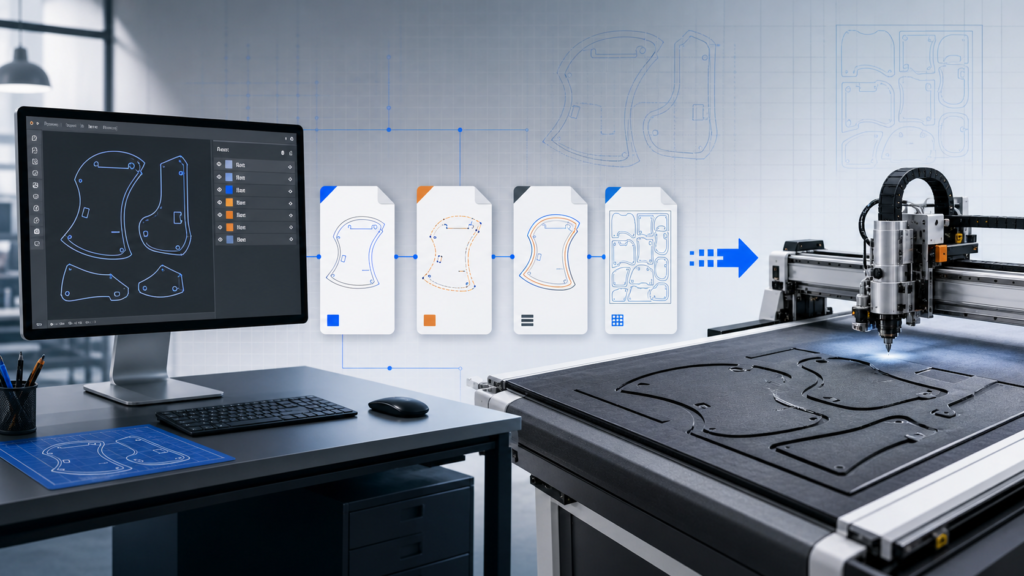
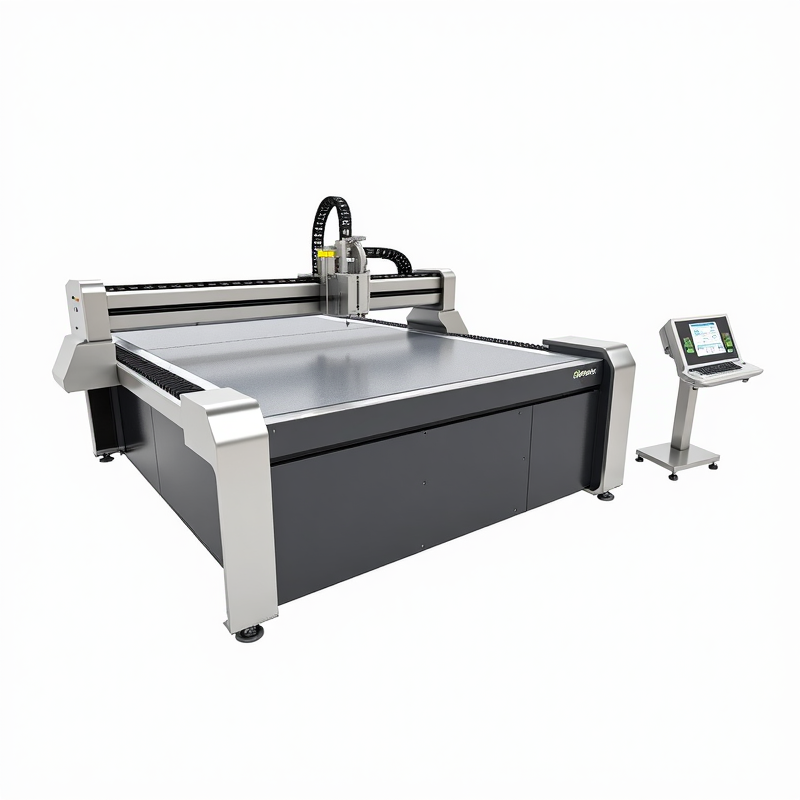
A rubber gasket cutting machine is a digital cutting system that cuts rubber gasket shapes from sheet material according to a CAD or drawing file. Instead of using a steel rule die, the machine follows a digital path and uses a blade, oscillating knife, pneumatic knife, punching tool or other tool configuration to cut the gasket. JEKE’s broader digital cutting machine category shows the type of flatbed cutting platform used for flexible-material workflows.
In many gasket workflows, the machine needs to cut both the outside contour and the inside features. A simple round gasket may only need a clean outer circle and center hole. A more complex sealing part may include several bolt holes, slots, narrow bridges, small curves or irregular shapes.
The main advantage is flexibility. When the gasket size changes, the operator can update the file instead of making a new die. This is especially useful for custom orders, maintenance replacement parts, small-batch production and prototype sealing components.
When digital knife cutting is better than die cutting for gaskets
Traditional die cutting can still be efficient for very large, repeated gasket orders. But for many custom and short-run jobs, digital knife cutting gives the buyer more control and less setup cost.
| Production need | Traditional die cutting | Digital knife cutting |
|---|---|---|
| New gasket design | Requires die making before cutting | Cuts directly from a digital file |
| Small-batch order | Die cost may be hard to justify | More practical for low-volume jobs |
| Frequent size changes | New or modified dies may be needed | Change the CAD file and cut again |
| Prototype sealing part | Slower setup before testing | Faster sample development |
| Mixed gasket shapes | Multiple dies may be required | Store and switch between files |
| Custom maintenance parts | Less flexible for one-off sizes | Suitable for replacement and custom shapes |
A CNC gasket cutting machine is usually worth considering when the factory handles many gasket sizes, materials or order types. The machine can reduce dependence on die inventory and make it easier to respond to urgent custom requirements.
However, the digital workflow must still match the material. Thick, hard, soft, elastic or fiber-reinforced gasket sheets behave differently during cutting, so tool selection and sample testing are important before purchase.
Gasket materials a digital cutter may need to handle
Gasket buyers often say “rubber,” but sealing materials can vary widely. Material composition, thickness, hardness, density and surface behavior all affect how the machine should be configured. JEKE’s application materials for rubber and flexible sheets page is a useful internal reference for checking whether the project fits the site’s flexible-material cutting scope.
| Gasket material | Common use | Cutting consideration |
|---|---|---|
| Rubber sheet | General sealing parts, custom gaskets, industrial pads | Elasticity can affect edge control and hole quality |
| Silicone rubber | Heat-resistant or flexible sealing applications | Soft material may need stable holding and clean tool pressure |
| EPDM | Weather-resistant seals and outdoor applications | Thickness and hardness should be tested before final setup |
| Nitrile / NBR | Oil-resistant gaskets and industrial seals | Edge quality and small holes need tool matching |
| Neoprene | Seals, pads and vibration-control parts | Material may compress during cutting |
| Cork rubber | Sealing and insulation applications | Composite behavior may require testing |
| Non-asbestos sheet | Industrial gasket production | Hardness and fiber structure affect blade choice |
| PTFE | Chemical-resistant gasket applications | Harder and denser sheets may need stronger tool matching |
| Graphite composite | High-temperature or industrial sealing | Brittle or layered behavior should be tested carefully |
| Foam rubber | Soft sealing strips or cushioning parts | Material holding is important to prevent distortion |
This is why a supplier should not recommend a rubber gasket cutting machine only from the keyword. A real recommendation should start with material samples, thickness, hardness if known, drawing complexity and expected production volume.
Which cutting tool fits rubber gasket materials?
Tool choice is the core of gasket cutting. The same machine platform may support different tools, but the correct setup depends on material resistance, thickness, hole size and edge requirement.
| Tool option | Best fit | What buyers should check |
|---|---|---|
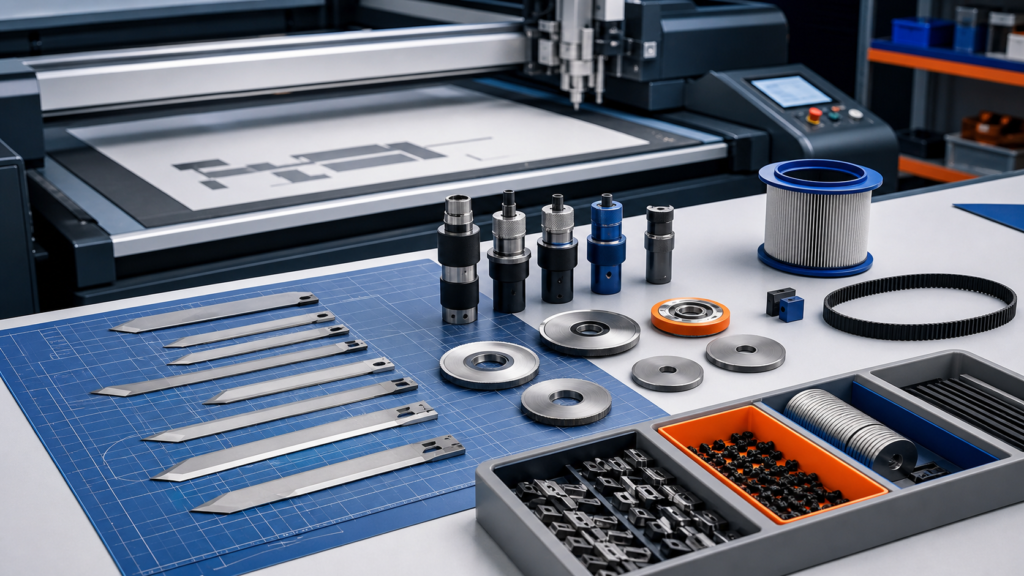
| Oscillating knife | Many rubber sheets, silicone rubber, foam rubber and flexible gasket materials | Whether the blade can cut the thickness cleanly without pulling the material |
| Pneumatic oscillating knife | Thicker or more resistant rubber and sealing materials | Whether stronger cutting force is needed for the actual sheet |
| High-power oscillating knife | Harder or denser gasket materials in some workflows | Whether the material is too hard for standard knife cutting |
| Punching tool | Bolt holes, repeated round holes, small inner features | Smallest hole diameter, hole spacing and punching sequence |
| Marking tool | Part numbers, alignment marks or layout references | Whether marking is needed before or after cutting |
| Milling tool | Harder, thicker or more rigid materials when knife cutting is not ideal | Dust, edge finish and machine configuration should be confirmed |
For many gasket jobs, the workflow is not only “cut the outside shape.” The machine may need to punch holes first and then cut the outer contour. This can improve consistency when the gasket has several bolt holes or small circular features.
Buyers should also watch for edge angle on thicker rubber. If the material is thick and elastic, the blade may push or deform the sheet during cutting. Vacuum adsorption, blade type, cutting speed, tool pressure and cutting sequence all affect the final result.
Before choosing an oscillating knife gasket cutting machine, send real gasket material and the most difficult drawing file for testing. A simple round gasket does not prove the machine can handle small holes, narrow rings or complex custom shapes.
Machine configuration checklist before buying
A machine that cuts one sample well may still be wrong for daily production if the table is too small, the tool head is limited or the software workflow is slow. Use this checklist before comparing suppliers.
- Material type: Confirm whether the gasket is rubber, silicone, EPDM, NBR, neoprene, PTFE, non-asbestos sheet, cork rubber, graphite composite or foam rubber.
- Material thickness and hardness: Thickness affects tool force and edge quality. Hardness, such as Shore hardness when available, helps the supplier judge tool matching.
- Maximum gasket size: The working area should fit your largest part without forcing inefficient layout changes.
- Smallest hole diameter: Small holes may require a punching tool or a different cutting strategy.
- Inner and outer contour complexity: Narrow rings, slots, multiple holes and sharp corners may affect tool selection.
- Sheet size and loading method: Tell the supplier whether you cut from sheets, rolls or repeated stock sizes.
- Vacuum adsorption and table surface: Rubber can shift, stretch or compress. Stable holding is important for repeated results.
- File format and software workflow: Prepare DXF, AI, PDF, PLT or other drawing files used in your workshop.
- Nesting and material utilization: For expensive gasket sheets, nesting can help reduce waste.
- Production volume: Occasional custom gaskets and daily production batches may require different automation levels.
- Operator and maintenance needs: Check blade replacement, table surface maintenance, tool calibration and routine cleaning.
- Sample testing process: Ask whether the supplier can test your real material and return photos, videos or sample results before final configuration.
This checklist helps narrow the rubber gasket cutting machine configuration before a formal quote. It also prevents comparing machines only by table size or price.
CNC knife cutting vs laser cutting for rubber gaskets
Laser cutting can be useful for some materials, but it is not always the best method for rubber gaskets and sealing materials. Many buyers compare laser and knife cutting because both can follow digital files, but the edge result can be very different.
| Factor | CNC knife cutting | Laser cutting |
|---|---|---|
| Cutting method | Physical blade or oscillating knife | Heat-based cutting beam |
| Edge effect | No burnt edge from heat | May create burnt edge, smoke or odor on some rubber materials |
| Material safety | Depends on blade and holding setup | Depends on material composition and ventilation |
| Small-batch flexibility | Good for custom digital files | Also flexible, but material behavior must be checked |
| Tool pressure | Needs correct blade, force and vacuum holding | No physical pressure, but heat can affect the edge |
| Best decision method | Test real gasket material and drawing | Test real gasket material and safety/edge result |
For heat-sensitive rubber, silicone and composite gasket materials, knife cutting is often worth testing first. It can avoid heat damage and may produce a cleaner edge on materials where laser cutting causes smoke, odor or discoloration.
That said, no cutting method should be chosen only from a general comparison. The correct process depends on the exact material, thickness, edge requirement and production workflow.
What information to send JEKE for a sample test or quote
The fastest way to get a useful recommendation from JEKE is to send production details instead of asking for a general machine price. Gasket materials vary too much for a one-size-fits-all answer.
- Material type: Rubber, silicone, EPDM, NBR, non-asbestos sheet, PTFE, cork rubber, graphite composite or other sealing material.
- Thickness and hardness: Include sheet thickness and Shore hardness if available.
- Sheet size and largest gasket size: This helps confirm working area and layout.
- Smallest hole diameter: This helps judge whether punching is needed.
- Drawing file: Send DXF, AI, PDF, PLT or the file type used by your production team.
- Quantity and production rhythm: Explain whether you cut one-off replacement parts, small batches or daily production.
- Edge and tolerance expectations: Describe what result is acceptable for the sealing application without inventing unrealistic requirements.
- Country and workshop conditions: Voltage, installation environment and operator experience may affect the final plan.
JEKE can review your material and file, then suggest whether your project fits an oscillating knife, pneumatic knife, punching tool or another configuration. If your workshop also cuts roll materials, fabrics or other soft sheets, JEKE’s automatic fabric cutter category may help you compare broader flexible-material workflows.
If you need to confirm the right setup, contact JEKE for a gasket sample cutting test. A real material test is safer than choosing only by machine name.