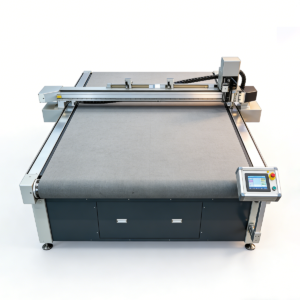
Price becomes a useless number when the buyer does not know what is included. A digital cutting machine priced at USD 7,000 and another quoted at USD 18,000 may look similar in a photo, but they may be built for very different materials, workflows, accuracy requirements, and daily output.
That is the real issue behind most searches for digital cutting machine price. Buyers are usually not asking for one universal number. They are trying to understand what budget is realistic for their own production and which machine level fits their material mix, job type, and automation target.
For flexible-material applications, price is shaped less by marketing and more by configuration. Table size, tool combination, camera system, feeding method, material type, and software workflow all change what the machine can actually do on the shop floor.
At JEKE, part of Dongguan Diaobao Automation Equipment Co., Ltd, many practical discussions with buyers begin in the roughly USD 7,000 to USD 10,000 range for standard flexible-material cutting configurations. That range can be workable for some packaging, signage, fabric, and sample-making needs, but it is not the right answer for every workflow.
If you are comparing options now, start with the actual machine category on JEKE’s digital cutting machine page and the material scope shown on the application materials page. Price only makes sense after those basics are clear.
Price Is Really a Configuration Question
Buyers often ask, “How much does a digital cutting machine cost?” A better question is, “What machine configuration do I need for my materials and workflow?”
The same product family can vary in price because the machine may be configured for:
- sheet materials or roll materials
- manual loading or automated feeding
- simple knife cutting or knife plus creasing
- general cutting or print-and-cut work with camera registration
- samples and short runs or higher daily throughput
That is why a serious price discussion should always begin with five decisions:
- what materials you cut every day
- whether jobs are sheets, rolls, or both
- whether you need camera positioning
- whether you need creasing, kiss cutting, or only full-depth cutting
- whether the machine is for samples, short runs, or repeated daily production
Without those answers, the quoted number may be accurate but still misleading.
What a USD 7,000 to 10,000 Digital Cutting Machine Usually Covers
In the flexible-material segment, a machine in the USD 7,000 to USD 10,000 range can often make sense for buyers who need an entry or mid-level production setup rather than a fully automated system.
This budget band is often suitable when the workflow focuses on:
- packaging samples
- corrugated prototypes
- signage and display finishing
- printed contour cutting
- fabric sample cutting
- leather or foam sample work
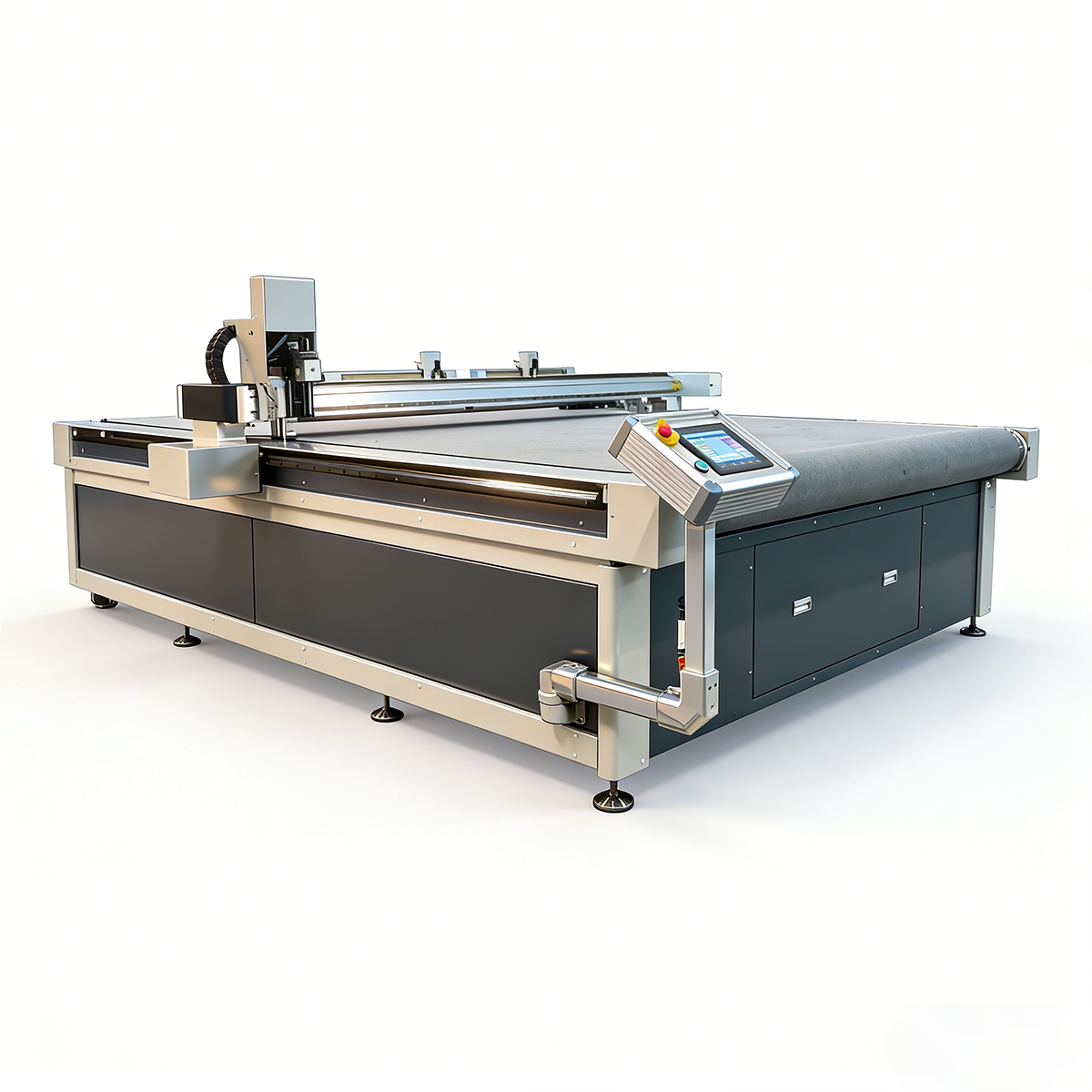
At this level, buyers can usually expect a practical cutting platform rather than a heavily automated line. Depending on the exact JEKE configuration, that budget may include some combination of:
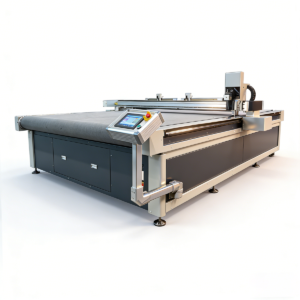
- a flatbed cutting table
- oscillating knife cutting capability
- drag knife or tangential knife for thinner materials
- basic vacuum hold-down
- standard control software
- optional camera positioning on selected setups
What it usually does not mean is a highly automated conveyor-based production line with advanced material handling, multiple specialized modules, and maximum throughput optimization.
So if your business is mainly sample making, small-batch work, signage finishing, or flexible production with moderate volume, the USD 7,000 to USD 10,000 range may be realistic. If your workflow depends on continuous roll feeding, higher automation, or a wider tool package, you should expect the budget to rise.
The Main Factors That Change Digital Cutting Machine Price
1. Working Width and Table Size
Machine size is one of the most visible price drivers. A small-format table for sample rooms and short-run prototyping is not priced like a wide-format system for signage boards, corrugated sheets, or larger textile workflows.
Larger working areas usually add cost because they affect:
- frame size and rigidity
- vacuum area
- motion system load
- installation requirements
- usable material width
The right question is not “Do I want a bigger table?” It is “What is the largest material size I truly process often enough to justify the added cost?”
2. Tool Configuration
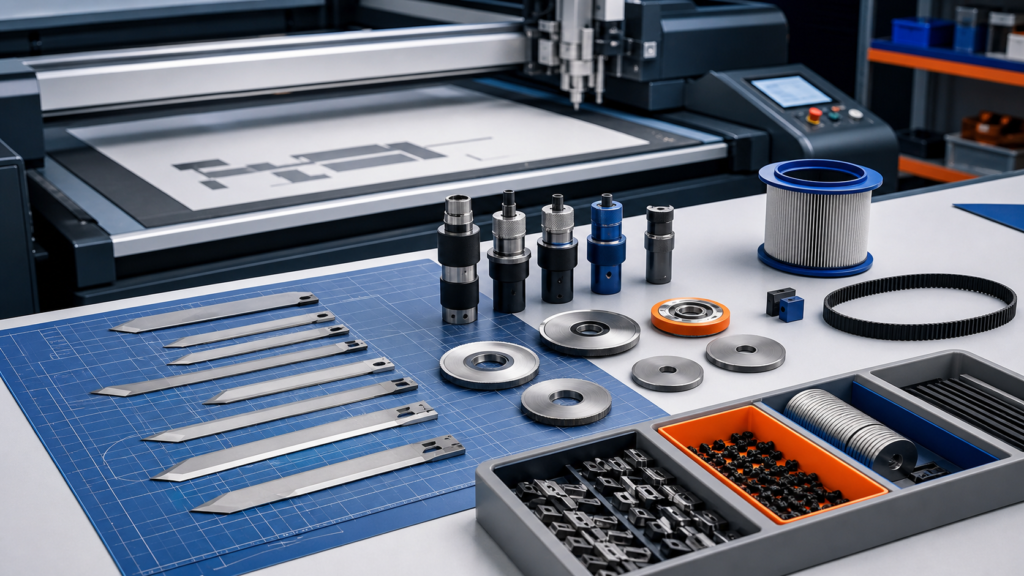
The tool head is where much of the machine’s real value sits. A buyer comparing only table size can easily miss the most important cost difference.
A digital cutting machine may be configured with:
- oscillating knife
- drag knife
- tangential knife
- creasing wheel
- kiss-cut module
- V-cut or routing add-ons
For packaging, the difference between “cut only” and “cut plus crease” is major. For signage and print finishing, the difference between a simple knife setup and one designed for contour accuracy can change the machine’s commercial value. For fabric and interiors, the right knife behavior matters for edge quality, stretch control, and repeatability.
If the machine does not have the right tool package, the lower price can become expensive very quickly.
3. Camera Positioning and Registration Capability
Camera-based positioning adds cost, but for many users it is not optional.
This is especially true for:
- stickers
- labels
- printed display graphics
- branded packaging mockups
- contour-cut signage jobs
In those workflows, the issue is not only cutting speed. It is registration accuracy. A cheaper machine without reliable camera positioning may still cut, but it may not cut where the printed image actually needs it to cut.
If your business depends on print-and-cut work, you should treat camera registration as a workflow requirement, not a cosmetic upgrade. JEKE buyers looking at this area should also compare with the use cases explained in the published article on camera positioning cutting workflows.
4. Feeding Method and Daily Throughput
A static flatbed setup and a machine with more advanced feeding are not priced the same because they are built for different levels of workflow continuity.
Price changes when buyers need:
- manual sheet loading only
- conveyor cutting
- roll feeding
- continuous textile handling
- faster loading and unloading rhythm
This matters especially in apparel, printed textile, and some signage workflows. If jobs are frequent, repeated, and time-sensitive, feeding method affects labor, output, and consistency just as much as cutting speed.
5. Material Type and Thickness Range
The broader the material range, the more demanding the machine setup usually becomes.
Cutting one stable material is simpler than switching among:
- corrugated board
- vinyl
- PVC foam board
- fabric
- leather
- EVA foam
- laminated composites
Materials with very different density, thickness, rebound behavior, or print alignment requirements often need better tuning, different tools, or stronger hold-down performance. Buyers who need one machine for many material categories usually need a more deliberate configuration, and that affects price.
6. Software, Training, and Support
A low quote that ignores setup support, software workflow, and operator onboarding is often not truly cheap.
Serious buyers should ask:
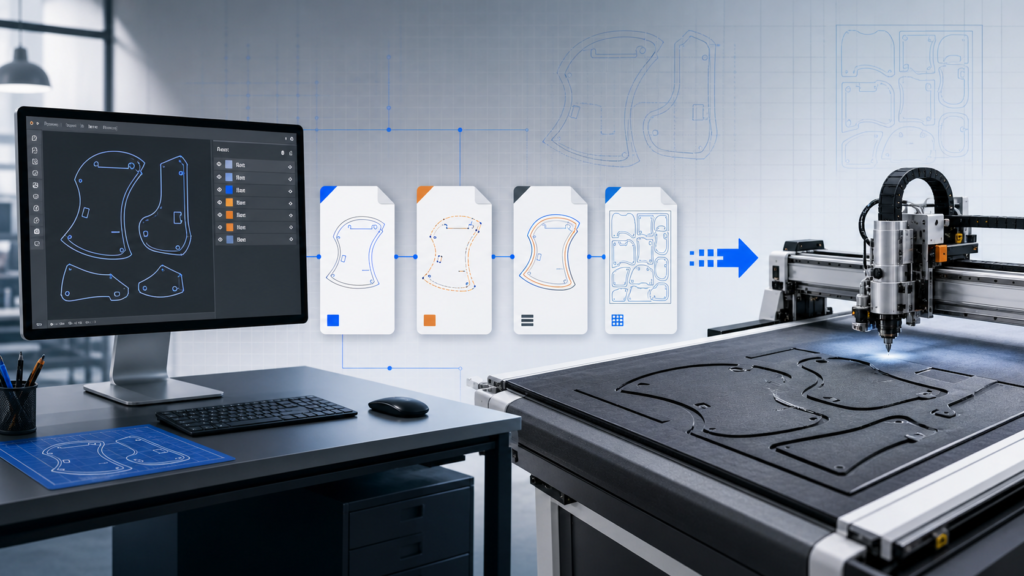
- how jobs are imported from CAD or design software
- how tool paths are managed
- how easy job switching is
- how training is handled
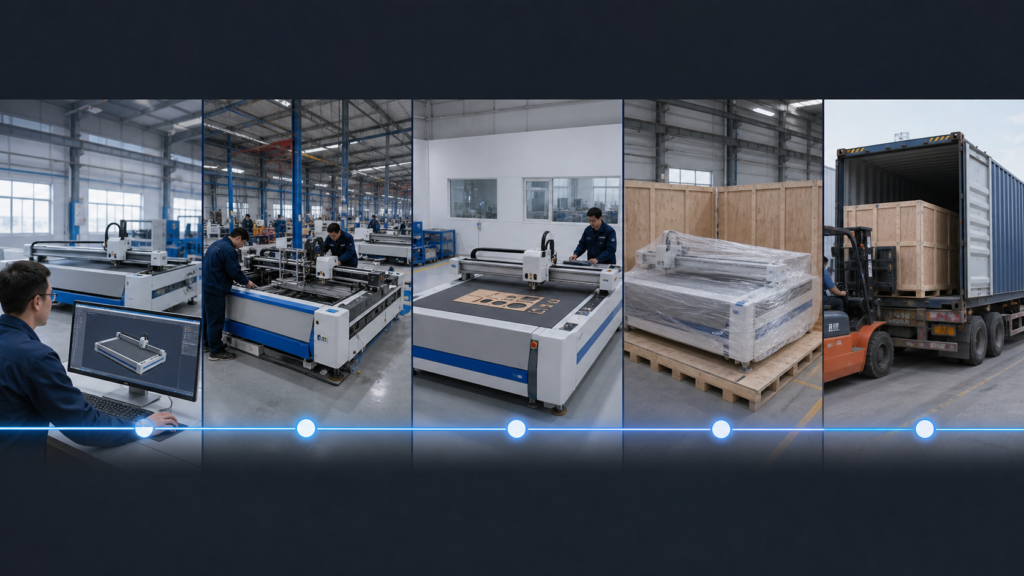
- what support is available after installation
International head brands are strong here because they sell a workflow, not just a machine. JEKE should be discussed the same way: the right value is not only the machine body, but the fit between hardware, software, materials, and support.
Price Means Different Things in Different Industries
Packaging and Corrugated Samples
In packaging, the buyer is usually not paying only for cutting. The buyer is paying for a faster sample workflow.
If the machine can cut and crease corrugated board accurately, it may reduce:
- outsourced sample making
- waiting for die tools
- manual rework
- approval delays with customers
For these users, the right machine is the one that moves design files into physical samples quickly. That is why a packaging buyer should also compare the machine against the workflows described in JEKE’s packaging-related cutting solutions.
Signage and Display Production
In signage, price often needs to be judged against job flexibility. A machine that can switch between vinyl, film, PVC foam board, cardboard, and contour-cut print work may create more value than a lower-cost setup that handles only one type of finishing reliably.
Signage buyers should focus on:
- contour accuracy
- material switching speed
- board size compatibility
- knife and camera combination
Apparel and Fabric Cutting
In apparel, the question is rarely just “How cheap can the machine be?” The real question is whether the machine matches the cutting room workflow.
Buyers should review:
- single-ply or multi-style sample work
- roll or sheet handling
- repeatability
- fabric stability during cutting
- labor reduction in layout and cutting
For textile-related workflows, JEKE’s automatic fabric cutter category shows the product direction that matters more than one single quote number.
 Automotive Interior, Leather, and Foam
In automotive interior work, lower price can be misleading if it comes at the cost of unstable cut quality or higher material waste.
Leather, foam, and layered soft materials are not forgiving. If edge quality, repeatability, or nesting performance are poor, the cost shows up in waste, rework, and appearance issues.
That is why buyers in this segment should compare price with:
- material utilization
- cut consistency
- pattern accuracy
- ability to handle multiple interior materials
When a Lower Price Is Good Enough
A lower-budget digital cutting machine can be the right purchase when:
- the business mainly makes samples or short runs
- materials are relatively stable and not overly complex
- automation level does not need to be high
- the main goal is to reduce manual cutting rather than build a full automated line
- camera positioning is needed only on selected jobs, not all jobs
For many first-time buyers, this is exactly where a standard JEKE flexible-material cutting configuration makes practical sense.
When Spending More Makes Sense
Budget should increase when the workflow depends on:
- higher daily production continuity
- larger working width
- more tool functions
- better contour-cut accuracy
- wider material range
- tighter repeatability requirements
- more software and automation support
Spending more is also justified when material waste is expensive. In leather, foam, and printed media, a weak configuration can cost more over time than a stronger machine with a higher purchase price.
Common Buying Mistakes
Comparing Only Base Price
Some buyers compare the lowest visible quote without checking the actual configuration. That almost always creates confusion later.
Buying for Today’s Simplest Job
If your business is already moving toward more material variety, faster turnarounds, or more custom work, buying only for the easiest current job can limit growth quickly.
Ignoring Tool and Workflow Fit
If the machine can technically cut the material but does not support the right tool process, feeding logic, or registration accuracy, the lower price loses its appeal.
Overbuying Automation Too Early
The opposite mistake also happens. Some buyers pay for automation depth they will not use for the next two years. That ties up budget without solving the current bottleneck.
A Better Way to Budget for a Digital Cutting Machine
Before asking for a final quote, prepare these five inputs:
- your main materials
- your maximum sheet or roll width
- the tools you actually need
- whether camera positioning is necessary
- whether the machine is for samples, short runs, or daily production
With those basics, the price discussion becomes much more useful. It moves from “How much is the machine?” to “Which configuration gives the best return for this workflow?”
Which Buyers Usually Fit the USD 7,000 to 10,000 Range
This range is often a good starting point for buyers who need:
- an entry-to-mid-level flatbed cutting system
- sample making or short-run production
- packaging prototypes
- signage contour cutting and finishing
- textile sample cutting
- flexible-material processing without full automation
It is usually less suitable for buyers who need:
- heavy automation
- high-volume continuous production
- advanced multi-module workflows
- maximum-width industrial systems
- broader integration requirements across a larger plant
That does not mean the lower range is “small” or “weak.” It means the machine should be matched to the business stage and the real production demand.
Why JEKE Is a Practical Brand to Compare on Price
JEKE is strongest when the buyer wants a workable, production-focused solution for flexible materials without treating every project like a top-end automated cutting room investment.
That is important in export markets because many buyers are not looking for the most expensive system in the world. They are looking for a machine that:
- fits the material
- solves the current bottleneck
- lands in a realistic budget
- leaves room for growth
That is why Dongguan Diaobao Automation Equipment Co., Ltd discusses price together with application, tooling, and workflow. The useful answer is not just a number. It is the right number for the right configuration.
Next Step
If you are evaluating digital cutting machine price now, the fastest way to narrow the budget is to compare your materials, maximum size, tool needs, and automation target first. Then the quote becomes much more accurate.
If you want a practical recommendation, JEKE can review your materials and daily workflow, explain what a realistic USD 7,000 to USD 10,000 setup usually covers, and tell you when a higher configuration would make more sense. The easiest next step is to visit the contact page and ask for a configuration-based recommendation rather than a generic price.
FAQ
What is the average digital cutting machine price?
There is no single average that fits every machine type. Price depends on table size, tools, camera system, feeding method, materials, and production target.
Is USD 7,000 to 10,000 enough for a digital cutting machine?
For some standard flexible-material cutting configurations, yes. That range can be suitable for sample making, signage finishing, packaging prototypes, and some fabric or foam applications, depending on the exact setup.
Why do two machines that look similar have very different prices?
Because the visible table is only part of the system. Tool package, camera registration, software workflow, automation level, and support can change the real capability of the machine significantly.
Should I choose the cheapest machine first?
Only if it actually fits your materials and workflow. A lower base price can become expensive if the machine creates more waste, more manual work, or more rework.
What should I prepare before asking for a quote?
You should prepare your main materials, material thickness, maximum size, tool needs, whether camera positioning is required, and whether the machine is for samples, short runs, or production.