The signage industry has changed quickly over the last few years. Customers expect shorter lead times, more customization, cleaner finishing, and better consistency across both small and repeat orders. For many sign makers, display producers, and print service companies, traditional manual cutting methods are no longer enough to keep up.
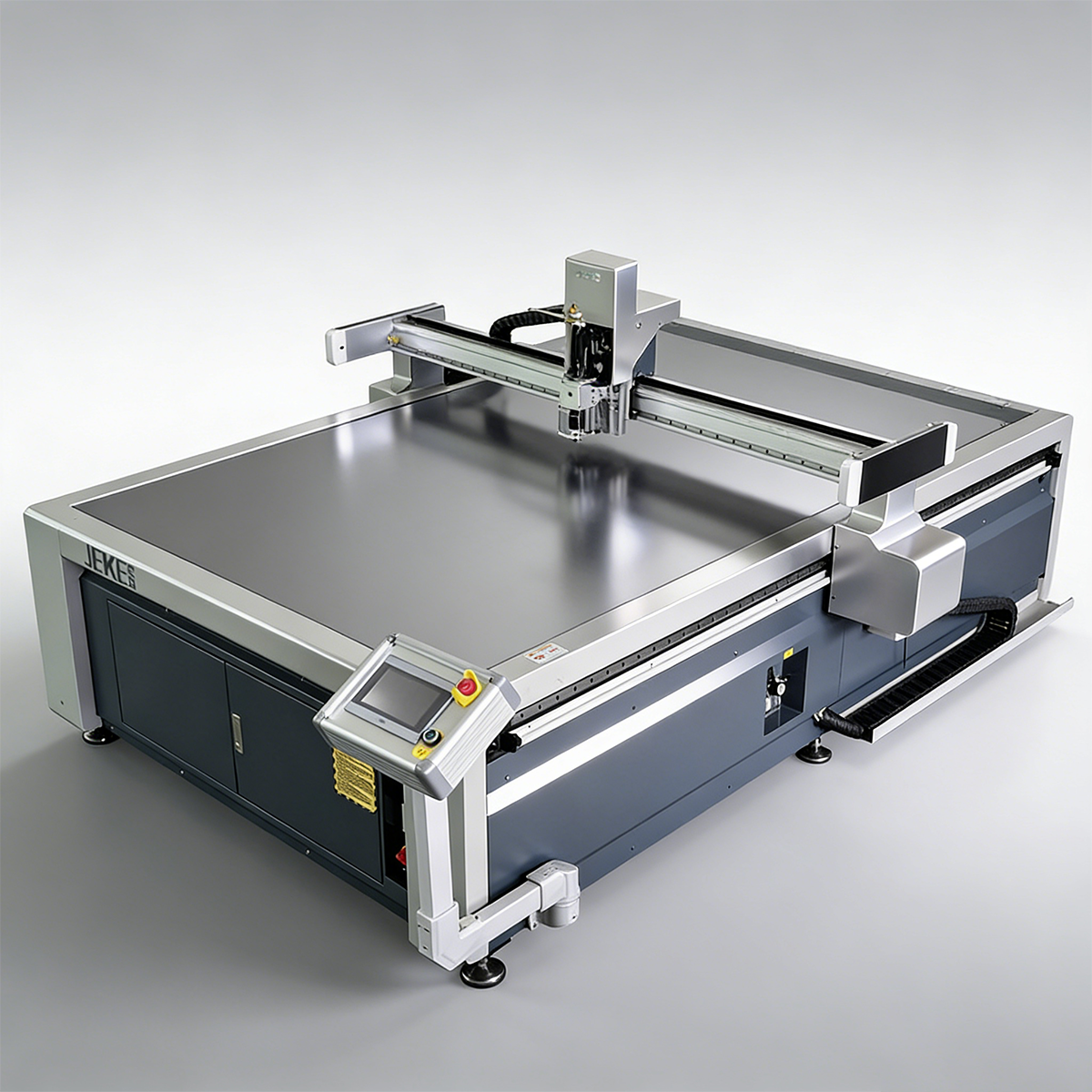
That is why more businesses are moving to a digital cutting machine for signage industry workflows. Instead of relying on separate manual steps for trimming, contour cutting, finishing, and sample adjustment, a digital cutting system gives signage companies a more efficient and repeatable production process.
In this guide, we look at why digital cutting is becoming more important in the signage market, which materials are most commonly processed, what machine features matter most, and how to choose the right setup for your business.
At Dongguan Diaobao Automation Equipment Co., Ltd, the JEKE brand focuses on automated cutting solutions for flexible and signage-related materials. That makes this guide practical for real production needs rather than only general theory.
Why Signage Companies Need Digital Cutting More Than Before
Signage work is no longer limited to standard shapes and simple board cutting. Today, many shops handle:
- short-run custom graphics
- contour-cut printed jobs
- indoor and outdoor promotional displays
- retail POP materials
- exhibition graphics
- foam board and corrugated display work
- reflective films and adhesive materials
The production challenge is that these jobs often involve different materials, different sizes, and different finishing requirements. Manual cutting slows the workflow, creates inconsistency, and increases waste.
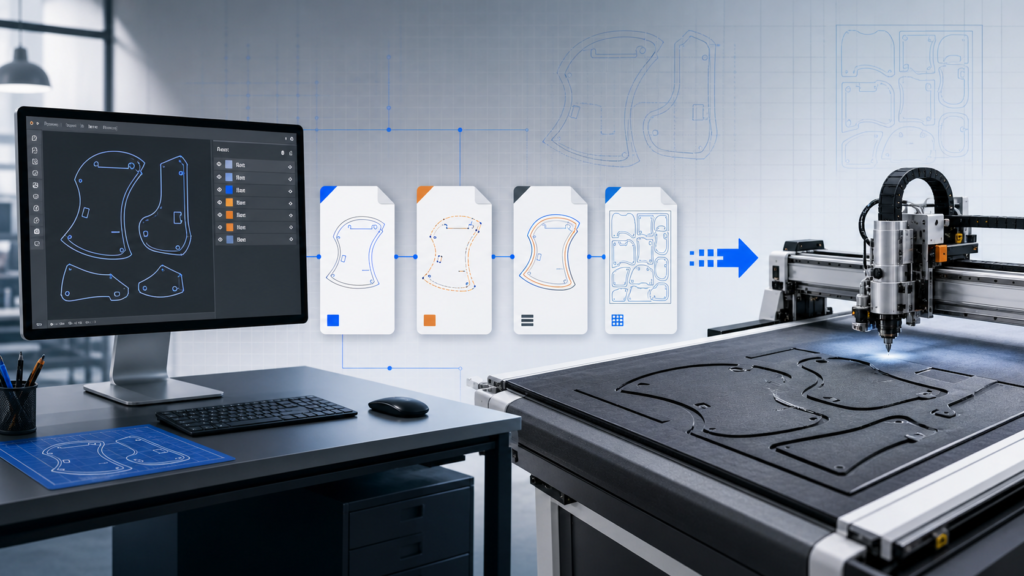
A digital cutting machine solves this by connecting design files directly to cutting output. That reduces dependence on operator skill for every detail and makes it easier to process both repeat jobs and custom work.
What Materials Are Common in Signage Digital Cutting?
A good signage cutting system should not be judged by one material only. Most sign and display shops need flexibility across multiple substrates.
PVC Foam Board
PVC foam board is widely used for indoor signs, displays, promotional structures, and mounted graphics. Shops often need accurate shape cutting and smooth finishing to keep the final display looking professional.
Printed Vinyl and Adhesive Materials
For contour-cut graphics, stickers, labels, and branded display applications, accurate registration is critical. A digital cutting system with camera positioning helps align the cut path with printed graphics more precisely.
Reflective Film and Flexible Sign Media
Many advertising and traffic-related graphics use reflective or specialty films. These jobs require stable tracking, clean cuts, and controlled tool behavior.
Corrugated Cardboard and Display Board
Retail display work and temporary promotional structures often use corrugated or paper-based boards. In these applications, digital cutting helps signage businesses take on more packaging-display crossover work without depending on manual finishing.
Foam, Paperboard, and Composite Display Materials
Depending on the application, sign companies may also process foam, laminated boards, or other semi-rigid display materials. This is why multi-tool flexibility matters in signage production.
What a Digital Cutting Machine Changes in a Signage Workflow
The biggest advantage is not just cutting speed. It is workflow control.
A digital cutting machine can help signage companies:
- reduce manual trimming time
- improve contour-cut accuracy
- lower material waste
- support short-run custom orders
- switch jobs faster
- improve repeatability across similar orders
- reduce finishing errors on printed work
For many shops, that means less rework and more confidence when handling customer-specific jobs with tight timelines.
Key Features To Look For in a Signage Cutting Machine
Camera Positioning
For print-and-cut workflows, camera positioning is one of the most important functions. It helps the machine recognize registration marks or printed references so the cut path matches the artwork accurately.
If your business handles:
- contour-cut stickers
- printed display graphics
- shaped branding graphics
- promotional visual materials
then camera positioning should be treated as a core feature, not an optional extra.
Tool Versatility
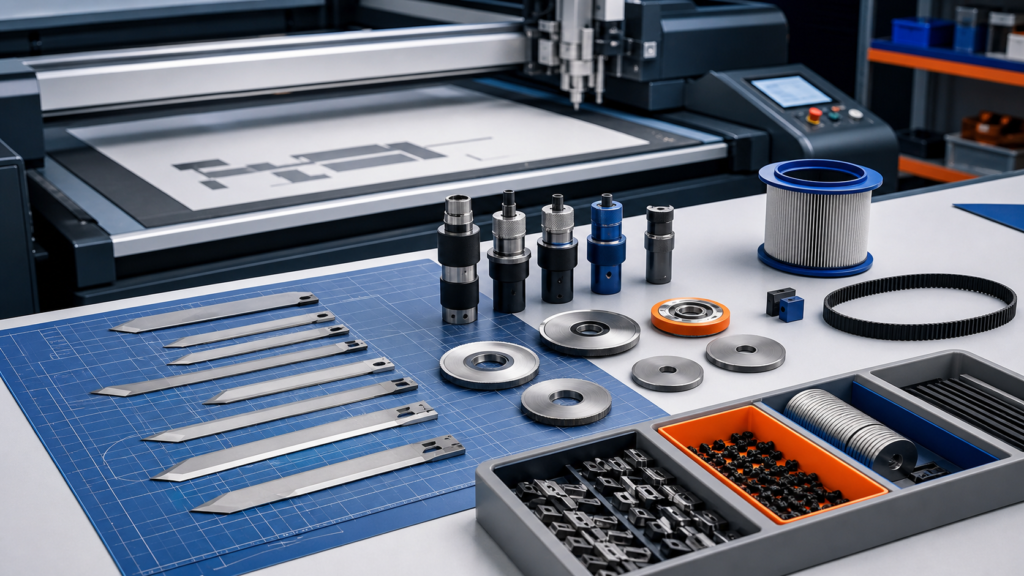
A signage shop may process both flexible and semi-rigid materials in the same production cycle. Depending on your workflow, useful tool options may include:
- oscillating knife
- drag knife
- kiss-cut tool
- creasing tool
- routing add-on for selected applications
The right tool combination gives you more production flexibility and reduces the need for multiple disconnected finishing processes.
Table Size and Material Handling
Some shops mainly process smaller sign panels or decal jobs. Others handle larger display formats. The right table size should be based on your common job dimensions, not only the largest format you ever expect.
Material handling should also match your workflow:
- sheet-based jobs may work well on a standard flatbed
- repeat flexible-media work may benefit from other feeding options
Software Compatibility
A cutting machine should fit into your existing print and design workflow. If artwork output, nesting, registration, and job preparation are slow or inconsistent, the machine will not deliver its full value.
That is why software compatibility matters just as much as machine hardware.
Why Digital Cutting Is Better Than Manual Finishing for Many Sign Shops
Manual finishing still works in small volumes, but it becomes a bottleneck as soon as order complexity increases.
More Consistent Quality
When cutting is done digitally from the file, dimensional consistency improves. This matters when:
- multiple copies must match
- branded shapes need clean outlines
- customers expect a professional finished look
Faster Job Turnaround
Shorter setup and more controlled output help shops handle urgent orders with less disruption.
Better for Short Runs and Custom Orders
Signage businesses often live on small-batch and custom work. A digital cutting machine is well suited to that environment because it reduces the friction of switching between designs and materials.
Reduced Waste
In manual workflows, trimming mistakes and alignment errors create material loss. Digital cutting helps reduce that problem, especially for printed jobs where media cost is meaningful.
Which Signage Businesses Benefit Most?
Not every shop has the same production needs. A digital cutting machine is especially useful for:
Print Service Providers
If your business already prints graphics but relies on slow finishing methods, digital cutting can improve both speed and finish quality.
Display and POP Manufacturers
Display work often combines different materials, custom shapes, and visual finishing demands. A digital cutter helps handle this complexity more efficiently.
Sign Makers With Custom Orders
If your business depends on short runs, fast revisions, and customer-specific shapes, digital cutting can improve response time and reduce production friction.
Shops Expanding Beyond Simple Flat Signs
When a shop starts moving into shaped graphics, display structures, retail visuals, and higher-value finishing work, digital cutting becomes much more important.
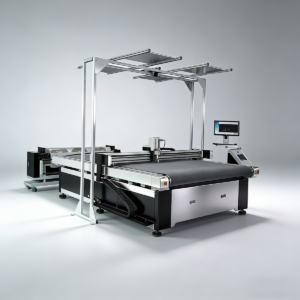
How To Choose the Right Machine for Signage Production
Before requesting quotes, signage buyers should answer a few practical questions:
- Which materials do we process most often?
- How many jobs involve printed contour cutting?
- What are our common board and media sizes?
- Do we need only knife cutting, or also kiss cutting, creasing, or routing?
- Are our jobs mainly short-run custom work or repeat production?
- Which steps in our current workflow are slowing us down?
These questions matter because the right machine for a print-heavy decal workflow may not be the same as the right machine for a display-board and POP production shop.
Common Buying Mistakes
Buying Only on Maximum Speed Claims
Speed is important, but accuracy, job switching, and material compatibility are equally important in signage work.
Ignoring Camera Registration Requirements
If you do printed contour jobs, weak registration performance will create repeated alignment problems.
Choosing Too Narrow a Tool Setup
A machine may look attractive on price, but if it only handles a narrow material range, it can quickly become limiting as your job mix changes.
Overlooking Future Service and Support
Support matters in production equipment. Training, spare parts, software support, and application guidance affect long-term value.
Why More Signage Businesses Are Switching Now
The signage market is under pressure from shorter delivery expectations and more customized work. At the same time, labor cost and finishing consistency remain ongoing challenges.
That is why digital cutting is becoming a practical investment instead of a nice-to-have upgrade. It helps signage companies move from manual, operator-dependent finishing toward a more controlled and scalable process.
For companies that handle multiple materials and frequent design variation, that shift can improve both production efficiency and customer responsiveness.
Conclusion
A digital cutting machine for signage industry applications is not simply a replacement for manual trimming. It is a workflow upgrade that helps signage companies cut a wider range of materials more accurately, respond faster to custom orders, and improve finishing consistency.
For shops working with PVC foam board, vinyl, reflective film, corrugated display board, and printed graphics, digital cutting can reduce bottlenecks and make higher-value jobs easier to handle.
The right machine depends on your actual materials, print-and-cut needs, tool requirements, and production targets. That is why the best buying decision starts with your real workflow instead of a generic product comparison.
If you want a more practical recommendation, JEKE and Dongguan Diaobao Automation Equipment Co., Ltd can review your signage materials, job types, and finishing requirements, then suggest a machine setup that fits your production process without adding unnecessary complexity.
FAQ
What materials can a digital cutting machine handle in the signage industry?
Typical materials include PVC foam board, printed vinyl, reflective film, corrugated display board, paperboard, and other flexible or semi-rigid display materials, depending on machine configuration.
Why is camera positioning important for signage cutting?
Camera positioning improves registration accuracy for contour-cut graphics and printed jobs, helping the cut path match the artwork more precisely.
Is a digital cutting machine only useful for large sign factories?
No. It is also useful for smaller sign shops that handle custom orders, short runs, or print-and-cut work where manual finishing limits speed and consistency.
Can one signage cutting machine process different materials?
Yes, if the machine is configured with the right tools. This is one of the main advantages of digital cutting for signage businesses with mixed job types.
How do I know which signage cutter is right for my business?
Start by reviewing your main materials, print registration needs, tool requirements, job sizes, and production bottlenecks. The right machine should solve the most important workflow limits in your shop.